
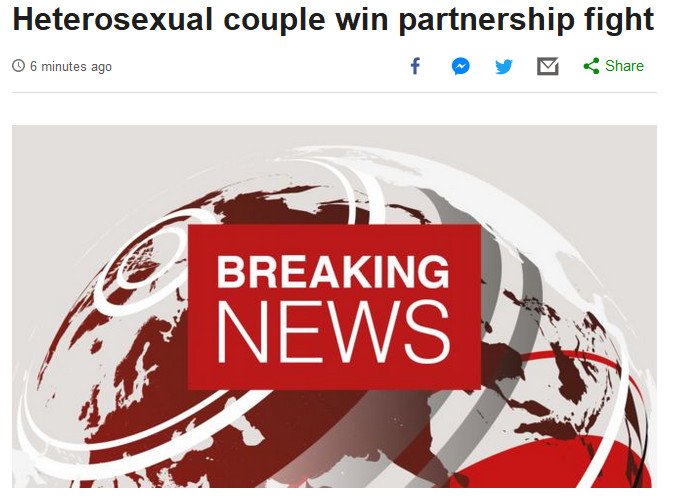
• Can the Epi Scopal Church speak of the love of God?


    In the name of the Father and of the Son and of the Holy Spirit. Amen.

    Identity matters. It always has of course but these days it seems to matter a huge amount.

    And one of the most difficult things for Scottish Episcopalians is to explain to others who we are.

    The name doesn’t help of course.

    Scottish Episcopal always sounds a bit more like an Edinburgh based insurance company than a part of the church universal. And the simple truth is that a lot of people have never heard of us, or if they’ve heard of us have no real idea who we are.

    Tricky names make things difficult.

    My name is one that lots of people get wrong. One of the great advantages for me in living so close to Glasgow’s greatest, if not widest river is that I live within the only few square miles of the world where I seldom have to spell my name to people.

    This came home to me once when I was gearing myself up to do a national broadcast on the BBC. And I could hear the continuity announcer in the headphones I was wearing introducing me live on air as the Very Rev Kevin Holdsworth. I sighed deeply just before the red light went on ready for me to be bright and perky to the nation. And I heard him finish his sentence with, “… the Very Rev Kevin Holdsworth, from St Mary’s Epi-Scopal Cathedral in Glasgow”.

    The Epi-Scopal sounds more like a procedure that you would have done at Gartnavel than an identity that you would want to be known by.

    The truth is, we’ve not been doing terribly well as a church with getting people to know who we are.

    My view is that this is one of the biggest jobs that the Scottish Episcopal Church has on its hands at the moment. No-one is going to learn anything about the love of God from us if they think we are an insurance company or a ghastly piece of medical equipment that goes up your nose, down your throat or ….

    No, let’s not think about where else an Epi Scopal might go.

    But it is a job that can be done. We can reclaim our space in the public life and consciousness though probably not by being meek and mild.

    This week I found myself being asked to talk to dozens of young LGBT activists who were gathered in Edinburgh for a conference. I was asked to join a human library. The idea being that the young people could come and speak to all the exhibits and hear our stories and ask us question.

    I know of no process more clearly designed to make you feel ancient. But the young people treated us all like national treasures and had good questions.

    And they all wanted to know what church I came from.

    And I tried to explain.

    Are you like the catholics? Yes

    Are you like the Lutherans? Yes

    Are you a bible church? Yes

    Are you a Reformed Church? Yes.

    It was a little puzzling for them.

    Until they started asking questions that were a bit like the questions that were being put to Jesus in the gospel this morning. Then we started getting somewhere.

    Well, what do you think about marriage? Who can be married? What do you think about divorce? What does your church teach?

    And I found that my identity was being seen through the lens of what they thought were decent ethics.

    And I don’t really have a problem with that.

    I think our ethics – the way we behave are our calling cards. People will remember us by the way we behave at least as much as by what we say.

    I find it interesting that religious groups in Jesus’s day found their identities in what their leaders taught about marriage.

    And I find it interesting that Jesus is sitting down with his disciples and giving his take on marriage and talking about how it is changing.

    Marriage was political then as it is now. Jesus is in the part of the world where John the Baptist had his head cut off for challenging Herod’s marital behaviour. His answers to the questions here are not just about what the man or woman on the Jerusalem omnibus is to think about marriage and divorce but had political overtones.

    Jesus is using language which might put him at risk from harm – which may be why some of his teaching about it seems to be done in private with just the disciples.

    As I was preparing this sermon, I saw others on social media having trouble trying to work out what to say about it. Mark 10 is a difficult chapter for many to preach on.

    I think that it is no problem at all if we are prepared to accept and preach boldly and with confidence the truth, which is that the body of Christ today teaches things differently about marriage than the person of Jesus did when gathered in private with his disciples.

    We don’t believe that someone who is divorced is committing adultery when they remarry. That was one of the questions the young activists asked me this week.

    We believe and teach something different to Jesus in his name because we believe in our day that the love of God commands us to have compassion.

    We live in a place and time where we teach that God’s love compels us to recognise that sometimes people need another start, and recognise that sometimes the ending of a marriage may prepare the way for new life better than staying in something that is not working, abusive and painful.

    And we do so in Jesus’s name believing that we are following him in sharing compassion and love in the world, notwithstanding these few verses of Mark chapter 10.

    I believe that the Jesus who said, “Let the little children come to me; do not stop them; for it is to such as these that the kingdom of God belongs. “ would do the same if he lived in our day.

    I’ll probably never convince the fundamentalists.

    But then you never can.

    Last week’s gospel included the line that if your eye sins you should pluck it out.

    Cedric nudged me in the ribs and pointed at the preacher and said, “but he’s got two eyes, why should we listen to a word he says”.

    My response to that gospel is always the same- Never trust a two-eyed fundamentalist.

    And maybe that can shine a light on Jesus’s words that we hear today. Maybe the same sense of Hebraic hyperbole is going on. If you get married, stay married he says and does so with a force that seems downright unreasonable now but in his day was part of the daily rhetoric.

    But then he says, “oh, and let all the little ones come unto me”.

    And he loves them and he blesses them

    I know where I hear most the God of Love in today’s the gospel as I read it in our times.

    And he took them up in his arms, laid his hands on them, and blessed them.

    Our identity in the world will be found when we can do the same.

    In the name of the father and of the son and of the holy spirit. Amen.

9 responses to “RSA Animations”

  1. annie t Avatar
    annie t

    Fascinating stuff; like watching a (very) animated Paulo Freire! Loved the insight ‘collaboration is the stuff of growth’. Interesting implications for a congregational paradigm for theological education. Thanks Kelvin.

  2. kelvin Avatar

    Yes – I was also reminded of my synod question about TISEC, which I still don’t think I’ve received an adequate answer to, which was something like this: “Is learning through TISEC driven by normalised marking or learning outcomes?”

  3. Kimberly Avatar

    presumably neither, but by the grace of God?

    (‘normal’, ‘outcomes’, and ‘TISEC’ all in the same sentence could lead to much fun. But I suspect I’d head down the via negativa again.)

    1. kelvin Avatar

      The answer that I got was “both” though I’ve never believed that can be possible. I do believe that TISEC at one time or another took on the trappings of each of those learning models, but that is not the same thing at all.

  4. Rosemary Hannah Avatar
    Rosemary Hannah

    Can I gently suggest that the Tisec you love to hate has over the years changes significantly?

  5. kelvin Avatar

    TISEC has always claimed to be changing – in that way it always is the same.

    I do accept that things have changed but have no way of knowing whether they have changed for the better. I still know people whom it appears to suit and I still know people who get distressed by what is done to them within it. In that respect at least, again, it remains the same.

    I’ve said before now that one of the reasons that TISEC is something that still presents unresolved issues for some of us who went through it is that there was never any public accountability within the church over what was done to us. No-one was ever held responsible and even though TISEC itself went through several reviews, the reasons for those reviews being carried out were never transparent.

    I’d still be happy to receive a coherent answer to the question. Incidentally, when I was in TISEC, the answer was clear – it was driven by learning goals and outcomes.

    I was at the General Synod where we voted for TISEC to cease to be a teaching institution. That was a pretty strong decision and one which was enthusiastically celebrated by some. (I went to the celebratory lunch afterwards and some folk came up from England for it). That does make it hard to understand what has happened subsequently.

  6. Rosemary Hannah Avatar
    Rosemary Hannah

    More than it would be appropriate for me as a staff member to answer to, and more than I am the most appropriate person to answer to, educational theory not being my speciality. However, FWIW I can answer to the fact that normalised marking is firmly in place, and that our external examiner is more than happy with the standards our students achieve. Beyond doubt all those who get a diploma from us have achieved the educational equivalent of the first two years of University education.

  7. kelvin Avatar

    Well, this isn’t comparing like with like as the current external examiner acts for an institution (albeit one which may have a financial interest) that had nothing to do with TISEC when I was in it, however, I can say that the external reports on TISEC were always astonishingly good.

    All the more astonishing for those of us who were in TISEC at the time I was, actually.

    It would be interesting to compare the quantifiable academic achievements of Scottish ordinands over time. I’ve a notion that two years of university study falls short of the standards for ordinands which the General Synod was hoping for when it last voted on a report about TISEC.

  8. Rosemary Hannah Avatar
    Rosemary Hannah

    The current external examiner is, it is true, employed; however he is not a member of the qualifying institution. He is a member of another independent academic institution, thereby bringing to his examination direct knowledge of at least three bodies (theirs, ours and his as it were). The work of our students is scrutinised by two markers at Tisec, and each piece of work scrutinised by the external examiner who checks it is achieving the same standards as YSJ. The over-all standard of YSJ is likewise scrutinised to ensure it too is achieving work of the same standard for the same level as other Universities.

    The question of whether standards nationally have risen or fallen is a different question, and harder to ascertain. We may indeed have our own different opinions. But I think it beyond doubt that the general level of the work of Tisec students is the same as the level (qualification for qualification) as the standard of students nation wide. So very much work goes into ensuring this.

    Personally, I would not be prepared to grant a degree in anything involving Biblical studies without knowledge of the Biblical languages. However it is a fact that the Universities now often do this – and indeed even forty years ago it was possible to obtain a M. Theol at St Andrews with only Greek. However regrettable this is, insisting on a full degree will not restore this.

    For those who study for a qualification with Tisec while working, as indeed for those who study with other bodies while working, to achieve two years of degree level study while in a full time job is a considerable achievement. To reach degree standard would take another 18 months I suppose – and that is a decision for the church to take.

    While I would be very sympathetic to the idea of encouraging more students to undertake a full time degree at a University, the funding of such things is a decision for the denomination, not Tisec. To ensure this in the present economic climate would be expensive, and for students who already have personal commitments, not always possible. This is why most English dioceses offer part-time training. The brief for Tisec is to offer a course that those NOT taking a full-time a course can follow, together with specifically vocational study which the Universities do not provide.

Leave a Reply

Your email address will not be published. Required fields are marked *

Previous Posts

  • US Liturgy Resources new downloads

    One of the busiest sets of pages on the Scottish Episcopal Church’s website is the set of pages which allow people to download the liturgies of the Scottish Episcopal Church. This has been the case for quite a while and was very much proved when we had a difficult week last year when the site…

  • Sermon preached on 10 November 2013

    What are you fighting for…in the name of the Father and of the Son and of the Holy Spirit? The gospel reading that we’ve just heard is a very particular one. The question is – if a man dies and his widow marries his brother, and six brothers die and she marries her way down…

  • The Case for Same-Sex Marriage

    The Equality Network has just published a great resource as part of the final push towards the legalisation of same-sex marriage in Scotland. It is called Six Reasons to Support Same-Sex Marriage. It can be found for free online but there are also nice printed versions available from the Equality Network too. Here’s a pic…

  • 10 ways to make church websites better

      1  Include what time the services are and how to get there. If you are making big plans for a festival then make big plans to put it online. Some churches appear to have given up celebrating Christmas if you read their websites. (And remember, people do read websites and most read little else).…