
• Rigoletto Review – Scottish Opera 18 October 2018 – ***

    Scottish Opera has chosen to begin its season of main stage operas this year with a revival – the production of Director Matthew Richardson’s Rigoletto which was first seen in 2011.

    If anything the passage of time makes both the opera itself and this particular production all the more relevant. This is a piece that has #metoo written all over it and this production very successfully illuminates and condemns a world of male violence and privilege.

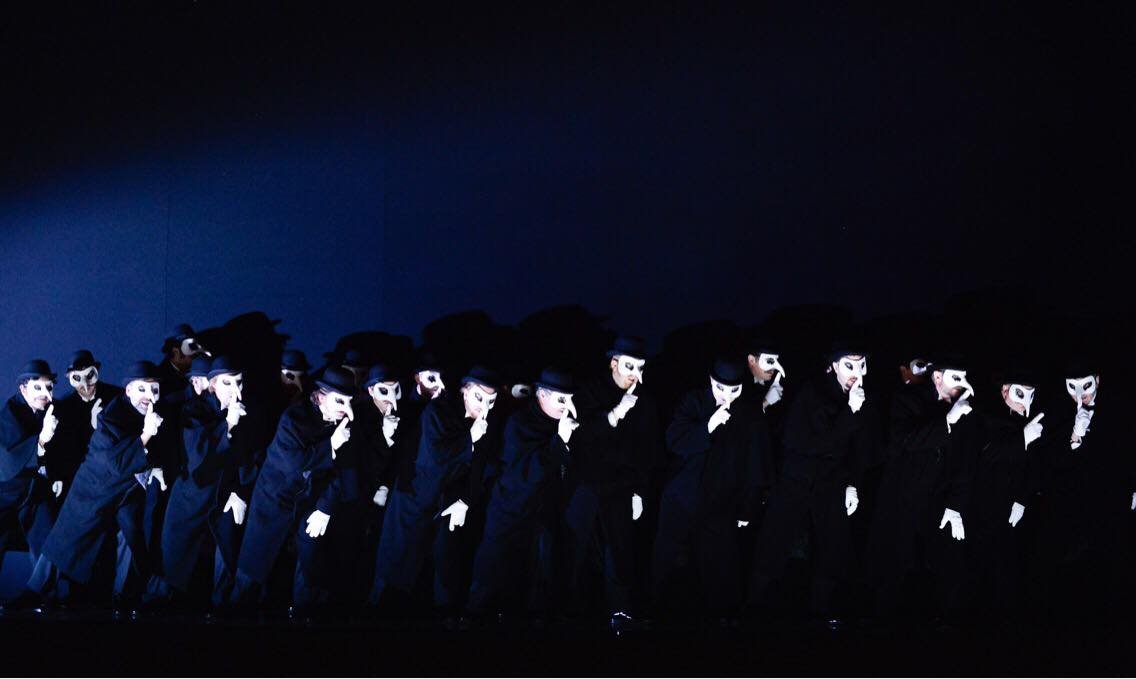
    This always was a stylish show too. There is much to like about Jon Morrell’s design and the whole thing is fabulously lit throughout by Tony Rabbit. Significant parts of the action are played before strong sidelights which cast enormous shadows and it very cleverly begins to seem as though the shadows behind the characters are where the real business lies.

    So far, so dark and that fits perfectly with the plot, but what was it like? Well, there is much to appreciate and there is no doubt that this is an enjoyable night. I happened to take a friend who had never been to an opera before and this is perfect first opera territory. The story is told clearly and with some elegance. The music is glorious and of course, you come out singing that tune, having been made very much aware that despite it appearing in TV advertisements and as background music everywhere, La Donna e mobile is as nasty a piece of misogyny as you will find in any repertoire.

    However, there is a problem with this outing of this production and it is a simple one. Anyone who remembers seeing it in 2011 may well remember that the singing was simply better than the singing this time around.

    Aris Argiris in the title role, we were informed before the curtain went up, was suffering from a cold. Certainly, that did not seem to have any effect on the power of his voice. However, its strength worked much better expressing Rigoletto’s rage than his tenderness. His acting is very fine and he dominated the stage. His Rigoletto very clearly bullies his daughter, as he is being bullied by members of the Duke’s court.  Lina Johnson gives a very touching portrayal of Gilda, Rigoletto’s daughter though their duets lacked a little in emotional depth. Alas, the problem with Adam Smith’s Duke of Matua was that he had the apect more of a student portraying a duke than a duke dressing up to win the affections of Gilda as a student. He was delightful but I’d have believed him more if we’d seen more much menace.

    The high vocal point in the whole production was the quartet Bella figlia dell’amore involving, Argiris, Smith, Johnson and Sioned Gwen Davies as Maddelena. This was a delight. It was also beautifully accompanied. Rumon Gamba kept the orchestra firmly in order throughout and tended towards the tender, which suited the singing completely.

    The all-male chorus sing beautifully, look menacing and do obscene things with female mannequins. One could scarcely ask for more.

    There is much to like and respect in this production. The story is told with grace, simplicity and style. Musically it is lovely, though excellence, sadly, eludes it.

    This review appeared first in the pages of Scene Alba.

    Rating: ★★★☆☆

9 responses to “The Lament Question”

  1. kimberly Avatar

    ask it in the singular, and the answer is: because you’re a four.

    you’ll have me playing the funeral ikos next.

  2. kimberly Avatar

    the other answer is about possibility being revealed in limits.

  3. kelvin Avatar

    Its not just me though, and not just fours.

  4. Aaron Orear Avatar

    I think because sorrow touches the core of the human condition – we are mortal but can perceive immortality. “He has made everything suitable for its time; moreover he has put a sense of past and future into their minds, yet they cannot find out what God has done from the beginning to the end.” (Eccl. 3:11)

  5. Erp Avatar
    Erp

    I understand Aristotle talks about catharsis and various philosophers have followed up on that idea.

    Perhaps it arouses sadness both from the art itself but also from our own sources festering within and allows us to let go. We feel better for the letting go, the lessening of our own internal sadness, and so perceive the art as beautiful.

  6. RosemaryHannah Avatar
    RosemaryHannah

    Kimberly was there before me. However, even I, a nine, can sometimes see the beauty in sad things. For me they do two things (may be more but two are most obvious). The first is the catharsis thing. The second is to make me less lonely. Look, here am I weeping, but all around me people sit in the same sorrow. It is not just my sorrow – I am not alone.

    I have long thought there is another answer, one I do not properly understand but I have (I think – and who am I to think it). Deep in God there is a huge well of sorrow. Unless we experience sorrow we cannot understand God. When we sorrow we tap into that well, and become closer to him.

    And being a nice cheerful nine, I will now add that I live in hope that having sorrowed with him, we will share also and even more fully in the joy which swallows the sorrow. Delete this last paragraph from your mind on reading, it will only spoil the joy of the sorrow.

  7. Elizabeth Avatar
    Elizabeth

    Edgar Allan Poe said the most beautiful thing in the world is a beautiful, dead woman. Nice, eh?

  8. Ritualist Robert Avatar
    Ritualist Robert

    Surely it’s because the concept of beauty is independent from concepts such as ‘sadness’ and ‘happiness’ – just as a G major chord might be loud or soft, but that volume has no effect on its G major-ness.

  9. Steve Avatar
    Steve

    I remember Augustine saying (don’t ask me where) that for a picture to be beautiful it requires dark colours as well as bright.

    There is also a hint of an answer in this poem by Edwin Muir:

    Yet still from Eden springs the root
    As clean as on the starting day.
    Time takes the foliage and the fruit
    And burns the archetypal leaf
    To shapes of terror and of grief
    Scattered along the winter way.
    But famished field and blackened tree
    Bear flowers in Eden never known.

    Blossoms of grief and charity
    Bloom in these darkened fields alone.
    What had Eden ever to say
    Of hope and faith and pity and love
    Until was buried all its day
    And memory found its treasure trove?
    Strange blessings never in Paradise
    Fall from these beclouded skies.

Leave a Reply

Your email address will not be published. Required fields are marked *

Previous Posts

  • It’s Time for a Vote

    This week we get to a significant point in the campaign for more equal marriage law in Scotland. On Wednesday there will be a vote in the parliament at Holyrood. Whilst there has been a lot of pre-scrutiny of the legislation and a long political process already, this is the first time that members of…

  • The Christian Year and Social Media

    I do love the way that the Christian Year is becoming more important to Christians because of social media. When I check my facebook and twitter feeds in a morning I can be pretty sure that there will be something there which relates to what season or more likely what day we have got to…

  • Samuel Seabury Day – God Bless America

    When I walked into Grace Cathedral in San Francisco last year to begin a three week visit as part of my sabbatical, I was hugely struck by this scene that was one of the large murals on the right hand wall of the nave. It is a scene that takes place in Scotland – the…

  • Keep the Cone

    I’m firmly cone positive and this video goes some way to demonstrating why. (For those out of town, see here: http://www.bbc.co.uk/news/uk-scotland-glasgow-west-24907190)