
• Dear Justin Welby

    Firstly, thank you for your speech the other night. Oh, I know it wasn’t directed at me, it was for the General Synod of the Church of England. But you knew that lots of us around the communion would be listening in.

    In that speech, you said:

    The majority of the population rightly detests homophobic behaviour or anything that looks like it. And sometimes they look at us and see what they don’t like. I don’t like saying that. I’ve resisted that thought. But in  [the recent House of Lords debate] I heard it, and I could not walk away from it. We all know that it is utterly horrifying. to hear, as we did this week, of gay people executed in Iran for being gay, or equivalents elsewhere. With nearly a million children educated in our schools we not only must demonstrate a profound commitment to stamp out such stereotyping and bullying; but we must also take action. We are therefore developing a programme for use in our schools, taking the best advice we can find anywhere, that specifically targets such bullying.

    Allow me, if I may, to start offering some of that advice that you’re looking for.

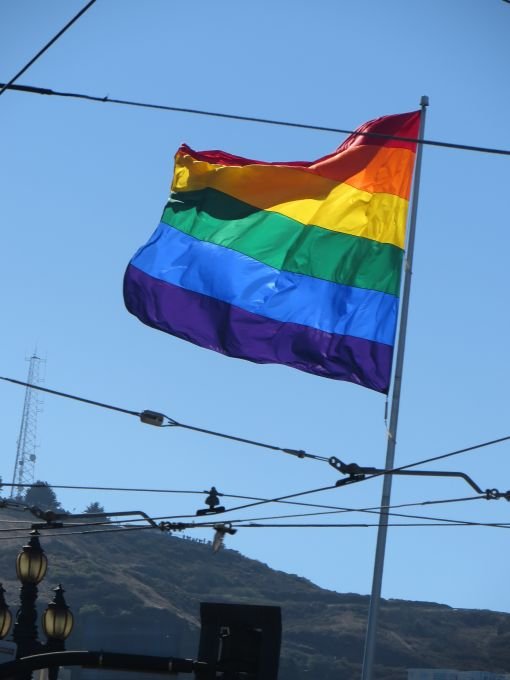
    Firstly, well done for naming the problem. It is good to stand up and say something unexpected to get people’s attention. Associating homophobia with bullying is really important. Lots of kids have a miserable life because of homophobic bullying and you’ve recognised that and said so more clearly than any other Archbishop of Canterbury. A resounding two cheers for you for doing so.

    Two cheers? Ah, well yes. You see, you missed one particular detail. You said you’d heard Lord Alli in the House of Lords saying that 97% of gay teenagers in this country report homophobic bullying and that in the USA suicide as a result of such bullying is the principle cause of death of gay adolescents.  So far, so good. What you missed out on reporting to Synod is that Stonewall’s research shows that such bullying is worse in faith schools and is not tackled as well in faith schools as it is in other schools. That makes the problem one that is sitting right at your door, with those million children in C of E care. Naming that this is a particular problem for the church is something you still need to do. But you’ve come a long way fairly quickly so we’ll just presume that you catch this detail and speak about it fairly soon, shall we?

    Now, the real headache is what to do next. I guess the temptation is to set up a committee. However, let me save you some time. Committees always take forever, and I can probably give you some starting points.

    Firstly, you’ve said  that you will take the best advice from wherever it comes. Goody! Get on the phone to School’s Out and Stonewall as soon as you are done with synod in York. They’ll be expecting your call. They’ll give you some leads as to who you need to speak to.

    What? Did you think I meant that you just needed to talk to those organisations? Oh no, life isn’t that easy. What they’ll help you do is listen to the gay kids themselves. (Start by reading Stonewall’s latest education report if you like, but make sure that is only a start).

    My hunch is that those kids will give you plenty to think about and plenty to get on with very quickly.

    Whenever I listen to such voices, I tend to hear them talking about role models, challenging bad behaviour and building a culture where homophobic abuse is unthinkable. (“Not cool” is what they sometimes call it. You and I call it “Sin”, don’t we?).

    So, when it comes to role models, you’re going to start celebrating some good gay role models and talking about them in public, yes? That will be good role models in the world as well as in the church, won’t it? Ian McKellern can’t get around every school in the country on his own. We need to help him out. A few senior gay clergy making an It Gets Better video would be a start. (You couldn’t find a budget line for that could you, just to make sure it is done well?)

    If you’ve a moment, you could check out some It Gets Better videos on youtube. They’ll give you clues as to which other organisations you need to be picking up the phone to, in order to learn how organisations get over homophobia. Start with the military and the police if you like, but make a start somewhere.

    Now, we are going to need some guidelines on appointments, are we not? I guess there will need to be a committee somewhere to produce them, but it can’t be hard. Just acknowledge that you want to stop homophobic bullying and so from now on, no appointment of teachers, particularly head teachers in church schools, unless they can demonstrate that they are supportive of gay kids, kids in gay families and gay teachers. Worried about people saying that you are discriminating against good teachers because they don’t like gay people? Face them down Father Justin, face them down. Look them in the eye and say, “You Bet We Are Discriminating!”. And then go on to say that we discriminate against racists (we do don’t we?) and what of it? You’ll win the argument and you’ll make the world a better place.

    Don’t forget those gay teachers. We’re building a culture where they can come out, aren’t we? You know, when they can talk as freely about being with their other half as a straight teacher can talk about his or her spouse? Where the kids get to send them cards if they get married (oops, nearly running away with myself) partnered or whatever you want us to call it. Where teachers are not frightened of expressing their love outside the school for fear of what might happen within it.

    And yes, we do need some good age appropriate resources for tackling this problem. (We might need some better sex-ed class material too, but why not take that up with your pal Mr Gove when you see him).

    However, you’ll be aware that it isn’t just resources that are needed, aren’t you. After all, simply providing a set of resources rather than going for a whole “revolution” in the way these things are dealt with in schools might almost make someone think that you thought that the problem was simply one of the children’s attitudes and that the world (the school?) around them was not partly to blame.

    And blaming the kids would never do, would it? It would be like passing the buck on child abuse and blaming the victims themselves. We’d never do that now, would we?

    Oh, wait a minute…..

8 responses to “More sermons”

  1. ryan Avatar
    ryan

    Listened to one of the sermons (the wife for Isaac one) and it struck me that the one thing all proper episcopal preachers that I’ve heard have in common is an attractive voice. Is this taught at theological college, or are prospective ordinands vetted, Simon Cowell on X Factor style?

  2. kelvin Avatar

    You are too kind Ryan. And the idea that people at theological college should be taught anything to do with preaching is delightfully charming.

  3. morag Avatar

    just read the kingfisher sermon,you really do have a beautiful way with words and imagery.I believe God is with us every day.I was walking with my dog in Kelvingrove park the other night and in the pond standing quite still and majestic was a large heron.He looked magnificent but nobody else seemed to notice they just walked on by.God is definitely in my local park,Victoria.There is a sort of semi wild section of large yellow Peace roses there and their scent is truly heaven “scent”I love to sit theredrinking it in and have quiet thoughts with God.This web page you have is truly unique and it is wonderful to come across someone in the church who so obviously has a living ,loving relationship with God

  4. David |daveed| Avatar
    David |daveed|

    And the idea that people at theological college should be taught anything to do with preaching is delightfully charming.

    May I beg to differ, at least for this side of the pond.

    Both of the seminaries which I attended in the USA, had a department with professors dedicated to teaching homiletics & worship. At Perkins School of Theology, SMU, we took two required semesters, which included writing weekly sermons to be delivered in class for critique by both professors and classmates. Each semester we also had three sermons which were videotaped at staggered points in the class for us to be able to witness and have record of our own improvements.

    I was even asked to preach one of my three in my native Spanish and was critiqued by the hispanic community, staff & students at Perkins.

    Preaching and Worship are pretty standard fare at seminaries in the USA & Canada.

  5. kelvin Avatar

    My apologies, David. I’d forgotten that we had gone global.

    I would say that I learned a lot about liturgy and worship during my training, much of it from other students. I don’t think there was much more than 15 minutes devoted to homiletics in all my training.

    I think that the theory was that this would be done whilst on placements in congregations. Although one can learn a lot in such placements, I think that preaching is something that everyone can always learn to do a bit better and that the church should not be shy of trying to teach.

  6. ryan Avatar
    ryan

    I’m always curious as to whether preachers write out a full script of a sermon, actor giving a reading style, or if there is an element of improvisation. A 60 minute sermon,at average speaking speed, works out at 6,000 words which is surely a lot to write out in full each week.And what happens if there are pastoral crises that prevent completing the writing of a sermon? Do you guys have a folder of back-up material for such occasions? Are you allowed to plagiarise or is that a big a vice as it is in academia?

  7. kelvin Avatar

    Thanks Ryan. Those are good questions.

    First of all, no-one in their right mind preaches for 60 minutes in the UK, do they? I think you will find on listening to mine that you get about 12 minutes. I think that if you are a regular preacher and you can’t say what you want to say in St Mary’s in 15 minutes you’ve probably started to preach next week’s sermon a week early. My recent one about dating strategies was just over 10, and there was a lot packed in!

    The readings that we use come round in a three year cycle so quite often one may have as a starting point what was said three years ago or six years ago. Using a common lectionary also means that a lot of people are preaching on the same thing at the same time and there are a lot of websites with emergency resources and other people’s ideas.

    I’d say that most preachers use other people’s ideas. Often it is nice to acknowledge them. Since putting all mine online, I’d say that I use other people’s material much less. I do sometimes use things that I’ve used before and in other contexts. If it was worth saying once, it might be worth saying again. Again, however, putting it online makes that kind of thing more risky now. They might have heard the jokes before.

    In a good week, I will have been thinking about the lectionary readings all through the week even through the pastoral events that come along. They feed into it somehow.

    Lots of my influences come from people I encountered when I was reading Divinity at St Andrew’s University. At the time I learned a lot from a prominent feminist theologian and have since learnt the importance of the Liberation Theologians that people were trying to get me to appreciate. At the time, it bored me silly. Now it is the stuff of life.

    They key is to develop a range of ways of reading the Bible. A repertoire of styles.

  8. David |daveed| Avatar
    David |daveed|

    Ryan, there are many styles, and we all have to find which of them is a best fit for us personally. I know a few who preach from the barest of notes on a 3 x 5 card. Others who read verbatim from a type written manuscript. I think the majority of us type a manuscript and refer to it, however, certainly not slavishly, leaving room to expand or alter “as the Spirit moves.”

    The axiom I was taught by both John Holbert and Marjorie Procter-Smith was that if you preach more than 15 minutes, you do not know what you are talking about.

Leave a Reply

Your email address will not be published. Required fields are marked *

Previous Posts

  • More than one way

    I found myself yesterday using this turn of phrase, "…oh, there is more than one way to wear a biretta…"It seemed a metaphor likely to be regarded as kinder to the more feline amongst us than the usual one. However, it has got me wondering.Is there? 

  • To the City

    Going to the city today (Edinburgh) to rearrange chairs.Amazing what one has to do for God’s kingdom sometimes. 

  • Day Off

    Most relaxing half hour of yesterday’s day off was having a very floppy puppy fall fast asleep, cradled in my arms.In other wildlife news, this morning I heard and saw a willow warbler (no, really) and nearly wrote off a deer. 

  • Alleluia! Alleluia! Alleluia!

    The day started bright and early with the 8 am congregation. There were double the number that I am used to at 8 am. Some had even come bright and cheerily on pilgrimage from Alloa to hear me sing the Exsultet. (I sing the Exsultet here twice – once at the vigil, a modern version…