
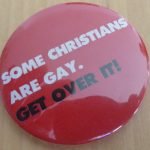
As I write this, it is just over 24 hours until a debate and a vote in the Scottish Episcopal Church’s General Synod that lots of people are going to be more interested in than most other General Synod happenings. It is the debate and the motions relating to a change to the Canons (ie the rulebook) of the church which could change who can get married in church. If the proposals are accepted tomorrow then same-sex couples would be able to get married in such churches that wanted to host such marriages and by such clergy who wished to be nominated by such
Rather tellingly, there is an item on the agenda just before this called “Strategic Direction” and this is scheduled to take half an hour. The various motions around marriage have two hours scheduled for them. There would be those who believe that the marriage motions say more about our strategic direction than will be said in the debate with that title.
It is probably worth a quick outline of what the synod will be doing.
The big motion is Motion 6 on the agenda. This motion is simply this:
That the amended text for Canon 31 be read for the second time.
One could be forgiven for thinking that this is rather a lot of fuss about a motion which is only about a dozen words long. However, what we are talking about has been talked about more than anything else that I remember whilst I’ve been on Synod – far more, for example, than the debate about whether to open nominations to Episcopate to clergy who happen to be women.
There are various ways to think about the matter at hand. One of the key things to remember is that outside just about every Scottish Episcopal Church there is a sign which is proudly displayed which says, “The Scottish Episcopal Church Welcomes You”. That lies right at the heart of what a lot of people will be thinking about when it comes to how to cast their vote tomorrow afternoon.
For those people who think this way, inviting same-sex couples to marry in church rather than being rejected by the church is simply a matter of being true to who we are. The sign suggests that everyone is welcome, so why should everyone be welcome on as equal a basis as possible?
 Of course, for some others the debate is primarily cast in different terms. For some people this is about what the bible says and here we have some people who read the bible with great devotion and who come to the conclusion that we can’t open marriage to same-sex couples and others who read the bible with great devotion and come to the conclusion that we can. I think that one of the consequences of the years of debate about this is that there has been an acceptance by most people that no-one owns the bible and no-one can defiantly declare that the bible says one or other thing about same-sex nuptials. Some will point to the various clobber verses (men lying with men being an abomination in Leviticus etc) and take their cue for there. Others see these as being admonitions of their time and see the fact that we teach that everyone is made in the image and likeness of God as being a defining argument.
Unless you are a complete newbie to this blog then you will not be surprised to hear that I’m very strongly in favour of change and believe that we have a divine mandate to make the change. It is because of my faith and because of my reading of the bible that I believe that change should come.
However, it is important to realise that the debate tomorrow is not being conducted in terms of a motion that will allow the Scottish Episcopal Church to vote either for or against the marriage of same-sex couples. I kind of wish that it was, but it resolutely isn’t.
The synod agreed a couple of years ago that the way that it wished to debate this was to see whether there was enough of a majority to remove the inherently heterosexual definition of marriage that had been placed in the Canons thirty odd years ago and replace it with a statement that acknowledged that Scottish Episcopalians believe different things about marriage and make proposals for allowing those who wish to marry same-sex couples to do so whilst protecting the conscience of those who do not wish to marry same-sex couples.
 This is fundamentally a vote about what kind of church we want to be.
If we want to be a church that tries to respect people’s consciences on this issue then the thing to do is to vote in favour of motion 6. If we want to be a church which insists that everyone has to abide by the rules of a minority position then the right thing to do is vote against motion 6.
That’s the thing, you see. We can be pretty sure that there will be a majority in each of the houses of synod in favour of moving forward. That means that there will be a majority in each house, including in the house of Bishops voting against the current policy of the bishops.
Should this vote fail, we’ll be in a strange place. No doubt some reflection will be needed but what is certain is that the bishops can’t defend a position that they’ve just voted against.
Should the vote succeed then it is incumbent on all of us to abide by what it says and work to protect the conscience of those who don’t want to solemnise the marriages of same-sex couples. Scots law means that there’s no way anyone can be forced to do so anyway, but there must be no disparaging those who don’t want to take part in any way at all.
Now what are the consequences of this?
I have absolutely no doubt that some churches will see a rise in their membership if we pass this proposed change. I am also, perhaps surprisingly, sure that the rise in numbers will affect those who are most opposed to change as much as those who are in favour of it. I think people looking to join churches tend to make their choices on the values of the local community. A clear sense of ethos helps people to make up their mind which church to join. And those churches which make a clear declaration one way or another on this question will see people who are looking for a church to join that suits them come inside and try them out. A clear policy helps people join. It won’t help those who say nothing.
One this is certain – if we pass this motion there will be clergy from England who will want to come to Scotland. Not particularly gay clergy, though I’ve no doubt that there might be a few of those. There will simply be a number of clergy who would rather be in a church that respects conscience on this issue and want to be part of a church like this.
We’ve struggled to recruit and retain enough full-time clergy from within Scotland in recent years and I have no doubt that this issue is very real. We’re a church in which refugees are welcome, in many different ways.
 “But what about the Anglican Communion?” I hear you cry.
Well, the Anglican Communion will be left unchanged by this vote one way or the other. The Anglican Communion exists of churches, some of which have made arrangements for same-sex couples to be married in church and some of which have not. The Americans and the Canadians got there before we did and they represent a larger slice of world Anglicanism than we do.
This is not only a big issue within Anglicanism for a very, very small proportion of Anglicans and a very, very large proportion of media producers and journalists.
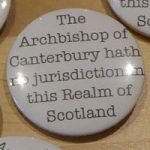
If the Scottish Episcopal Church does move forward and agree to this vote then there will be headlines (thankfully bumped down the page by the General Election on Friday) which proclaim loudly and confidently “Church Splits over Gays”. They will run the same tired story that they have been running for a very long time indeed and which has the advantage of being a great story and the disadvantage of not being actually true. The Anglican Communion will still exist on Friday morning, notwithstanding anything the Scottish Episcopal Church might do on Thursday afternoon. Oh, and the Archbishop of Canterbury will still have no jurisdiction in this realm of Scotland, notwithstanding the very few calls that will be made that will be very loudly reported, that he should Do Something About Scotland.
If the Scottish Episcopal Church moves forward and votes in favour of Motion 6 to amend Canon 31 tomorrow it will not be the first Anglican church in which the marriages of same-sex couples will be celebrated. Nor will it be the first church in the UK nor in Scotland to allow such marriages.
However, it will be a church which has something to offer others – a model for dealing with this issue that will allow the church to get on with being the church and bringing God’s kingdom in. The key to it all is to make the question of whether or not clergy can marry same-sex couples a matter of conscience.
Making this a matter of conscience is the mainstream Anglican answer to the troubles that have beset us for so many years. What happens in Scotland tomorrow could well inform other parts of the Anglican communion in the future. Far from being outside the boundaries of Anglicanism, what I hope we will do tomorrow is slap bang in the middle of classic Anglicanism which seeks not to build windows into other men’s souls and to allow people to make decisions to the best of their ability with their own consciences informed by scripture, reason and tradition.


Leave a Reply