• Herald Article: Pride and Frustration

    This article appeared in the Herald newspaper today.

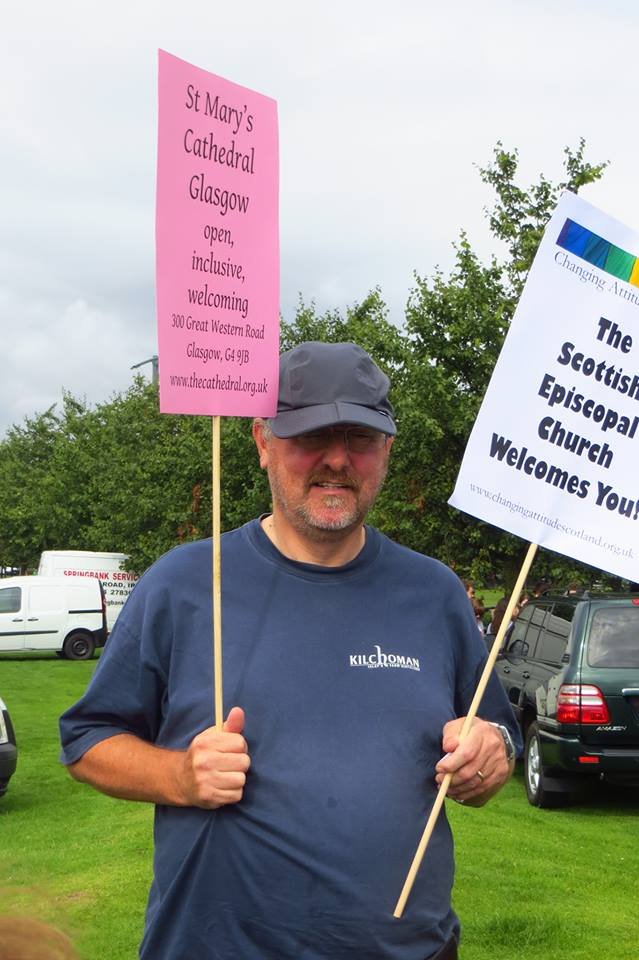
    I will be joining the Pride Glasgow march this weekend with mixed feelings – pride at how much has been achieved and concern at how much that needs to be done.

    I’ll be marching with hopes high that before Pride comes around next year, the Scottish Parliament will have passed new laws to allow same-sex couples to marry. Marriage law is one of the greatest barriers to equality for gay people in Scotland. Access to marriage isn’t the only big change gay people need. However, it remains such a big prize for gay campaigners because those marching through Glasgow all know how much social attitudes have softened since civil partnerships came in and all hope for even more once same-sex marriage is part of our common life.

    Changes to the law are hugely welcome, but still don’t represent equality – just ask any gay couple wanting to get married in church on the same basis as the straight couple sitting in the pew next to them. The overly cautious legislation that will be passed next year is a consequence of politicians still giving credence to religious voices of intolerance.

    Another issue that still needs a lot of work is access to education free from prejudice. It means education authorities and individual schools working on homophobic bullying. Part of the means of achieving that is to ensure that gay teachers in schools are able to be the role models that both gay and straight kids need. Those teachers need to know that they can live outside school time without fear of what might happen in school if their relationships are known about.

    Notwithstanding the high spirits that are a feature of every Pride march, I’ll be marching to express a good dose of anger and frustration. Every Pride is a celebration but every Pride is a protest too. This time the most immediate part of the world which is causing concern is Russia. President Putin’s sudden recent crackdown against lesbian, gay, bisexual and transgender (LGBT) people has been brutal, unexpected and frightening and greatly under-reported in the mainstream media in the UK. Glasgow’s Lord Provost’s letter to her opposite number in twinned Rostov-on-Don this week is welcome but far too weak. She has invited a delegation from Russia to “share more of our good experience of working to include LGBT citizens as a valued part of our city”. Meanwhile, Glasgow’s actual LGBT citizens might be rather puzzled, given the history and demise of the LGBT centre in the city, as to how that support is being expressed.

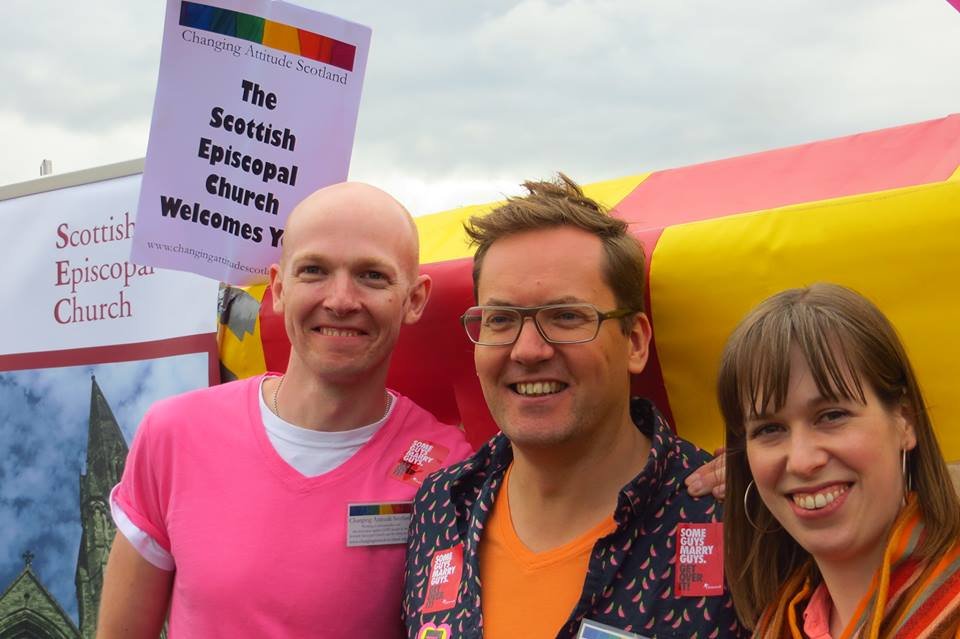
    This weekend at Pride, I’ll be marching, as usual, with thousands of others. This time, though, I’ll be marching with members of my own congregation. There will be several older members coming along to march in support of their gay and lesbian children and grandchildren. I’ll be marching alongside a couple whose civil partnership I’ll be blessing in a couple of weeks as they make their journey towards legal marriage. Alongside me there will be clergy from my own Scottish Episcopal Church and ecumenical friends in the crowd in clerical-collars answering all the usual questions that arise about how to find a church that is open, inclusive and welcoming to all. I’ll also be walking alongside a young straight couple who have told me they want to bring their toddler, a member of the Young Church at St Mary’s Cathedral. They want to be able to tell him he was at Pride the year of the legislation allowing gay and lesbian couples to marry. My earliest memory is of being woken by my parents to see the moon landings. These days, for some parents bringing up children, equalizing the law on marriage is the equivalent kind of life defining moment.

    And I’ll be marching with LGBT folk from my congregation too; people who work and struggle and pray for justice in the church and beyond. I march this year because I’m immensely proud of them all.

8 responses to “What is a wiki?”

  1. Chris Avatar

    I wanted to comment on your wiki post, but there is a gremlin preventing me – no box to write in, so no writing!
    [Comment now moved]

    This is what I’d have said:
    Great clip! A really clear description – can we get it incorporated into an educational package for the church? See http://scotedublogs.wikispaces.com/ for a good example of a wiki in use for over a year.

  2. Tim Avatar

    Yeah. Wikis have huge potential. When I was setting up my church website I sat down and thought:
    a) lots of pages
    b) easy editing
    c) uniform appearance across pages
    d) ability to allow some people to (not) edit certain pages

    End result was dokuwiki.

    The real trouble is still persuading people that they’re capable of contributing…

  3. kelvin Avatar
    kelvin

    Yes, it is odd getting people to post on a wiki is very much harder than getting them to post a comment on a blog. Something about a fear of being the authorial voice.

    I think that it is fear of being contradicted and corrected, which is a shame, as whenever I post to a wiki, I’m hoping that someone can improve on what I’ve written.

  4. Kimberly Avatar

    Fabulous video. Thanks for linking it.

    I wonder if this is one of the ways we should be trying to respond to the Draft Anglican Covenant.

  5. Stewart Avatar

    Wikis are great – look forward to seeing the St Mary’s Wiki developing (and adding to it!)

  6. jimmux Avatar

    Thanks for a very clear explanation! Now that I understand how they work, I’ll be raising a discussion on how we might be able to use them on the National Postgraduate Committee of the United Kingdom. They seem a very useful tool for sub-committees which do a lot of work by e-mail.

  7. Kennedy Avatar
    Kennedy

    I had a look at Tim’s church website and looked at the bit with the contributions from the congregation and saw this statement:

    ‘Please note: the content in this section is contributed by members of the congregation and should not be considered official statements by the Church.’

    I am a great fan of wikis for collaborative work, but I think this indicates one of the issues with ‘public’ wikis. These problems tend not occur when wikis are being used for internal usage or for a closed group. Open editing is very attractive but you need some form of management to ensure that defacement doesn’t occur or statements which might be damaging are published.

    Also, how do I tell the difference between ‘the Church’ and ‘ members of the congregation’? Are they not the same thing?

    Kennedy

  8. […] First posted quite a while ago here. […]

Leave a Reply

Your email address will not be published. Required fields are marked *

Previous Posts

  • Lonely hearts

    When I was involved in the design and format discussions for inspires magazine there were two things that I wanted to see which never made it onto the pages. The first was an agony column (Dear Father…) and the second was a lonely hearts column. I seem to remember some nervous tittering about what categories…

  • Let us haste to Kelvingrove

    To Kelvingrove Art Gallery and Museum yesterday along with thousands of other people each determined to make sure it was open once again.Of course, I had a sneak preview a month ago when I went there for a press-call with the Lord Provost. I could see then that the place was looking good.The highlights for…

  • Liberal Theology – Making your mind up

    Fr Gadgetvicar, amongst others, points towards Oliver Donovan’s learnèd diatribe against Liberalism on the Fulcrum website.Who would be a Liberal believer after reading all that? As polemic goes, it is all very clever, but it does rather miss the point by refraining from asking where and why people find faith and nourishment in liberal thinking.…