
A long time ago, back in the mists of nearly twenty years ago, I started to think that it was important that there was a liturgical celebration of creation. I thought long and hard about it and decided that instead of celebrating that modern invention the Harvest Festival, we would celebrate Creation instead, rolling a sense of thanksgiving into that but praying too for the wellbeing of the created world.
That is the way that it has been for quite a while now. We usually keep it on the first Sunday in October, around the time of the Feast of St Francis. We even sometimes throw in an animal blessing service that weekend, despite the fact that Francis himself wouldn’t allow members of his order to keep pets.
As time has gone on, the climate crisis has become more obvious to more people and the churches have been looking for ways to think about creation. Thus the idea of Creationtide – a month long celebration of creation has started to be marked in different ways in different churches.
Now, I’m a bit of a cynic when it comes to churches declaring new seasons. When the Church of England and those who follow its mysterious ways decided that Kingdom Season was a thing, I wasn’t impressed. Similarly, when in the Scottish Episcopal Church, the bishops started talking about a Season of Christian Living or a Season of Discipleship I was more inclined to be a disinterested observer than an active participant. The biggest problem, it always seemed to me, with new Seasons in the Calendar was that the worldwide church hadn’t made its mind up.
And yes, I know that there are those who will think that it is odd that I thought we could move ahead with the marriages of same-sex couples or the ordination of priests who happen to be women without the enthusiastic agreement of the whole church but that we couldn’t have a new season without universal agreement but there we are. We all have our red lines.
The surprising thing about the Season of Creation though it that it is attracting considerable interest across different denominations. Churches of the Orthodox tradition, Roman Catholicism and Anglicanism are all pondering what it means to keep a season or a feast meditating on creation. Significant elements of the world church do seem, this time, to be on their way to creating a new season or feast.
I’d be happy with a feast rather than a season, but that’s not the principle point that I’m interested in right now.
The thing that bothers me more than anything about this isn’t the intention to mark Creation in the calendar. It is how we mark it and what we say about it.
In particular, it troubles me considerably that the language that we use to mark the feast might be contributing to damaging ways of thinking about the created order in the face of the climate crisis. Our words form our thoughts and I’m not convinced that declaring a Season of Creation without thinking hard about what words we will use is really going to help.
I struggle most with the notion that it is a positive thing for human beings to be seen as Stewards of Creation. This idea inhabits many modern liturgies.
We currently have the following as a prayer offered for experimental use during the Season of Creation.
God give you grace to be faithful stewards of Creation,
rejoicing that you are made in God’s image,
and seeking justice for those who do not share in the earth’s bounty,
and the blessing of God almighty, the Father, the Son, and the Holy Spirit
be upon you, and remain with you always. Amen.
This is by no means unusual. The idea that we should become better stewards of creation comes at us in hymns and in prayers and, I suspect, in sermons preached around this time.
The trouble is, I think that human beings being stewards of creation is part of what has got us into the mess we are in globally.
It posits a God who has gone away, leaving creation to be managed (stewarded) by human beings.
Firstly I don’t think that God has gone away. And secondly, the trouble with a management model is that it imagines our role in creation to be primarily that of taming it, controlling it. It is as though we are here to turn creation into a park fit to live in.
That very idea of human beings being created themselves in order to manage the rest of creation seems to me to be deeply problematic. It puts human beings at the centre of the created order when all that we can see around us tells us that this is not so. Who stewarded the dinosaurs? Who stewards Alpha Centauri?
Placing ourselves at the centre of how we think about the world isn’t surprising. It may even, with a little side order of repentance be something that is forgivable. I think therefore I am very quickly turns into I think therefore I am right here at the centre of things and morphs into I think therefore I am in charge, all too easily.
Here in the Scottish Episcopal Church we’ve also been experimenting with the idea of being “priests to creation”.
…you formed humanity in your own image,
and entrusted us with the priesthood of your Creation.
It is a poetic image which comes from some serious theology but it is theology that predates the Climate Crisis.
And anyway, I have more of a sense that creation is a priest to me, mediating my relationship with God than that I am a priest to creation, somehow standing between the created order and divine love.
Creation is not ours to tame. The stewarding and priestly metaphors lead directly into a control mentality. And the outworkings of that are all too evident. At least one of the leaders of a political party in the UK came away from the Triumpian Banquet this week convinced that the best way forward was to extract all our oil and all our gas from the North Sea and use it. Note the possessive adjective used – our. In the face of the Climate Crisis, oil of ours might well take us closer to our destruction.
Deep inside, I think that most Christians know that Creation is not ours to tame.
There are currently many Christians coming on pilgrimage to Scotland. (When Jerusalem is closed, Iona is open). Many of them come via the church I serve either on their way to Iona or on their way back.
There is a sense when you talk to them that they have an instinctive urge to get to a place where human beings have not tamed the created order. As though God will speak to them there. I have many problems with that as I think that God is as present in the city as in the country and in the New World just as much as the Old. However, that sense of the goodness of creation being found in the wilderness is instinctive in the minds of many of the pilgrims that I meet.
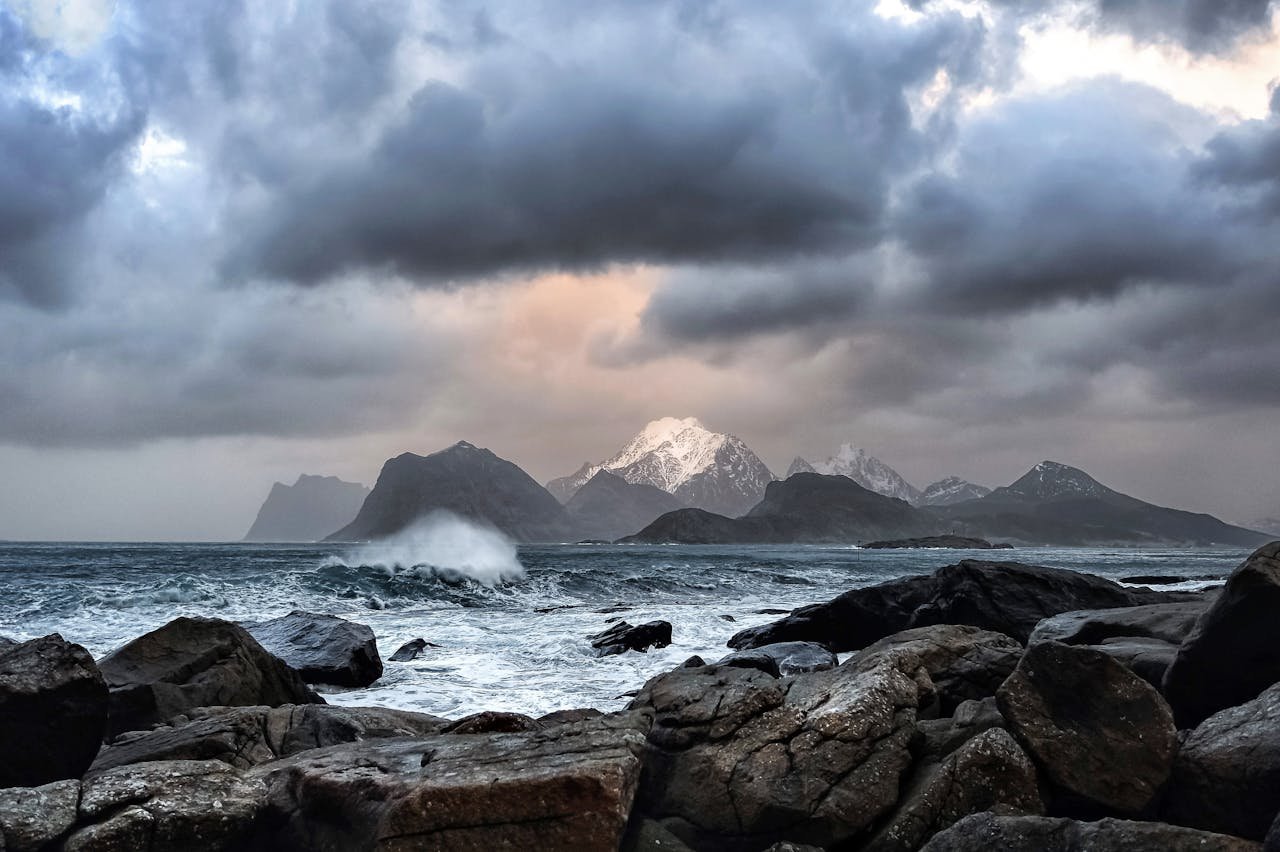
Kierkegaard asked himself whether he should choose the monastery or the deer park – piety or pleasure. Our choice lies in whether we choose to see God in the crashing waves, the raging of the volcano and the struggle between the predator and their prey or whether we can only imagine God at work in some place where the wilderness has been tamed.
We may have been created for a garden and we may end up destined for a garden of delights, but here, out of Eden, we neither live in parkland nor are called to tame, pillage or plunder the world around us.
That notion of stewardship is trouble for it doesn’t allow us to think of ourselves as inherently creatures within creation. It always calls us to manage, interfere and control. It brings with it mentalities of harm.
Jesus has harsh words to say about stewards. They are seldom, in his thought world intrinsically good.
In Scotland, we use other vocabulary for stewards. Both in terms of managing highland estates or in terms of how we manage shared buildings in cities, the steward is called the factor. Factors are often disliked and often mistrusted. They are simply there to manage and steward property on behalf of others who are either absent or unable able to exercise the level of control that is needed to cope with property.
Such an image is a terrible one for how we think about creation.
Somehow we need language that stops us from thinking that human beings are in charge.
Should we pray, “God give you the grace to be faithful factors of Creation?”
Everyone who has ever had a factor will think we should not.


Leave a Reply