
• 10 Thoughts on the Blessing of Asparagus

    It seems that Worcester Cathedral recently had a service for the blessing of asparagus.

    As this is a matter that might be seen to have consequences for the wider Anglican Communion, I thought I’d offer a few thoughts.

    1. There can be no justification for blessing asparagus as asparagus is never mentioned positively in the bible. There is simply no biblical case for blessing asparagus. None at all. If God had wanted asparagus to be blessed, then surely Jesus would have blessed asparagus at the last supper. (1 Corinthians 15:3)
    2. In fact, we know that asparagus should not be blessed because Genesis says so. “In the course of time Cain brought to the Lord an offering of the fruit of the ground, [asparagus] and Abel for his part brought of the firstlings of his flock, their fat portions. And the Lord had regard for Abel and his offering, but for Cain and his offering he had no regard.”  (Genesis 4: 3-4). You can’t pick and choose what the bible says. God’s holy word is clear and lasts forever.
    3. The blessing of asparagus promotes and validates the asparagus lifestyle. How will the church as a whole be able to maintain moral standards in one part of the world if asparagus is blessed in another? (Matthew 5:48)
    4. If we start blessing asparagus then it automatically follows that people will demand blessings for other kinds of vegetables. Although one might not personally object to the blessing of asparagus, one must take into account where this might lead. God will not be faithful to those who bless asparagus. (Amos 5:14)
    5. It would be entirely acceptable to offer a Thanksgiving for the Picking of Asparagus provided there are no rings used to hold the asparagus and any blessing must be upon the asparagus pickers and not the asparagus itself. (Ezekiel 44:30). The blessing of asparagus itself is sinful.
    6. The Archbishops have issued the following statement: “No asparagus is a problem, or an issue. Asparagus is made in the image of God. All of the asparagus, without exception, is loved and called in Christ. There are no ‘problems’, there is simply asparagus. (Romans 8:28) However, in order to maintain the unity of the church, it remains the case that asparagus blessings fall outside of that which is permitted for clergy of the Church of England following the last agreed Lambeth Conference statement on the matter. Clergy should continue to explore the maximum freedom possible when encountering asparagus whilst remaining within current guidelines. (Philippians 4:5)
    7. It remains the case that we all strive towards good disagreement (Philippians 4:2) about asparagus blessings whilst forbidding entirely the actual blessing of asparagus
    8. You cannot serve God and asparagus. The love of asparagus is the root of all evil. Do not associate with other eaters of asparagus. (1 Corinthians 15:33)
    9. There is an additional argument against the blessing of asparagus which stems from tradition. There should be no blessings of asparagus until the major churches who have the apostolic succession make an agreed statement on asparagus. This might be achieved in the form of an Ecumenical Asparagus Council of the Church however there remains some disagreement about who has the authority to call such a Council. (1 Corinthians 11:2)
    10. Always remember that God loves asparagus and that there have been some fine and courageous examples of self-giving asparagus throughout history. Many people are able to testify that some of their best friends have even eaten [unblessed] asparagus. So long as the church exercises gracious restraint in blessing asparagus, it will be possible for people to hear about the unique gifts that asparagus brings to the world. It may even be that God has a purpose for asparagus. (Exodus 9:16)
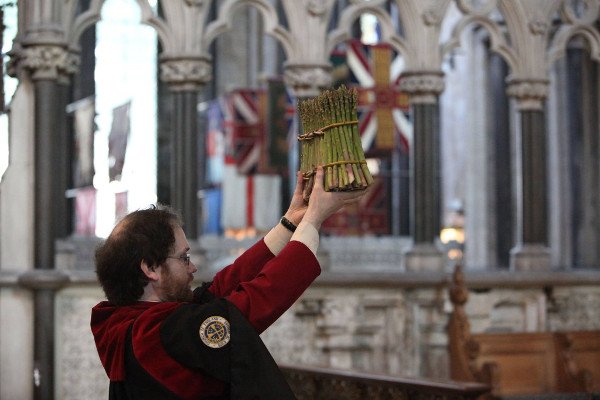
    the offering of the asparagus

    Save

    Save

    Save

    Save

5 responses to “The Primus’s Radio Interview about the Columba Declaration”

  1. Benj Avatar
    Benj

    I’m not sure Chillingworth gave a clear answer to Beattie’s question of what is wrong with the declaration beyond its discourtesy and rudeness. What does he mean when he says it is putting at risk the leadership of Christian faith communities at a critical moment in the ‘story of Scotland’?

    1. Kelvin Avatar

      I can’t speak for Bishop David but my view is that this debacle (the discourtesy and rudeness and the rest) has had a serious knock on effect on the ecumenical life of Scotland. To put it bluntly, trusts and friendships that have been built up over years have been very sorely tested. I think that this risks poisoning ecumenical life in Scotland for a generation and I’d say that does seriously compromise the way in which church communities and leaders will be able to speak to Scotland.

  2. Richard Avatar
    Richard

    It also speaks volumes for the contempt with which the Church of Englandshire holds for the Scottish Episcopal Church.

    You struggle to see the shining truth through his words because his words lack honesty and integrity. Not that anyone in Englandshire really cares- most probably haven’t even heard of the Scottish Episcopal Church and if they have, it will be as an unknown backwater entity. To sweep aside the Scottish Episcopal Church must have taken breathtaking arrogance.

  3. Iain McLarty Avatar
    Iain McLarty

    I can totally understand the SEC concern about the CofE barging into territory that isn’t theirs. However, there are perhaps a few things to bear in mind about why a relationship between the CofS and CofE is important where that isn’t really relevant.

    The first is that the CofS has a presence in England. Having spent a few years in a CofE congregation in Denmark I witnessed first hand how important the Porvoo agreement was in that context for enabling local worship and mission and similarly it could be hugely beneficial for the CofS congregations in England to be able to develop more formal relationships with their local Anglican partners.

    Secondly, there are a number of areas where the CofS and CofE are already working together and developing closer relationship such as on training and fresh expressions. These are areas where the relationships have developed naturally due to the two churches dealing with similar areas of concern and where there should again be no encroaching on SEC ground.

    Thirdly, the CofS and CofE work closely together in ecumenical circles through both CTBI and the WCC where both are significant players. It does seem strange that these two churches don’t recognise each other when their place in the wider ecumenical scene is so closely linked. That is not to deny the SEC’s ecumenical importance.

    Obviously no one is denying that the way this became public has been badly handled but I struggle to see what more can be down than the very sincere apologies and frank criticisms of what happened which have been offered. In terms of what real issues there are, I have yet to see anyone pin down specific parts of the Columba agreement which are concerning to the SEC, with all the comments either much more vague or else being fears about issues (such as interchangeability of ministry) which are not actually part of the agreement. In my experience (through ACTS, WCC etc.) the relationship between the CofS and SEC is one of the strongest ecumenical relationships and it would be very sad if this was jeopardised because of miscommunication rather than substance.

  4. Jeremy Bates Avatar
    Jeremy Bates

    It’s not just Scotland. A lot of people are struggling to see truth in the words of the Archbishop of Canterbury these days.

Leave a Reply

Your email address will not be published. Required fields are marked *

Previous Posts

  • All may, none must, some should.

    The title of this post indicates the teaching that many Anglicans/Episcopalians would give to people when asked what Anglican teaching about the sacrament of confession is. It isn’t defined anywhere I don’t think though the practise of the church and canon law back it up. Ash Wednesday seems to me to be an appropriate day…

  • The 10 Commandments of Using Images on Church Websites

    1 – Thou shalt remember that a burning candle is not the only image of all that is holy and all that is true. 2 – Thou shalt not put the vulnerable at risk by revealing their identity and location. 3 – Thou shalt remember when using pictures of people that the Lord thy God…

  • Pancakes a-coming

    My most successful blog post of all time is just about to get its annual boost. Always gets readers in the week running up to pancake day. Yes – it is the Provost’s Famous Pancake Recipe. Full instructions here: http://thurible.net/20040224/pancake_receipt/

  • From Criminality to Equality

    I think this is one of the moments in the debates on marriage where there’s more wisdom to be heard in one speech made well than in acres of newsprint trying to analyse the vote in the House of Commons last night. Here’s David Lammy giving it his all. Let me speak frankly. “Separate but…