
• The Four Horsemen of Growth – their names and their characteristics

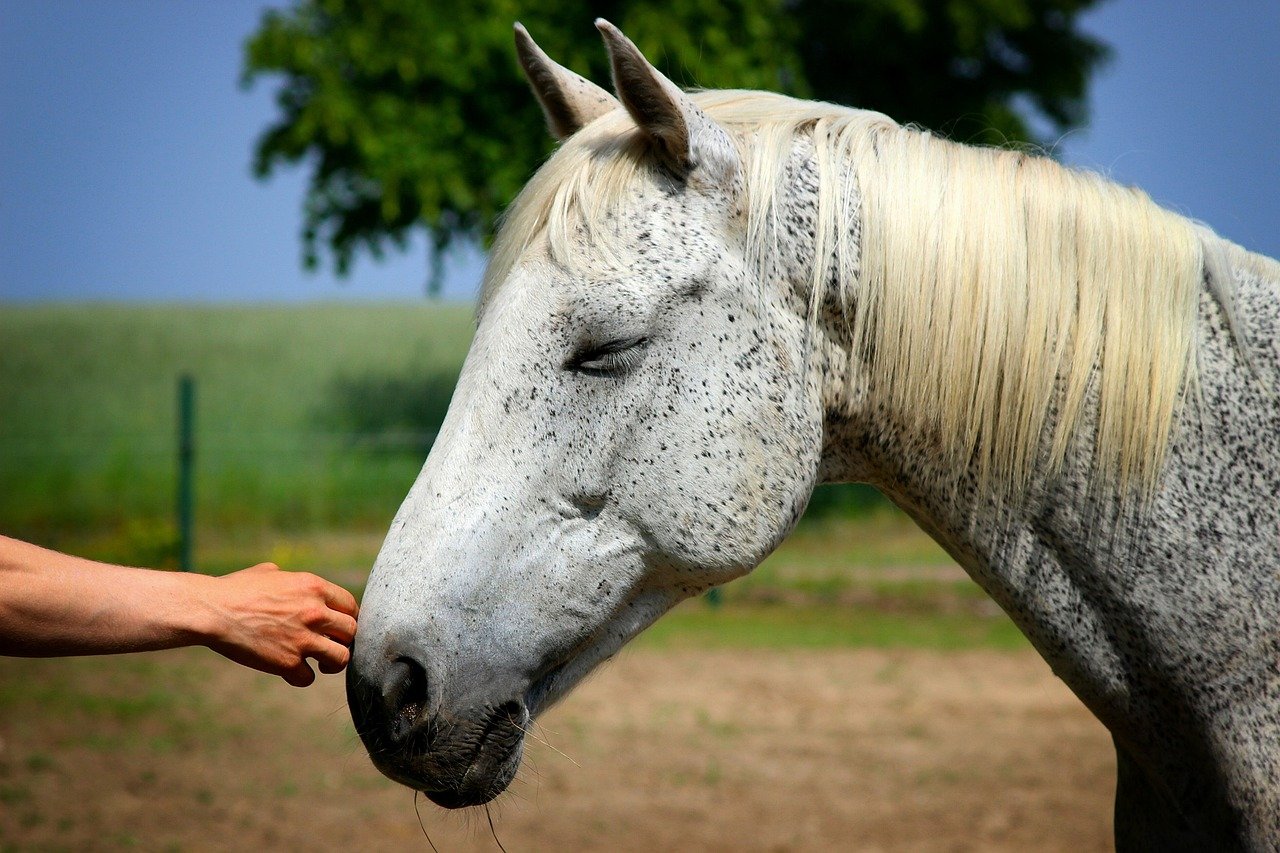
    Horse with a hand reaching out to it

    “And lo, after the Four Horsemen of the Apocalypse of Decline had ravaged the Church of God,  there appeared on the horizon the Four Horsemen of Growth. They stalked the land offering terrifying hope, and succour to the needy”.

    There are only a limited number of ways that a church can grow. These apply both to denominations as well as to local churches.

    Last week I was at the General Synod of the Scottish Episcopal Church where we were asked to engage with the idea of becoming a growing church.

    So far as I can see there are only four major ways in which this can happen. The Four Horsemen of Growth have names. They are Immigration, Conversion, Assimilation and Procreation.

    They do not always arrive individually or sequentially. They tend to arrive in one another’s company. They are social. They are amiable. They enjoy one another’s company.

    The pathway to becoming a growing church is not one that is simple. It is not a trivial task to bring this about either in a local church or in a denomination. And I think that it is important to get to know the Four Horsemen of Growth and to become their friends.

    One of the first things that I would say about this is that I am talking about visible, measurable numerical growth. Yes, I believe that spiritual growth matters. Yes, I believe that serving the needy matters. But sometimes we do need to talk about actual numerical growth and decline in the life of the church. I sit with groups regularly who have to decide where best to spend the resources at our disposal. As I do so, I bear in mind other forms of growth but I am aware that spiritual growth and other non-numerical forms of growth will be wiped out without thinking a little bit about how churches can or can’t grow numerically.

    When thinking about this in my context, the first thing that people need to do is to put on their Hats of Holy Humility and take a long hard look at church statistics. They offer little for our comfort. This is not to say that there isn’t hope. There is hope and it is important to be able to identify where it is hiding and bring it out into the open. The reality though for my denomination is that it has been declining at a fairly steady rate since the 1920s. The patterns of decline that I live amongst were already in place long before I was born and long before I joined the church. Shifting them is not a trivial task or a quick fix. The most likely thing is that those patterns are here to stay.

    But let us grab hold of a bit of hope before thinking about the names of the Four Horsemen of Growth.

    There is something that I think need to be said clearly and unambiguously. This is that church growth is possible both in individual local congregations and also in denominations. My own congregation is bigger than it was 20 years ago when I came here. Significantly so. I can easily name other churches that have grown over a timescale of decades. Ps and Gs Church in Edinburgh and St Mungo’s, Balerno are two within my own denomination that have stories to tell about how they grew significantly. Note that those of us who do have those stories to tell also have stories to tell about how difficult things have been since the pandemic and would probably all note that it is too soon to say what the effect of that major disruption has been. But there are signs of hope in individual congregations even since that time too.

    I rejoice that there is obvious renewal and measurable growth at my neighbouring Episcopal congregation – St Bride’s, Kelvinside. (Which isn’t in Kelvinside for reasons involving a traction engine). I know of other churches in this diocese that are talking about growth as something that they are experiencing too. St Oswald’s in Maybole is another one with a story to tell.  And there are others too.

    I can see growth in congregations of different sizes and which worship in different ways.

    When we think about denominations, I am aware of confidence in at least some parts of the Free Church of Scotland. I am aware of significant interest in Orthodoxy too though that remains relatively small when looking at the bigger picture of faith patterns in this country.

    I have a fairly fundamental belief that it might be important to listen to the voices of those who can speak confidently about their congregations growing.

    I also have a fairly fundamental belief that where there is weekly worship in which people encounter God in a way that is transformative for their lives and meet clergy whom they would like to spend an hour a week with then growth is very likely to happen.

    This is one of the reasons why I always want to talk about worship and clergy whenever we have conversations about growth and mission and all that stuff. Some people really don’t want to talk about those things. But I know that I do.

    But where revival comes, how does it come?

    Well that brings us to the Four Horsemen of Growth.

    Let us deal with them one by one and name their names.

    Firstly the Horseman of Immigration.

    One of the ways in which churches can sometimes grow is through the movement of people from one place to another. This is not a growth in the number of Christians in the world but it can look encouraging locally.

    There have been historic attempts to harness the horse belonging to this horseman but not always successfully. In this diocese there was a huge effort put into building churches for immigrants to the area from Northern Ireland. (Several were not that far from me, particular the church in Anderson built to serve the docks). Scottish Episcopalians spent quite a lot of money putting up churches to welcome these workers new to the area. However, these workers new to the area seem to have preferred the  rather more reformed charms of the plain local Kirk to the exotica of Scottish Episcopalianism. Most of these churches are now long gone. It was a bold attempt to do something and we should be bold in our doings. In the long term though, the demographic changes didn’t lead to lasting change.

    However, more recently, there have been hugely positive  changes to some local churches in which the Horseman of Immigration has played his part.

    In my own congregation, Anglicans from Africa – particularly from Nigeria have arrived and enriched our experience of church hugely.

    Even more recently, there have been arrivals from Iran who have become beloved members of our local fellowship.

    Our life is greatly for the better for those who have arrived from afar.

    Here in the West End of Glasgow it often feels as though we are our own Anglican Communion with people present from India, South Africa, Japan, Canada, Mexico, the USA and West Africa.

    The Horseman of Immigration is our friend in these parts.

    Some of those arriving in my own congregation from both near and afar though have not always been Christians, never mind Anglican Christians.

    Their arrival is due to the work of the Holy Spirit stirring up their hearts at the prompting of the Horseman of Conversion.

    Conversions still happen. I see them fairly regularly. This is a surprise to many people.

    A couple of years ago I started to notice an interesting change in the pattern of people being baptised here. For what I suspect was the first time in the modern history of this congregation, the number of people being baptised as adults (or at least as children who could answer for themselves) was greater than the number of children being baptised as babies. I suspect that it is possible that we’ll soon see a year when all the baptisms here are of those who can answer for themselves.

    People still choose Christianity as a way of life. People still choose Christ. People still find themselves, sometimes to their surprise, looking to the church to find spiritual nourishment and a way of living.

    I can easily point to people who have arrived from other countries who have wanted to explore the faith of the country in which they have found themselves. (The Horsemen of Immigration and Conversion are the best of friends). I can also point to people engaging through online encounters with the church finding that they have faith where previously they had none. It used to be that I knew more people who had tried yoga, Buddhist practice and various new age expressions of faith before pitching up here. I still encounter them but now I find myself meeting people who arrive having tried to find a thoughtful way of living through exploring philosophy but now find themselves looking for something more.

    The Horseman of Conversion is surprisingly active these days and has not grown nearly as old and weary as some would suspect.

    Trotting next into view is the big, bold Horseman of Assimilation. He’s the one about whom we most rarely speak.

    This aspect of Church growth (again not the building up of Christianity but of local expressions of the church) is all about people having been brought up or having encountered other expressions of Christian faith and finding themselves drawn towards a new one.

    Here at St Mary’s the Horseman of Assimilation has blessed us with many joys over the years.

    When we do our Rough Guide to St Mary’s afternoon, something we do every three or four months, we find that most people who come to it do not have much of  a background in Episcopalianism or Anglicanism. We also find that they are astonished to discover that people such as themselves make up the majority of the congregation. And when we tell them that this is also the experience of most of the clergy that they encounter including the Provost and the Vice Provost, they fall off their chairs in amazement. (Well, they teeter on the edge of their chairs in amazement but I exaggerate a little for comedic and holy effect – comedy and holiness being a pair of friends that we may explore more in another post).

    People come to us from other churches. They tend to be looking for a relatively small number of things. They are looking for worship that makes them feel more alive and which allows them to experience joy and which will provide a comfort for their sorrows when comfort is needed. A big signifier of that is the musical life of the congregation but it isn’t the only signifier by any means. They are also looking for an open, inclusive and welcoming ethos. Here and hereabouts this tends to be signified to them by an explicit acknowledgement of LGBT equality and of women and men having equality of opportunity and practice in the congregation and in our denomination. They are also looking for a faith that is neither represented by finger-wagging nor an anything-goes free for all. In some things we are in the middle of the road and in others we are very much on one side of the road and not the other. And people know what they are looking for. If they don’t find what they are looking for here, I’m very happy to help them find it elsewhere. There will be plenty more people in this world who are looking for what happens here.

    The Horseman of Assimilation is nudging people our way all the time. But we don’t talk about it much and in my denomination we are a little afraid of making it clear that those who have first encountered God in other churches are welcome to bide with us whenever they want to walk through the door.

    The Horseman of Assimilation may find his work easier to do now that ecumenism is changing from the expectations of the 1970s to something fresh and new. In the past it was harder to keep company with this horseman because lots of people thought that denominational boundaries and distinctions were going to melt inevitably away leaving some kind of new uniting church that would hold everyone together. This hasn’t happened and the expectation that it will is on our rear horizon not the one that is in front of us.

    And so finally we come to the Horseman of Procreation.

    We can grow the church by having children and bringing them up in such a way that they find faith compelling in later life. This is not a short term strategy for growth!

    Many of our expectations about growth depend on this Horseman. Many of these expectations will not be met in our lifetime.

    I found myself looking around at the General Synod and wondering how many of those present would be able to engage meaningfully with embracing this Horseman of Growth as the major driving force behind real growth in the congregations that they come from. I have a feeling that the Horseman of Procreation has his work cut out amongst us at this time. Contraception has made his work a little harder. Modern ways of being men, women and other people have made his life a little more complicated. But he’s still at work. Children are still born. Children are still baptised. And in churches which draw them into active participation in the liturgical life of the congregation, children are part of God’s bountiful growth.

    So there we are. Four Horsemen of Growth whom we should befriend, as they befriend and help one another. If I’ve missed any other means of growth out, I’d be interested to hear about it.

    And when we talk about becoming a growing church again, though some of them may seem to be in the distance, I’d like us to be talking about which of the Horsemen of Growth we see galloping  enthusiastically towards us.


20 responses to “Apologies have consequences too”

  1. Andrew Cain Avatar
    Andrew Cain

    You say so often and so eloquently what I feel.

    1. Father Ron Smith Avatar

      Food for serious thought, Father Kelvin. I don’t suppose there has been any objection raised by the Church of England Bishops about the liberalising ativity of our Norwegian partner’s in Christ. It is this continuing double-mindedness that exposes us Anglicans to the charge of structured hypocrisy. Keep up the good work you are doing on your web-site. Christ IS risen, Alleluia!

  2. Alan Wilson Avatar

    Thank you, Kelvin. It’s certainly a change of the mood music going on, but self-lacerating apologies are subject to the law of diminishing returns unless they indicate what we call “Metanoia” – change of mind, aka repentance. This means things real change. Without it, apologies breed cynicism, not hope. When, for example, a bishop tells us he is ashamed whenever he encounters homophobia in the church, curious minds want to ask him “when did you last encounter what you call homophobia in the church? What was it like? How was it separable from the ideology that validated it? And since it’s such a shameful thing, what are you going to do about it?”

    1. Kelvin Avatar

      The real disconnect for me is that Justin Welby is someone who clearly does know something about what reconcilliation is. He can’t have done that job in Coventry and not known and he can’t have named reconcilliation as one of the key strands of his time as Archbishop without knowing that metanoia is part of the deal if that is what you are chasing after.

      However, I can only come back again and again to the possibility that there are those who simply think that LGBT are indeed actually worth less than real people.

      1. June Butler Avatar
        June Butler

        Kelvin, after I read your words about the empty apologies by authorities in the church after which their behavior does not change, I could not help but think what you stated in your comment, that the leaders, with exceptions like Alan Wilson, believe LGTB folks are lesser. What else can we think? My advice would be to stop apologizing and be honest, which would be a step in the right direction, because at least the hypocrisy would end.

  3. adrian copping Avatar
    adrian copping

    Thank you for this. Something similar has been happening here in Wales in the past week or so where our Bishops have apologised AND issued some prayers which are authorised for use in connnection with ministry to LGBTI people. This is to be welcomed as a sign of a step in a positive direction but, at the same time, leaves a lot of questions and many disappointed.

  4. Bob Webster Avatar
    Bob Webster

    Saying it is a “constant source of deep sadness that people are persecuted for their sexuality” is not an apology. At best it is a request that someone should stop making him feel bad. That could be the people doing the persecuting, or it could be us who should just be quiet and preferably go away. An apology would be “I apologize for the hurt I have caused and as a consequence of recognizing my sin I will cease that behaviour and do everything I can to get others to stop as well.”

  5. Ruth Richards-Hill Avatar

    Kelvin, you are an expert at stating things so eloquently that makes everyone else in the Anglican communion squirm.

    I was not oblivious to the fact that as a lesbian woman I entered a family of churches with a huge diversity of attitudes towards my sexuality. It was only because of the grace and love of Jesus Christ that I felt safe to come into the church despite my “flaws” and receive baptism. Is my baptism any less valid because I am a lesbian?

    As a convert from Orthodox Judaism I suspect that I am sometimes more acutely aware than others at what should be in my mind a glaring hypocrisy. Rabbinical thought always looks for an alternatives to explain why a certain situation does or does not apply according to halachah (ecclesiastical law – much like the canons). But the balance either exists or it doesnt. Jesus speaks about divorce and makes it quite clear that its not really an option, while in rabbinical law, it certainly is an option. We are taught that he came to fulfil the law and yet we his church are part of a new covenant are we not? The church seems to have taken the easy way out and will marry people who have divorced, but will not marry gay couples. So if divorced people are part of the new covenant, why arent us gay folk?

    I could get into all the biblical quotation arguments and as someone that reads Classical Hebrew better than most Anglicans I know, I have no fear in taking a stand on my point. (My Greek needs a little more work however.) That said, I dont see a balanced biblical foundation for excluding some that are automatically excluded by literal translation of scripture, but not others, but rather an inherited bigotry and hypocrisy that continues to thrive simply to satisy the whims of member churches whose societies havent quite experienced the journey that ours has. While that doesnt invalidate their position, neither does it invalidate the position of our society and our spiritual progress should not be hindered to satisy the agenda of those religious leaders that appear to be pandering to the demands of those churches that have not walked the path of ours.

    I have arguments that cover more than simple translations and exegesis particularly surrounding what the rules were both before and after the death of Christ, but those are for another day. I know that I am a baptised Christian and Jesus loves me as much as any other, not because I am gay or straight, but because I am one of his, and therefore he wants me to thrive within his covenant rather than the stifling, unreasonable and hair splitting laws that came before – Ones that I personally know how incredibly impossible they are to live by, no matter what your sexuality, or colour, or intellectual ability. – I was there once.

    When our Bishops and leaders realise that Christ died exactly to make the Christian lives of the likes of me equally valid as straight people, then perhaps we’ll make a little more progress and not see these “apologies” as merely lip service. Its almost embarrassing to LGBT people for whom their faith is a core part of their lives. It certainly is for me.

  6. Ruth Harley Avatar

    Any child in my Sunday School group could tell you that repentance is not just “saying sorry” it is “saying sorry, being sorry, and changing”. Possibly ++Justin’s words make it as far as the first of these, but I’m not convinced they signify the second, and the third is nowhere in sight. Perhaps I should send my 5 year old theologians to Lambeth and/or Lusaka to explain! Or perhaps it’s just that those who are issuing these ‘apologies’ aren’t really thinking in terms of repentance, or seeing the need for it, at all.

  7. Mark Falby Avatar
    Mark Falby

    Apologies mean nothing if not backed by action.

  8. Junia Avatar
    Junia

    Well I did recently get brutally and spectacularly dumped by an American lesbian, so perhaps they just are naturally more wicked over there…

    In seriousness though, thank you for this wonderfully elegant post, Kelvin, summarising so much of what I have felt since ++Justin’s statement in January. I’m starting to get a little sick of being apologised to.

    1. Cynthia Avatar
      Cynthia

      Speaking as an American lesbian, I’m sure the Norwegian lesbians are much better people, and that we are “naturally more wicked…” 😉

      Kelvin expresses well the debacle of January. But interestingly, Justin just delivered an amazing sermon at ACC-16 that marks a major change of heart and theology if he’s sincere. We’ll see. A lot has happened since January.

      Have a look at the sermon, it’s in the Anglican Communion news. I’d hate to think that those are just empty words. Time will tell. But I want hope.

      1. Kelvin Avatar

        Could you point us towards the sermon, Cynthia. I’m not seeing anything at all that’s new in relation to the things I’ve written about above.

        1. Cynthia Katsarelis Avatar
          Cynthia Katsarelis

          Here it is: http://www.anglicannews.org/news/2016/04/new-calls-for-new-times-archbishop-welbys-presidential-address-to-acc-16.aspx

          To me this seems like a new direction, born of recent realities, and perhaps inspired by the Holy Spirit.

          Of course, my hopes could be typical, off-the-charts American optimism. We wicked American Episcopal lesbians just know that the Promised Land is at the end of the next rainbow.

          1. Kelvin Avatar

            Cynthia – this is what I was writing about above. It isn’t a new direction. It is what I’m complaining of. Talk of reconciliation whilst not engaging in it.

            There’s not a word in it about a new direction on the way the ABC relates to the Anglican Communion’s troubles. Not one.

          2. Cynthia Katsarelis Avatar
            Cynthia Katsarelis

            It seems like he was asking people to focus on the major characters, climate change and religious violence, and to work together within our diversity. That sounds like a new tack. Of course, it will be interesting to see if this translates into action. Will the discrimination against married clergy stop? Will the ABC stop pandering to the primates who didn’t show up to ACC-16?

            You might be right, you seem very prophetic to me. But I want you to be wrong this time. I want hope, and to work together on things that actually matter.

          3. Kelvin Avatar

            There are simply no signs of what you hope for, Cynthia. None.

          4. Cynthia Katsarelis Avatar
            Cynthia Katsarelis

            Perhaps not. But I was recently a TEC delegate to the UN Commission on the Status of Women where I met a posse of awesome women from the Anglican Communion Women delegation. We had great interaction and they affirmed a “walking together” statement they wrote in 2007. It says they are staying in communion, no matter what the guys do. We women in TEC are drafting a response, graciously receiving and affirming the statement. Against this, Justin doesn’t stand a chance and he might as well change his tune.

            PS. One of the awesome delegates was a Rachel from St. Andrew’s, Scotland.

  9. Richard Barnes Avatar
    Richard Barnes

    I was really hopeful about the Anglican Communion’s purpose from reading Rachael’s blogs from UN CSW last month. But not for long. ABC Welby’s Sermon reads like a random speech generator and says much the same as he’s been doing for months in global fora.
    It’s like a couple who talk about the garden and the difficult neighbours because they don’t want to talk about their sex life.
    Clever way to end ACC with everyone apparently united by talking about bigger issues.
    But to read ++Welby asking for nuanced theology, when he’s totally binary (Christian=happy, healthy, wealthy & wise) just made me laugh.

  10. Robin Avatar
    Robin

    > In the last week we’ve had the latest document on family life to come from the Vatican and it is very clear that there’s a change in tone from the current pope and it is hard not to welcome that.

    I don’t see any change of tone in the following, which is the beginning of paragraph 251 of “Amoris Laetitia”.

    > 251. In discussing the dignity and mission of
    the family, the Synod Fathers observed that, “as
    for proposals to place unions between homosexual
    persons on the same level as marriage,
    there are absolutely no grounds for considering
    homosexual unions to be in any way similar or
    even remotely analogous to God’s plan for marriage
    and family”.

    I’d call that a monumental snub, deliberately administered, or an equally deliberately administered drenching with cold water.

Leave a Reply

Your email address will not be published. Required fields are marked *

Previous Posts

  • Predictions 2026

    A rocky road to the enthronement of the next Archbishop of Canterbury. Further turmoil and scandal in the Anglican Episcopates of the United Kingdom. No progress for those hoping for Equal Marriage in the Church of England. More talk about the Quiet Revival which will continue not to show up in denominational statistics. Success for…

  • How did I do with last year’s predictions?

    Here’s a run down of how I did at last year’s predictions. Good results for Nigel Farage following the English local elections in May. Terrible results for Conservative Party. Exactly what happened. YES No progress towards the marriage of same-sex couples in the Church of England Exactly what happened. Indeed, I think things may have…

  • AI Ethics Questions for Preachers

    The first time that I encountered ChatGPT was three years ago when I was staying in a seminary in the USA. It was a place dedicated to teaching theology and particularly to training Episcopal clergy. The ChatGPT preview release was let loose on the world on 30 November 2022, so I must have discovered it…

  • We are not stewards

    A long time ago, back in the mists of nearly twenty years ago, I started to think that it was important that there was a liturgical celebration of creation. I thought long and hard about it and decided that instead of celebrating that modern invention the Harvest Festival, we would celebrate Creation instead, rolling a…