
• How twitter and facebook can save your blog rather than kill it

    One of the things that anyone keeping a blog must be aware of at the moment is that things are not the same as they were. At one time you simply had to put up something even vaguely interesting and people all over the world would read and comment. Blogging was like the Wild West – for the attention seeker there was gold to be mined her.

    I remember Mother Ruth saying to me before she started blogging, “All you have to do is ask ‘Who teaches cats yoga?’ and you’ve an audience”. If you could supply an entertaining picture of the cat in question, you were immediately set to dominate the blogging world.

    Nowadays, things are more difficult. One-liners like that have long since moved over to social media. Facebook and twitter are a more appropriate place for compact wit and if you are initially trying to reach friends and friends of friends then the social media platforms are the way to go. It is, to a large extent, what they are for.

    I made a prediction in one of my new year posts that the number of active bloggers would decrease but the influence of those who remain blogging would continue to increase. I still think that is true and I can see when I look through my blog feeds in a morning that there really are far fewer people making the effort. The fad has past but there are some who continue. Those who continue tend to be those who have learned to harness social media and quite often those who have  given up have simply moved to social media instead. Perhaps blogging gave them connections with people that they are happy to retain in a different way.

    For some people, starting a blog is about keeping up with those whom you know. For others it is like taking a few tentative steps into the limelight and tottering onto a very public stage. It is the latter type of bloggers who are persisting and they have even greater potential now to become global voices. The blogosphere is becoming free of some of the clutter. Now the cat pictures have moved to facebook and twitter, maybe posts with more substantial thinking matter more.

    It is very obvious that quick witty thoughts are going on social media whereas blogs are now being used for more substantial thinking. Successful blogs these days quite often seem to have fewer posts than they once would have done but the posts themselves are more substantial.

    Who would have guessed that blogging would have reinvigorated the essay as a writing style?

    Anyway, it seems to me that you can write as much as you like these days, if you are not engaging on social media then you are unlikely to see many readers.

    Here’s how to make social media work for you and keep the readers flowing in.

    • Post links to your latest blog entry on twitter and facebook (it isn’t rocket science, that’s where your readers are).
    • Note the plural! – Post a link in the morning to get the morning audience, one in the afternoon (for when America is waking up, if you are in Europe) and another one later in the day.
    • Don’t be ashamed to work for your audience.
    • Remember that email is a form of social media and offer people the chance to sign up to receive your posts. This way of reading blogs is growing.
    • Remember to provide an RSS feed for those who receive blogs that way. (For readers, I recommend Feedly now that Google Reader is long gone).
    • A witty link on twitter that gets retweeted is the gold you are chasing
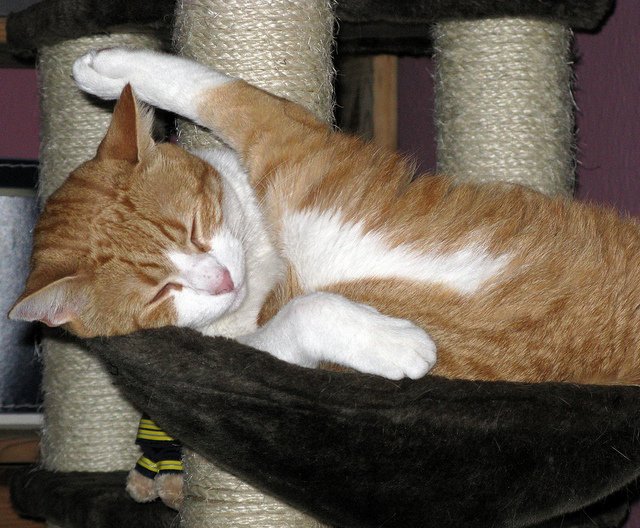
    • A photo of a cat doing yoga is never wrong.
     

    4951372883_299d70bc2b_z

    • Oh and one last thing. Why do you think it is important to ask questions on a blog?


    Picture credit – Mel on Flickr  Copyright (CC BY-ND 2.0)


5 responses to “The Primus’s Radio Interview about the Columba Declaration”

  1. Benj Avatar
    Benj

    I’m not sure Chillingworth gave a clear answer to Beattie’s question of what is wrong with the declaration beyond its discourtesy and rudeness. What does he mean when he says it is putting at risk the leadership of Christian faith communities at a critical moment in the ‘story of Scotland’?

    1. Kelvin Avatar

      I can’t speak for Bishop David but my view is that this debacle (the discourtesy and rudeness and the rest) has had a serious knock on effect on the ecumenical life of Scotland. To put it bluntly, trusts and friendships that have been built up over years have been very sorely tested. I think that this risks poisoning ecumenical life in Scotland for a generation and I’d say that does seriously compromise the way in which church communities and leaders will be able to speak to Scotland.

  2. Richard Avatar
    Richard

    It also speaks volumes for the contempt with which the Church of Englandshire holds for the Scottish Episcopal Church.

    You struggle to see the shining truth through his words because his words lack honesty and integrity. Not that anyone in Englandshire really cares- most probably haven’t even heard of the Scottish Episcopal Church and if they have, it will be as an unknown backwater entity. To sweep aside the Scottish Episcopal Church must have taken breathtaking arrogance.

  3. Iain McLarty Avatar
    Iain McLarty

    I can totally understand the SEC concern about the CofE barging into territory that isn’t theirs. However, there are perhaps a few things to bear in mind about why a relationship between the CofS and CofE is important where that isn’t really relevant.

    The first is that the CofS has a presence in England. Having spent a few years in a CofE congregation in Denmark I witnessed first hand how important the Porvoo agreement was in that context for enabling local worship and mission and similarly it could be hugely beneficial for the CofS congregations in England to be able to develop more formal relationships with their local Anglican partners.

    Secondly, there are a number of areas where the CofS and CofE are already working together and developing closer relationship such as on training and fresh expressions. These are areas where the relationships have developed naturally due to the two churches dealing with similar areas of concern and where there should again be no encroaching on SEC ground.

    Thirdly, the CofS and CofE work closely together in ecumenical circles through both CTBI and the WCC where both are significant players. It does seem strange that these two churches don’t recognise each other when their place in the wider ecumenical scene is so closely linked. That is not to deny the SEC’s ecumenical importance.

    Obviously no one is denying that the way this became public has been badly handled but I struggle to see what more can be down than the very sincere apologies and frank criticisms of what happened which have been offered. In terms of what real issues there are, I have yet to see anyone pin down specific parts of the Columba agreement which are concerning to the SEC, with all the comments either much more vague or else being fears about issues (such as interchangeability of ministry) which are not actually part of the agreement. In my experience (through ACTS, WCC etc.) the relationship between the CofS and SEC is one of the strongest ecumenical relationships and it would be very sad if this was jeopardised because of miscommunication rather than substance.

  4. Jeremy Bates Avatar
    Jeremy Bates

    It’s not just Scotland. A lot of people are struggling to see truth in the words of the Archbishop of Canterbury these days.

Leave a Reply

Your email address will not be published. Required fields are marked *

Previous Posts

  • Prayer Resources for Advent

    I’ve updated the Daily Prayer page with some new resources, specifically two bookies containing Evening Prayer for Advent. In the Scottish Episcopal version of Daily Prayer, we have prayers with the title Anticipation which we use for Advent. There are two files for evening prayer. One for the first three weeks of Advent and another…

  • Glorious Failure

    A very dusty hour and a half was spent on Friday trying to get audio from the church to be heard in the hall for the benefit of parents and those working with children who sometimes use the hall and meeting room during part of the 1030 service on a Sunday. I had come up…

  • St Silas Webcam

    Don’t miss the webcams looking at the St Silas building project. Our friends in our nearest Scottish Episcopal Church are undertaking a big programme to build hall space. It is an ambitious project which they have been working at for months. Its great to see the work actually taking shape. The webcams are a brilliant…

  • web outage

    I’m back online at home following an unexpected web outage. Something blew up. Back online now using a spare something from the cupboard.