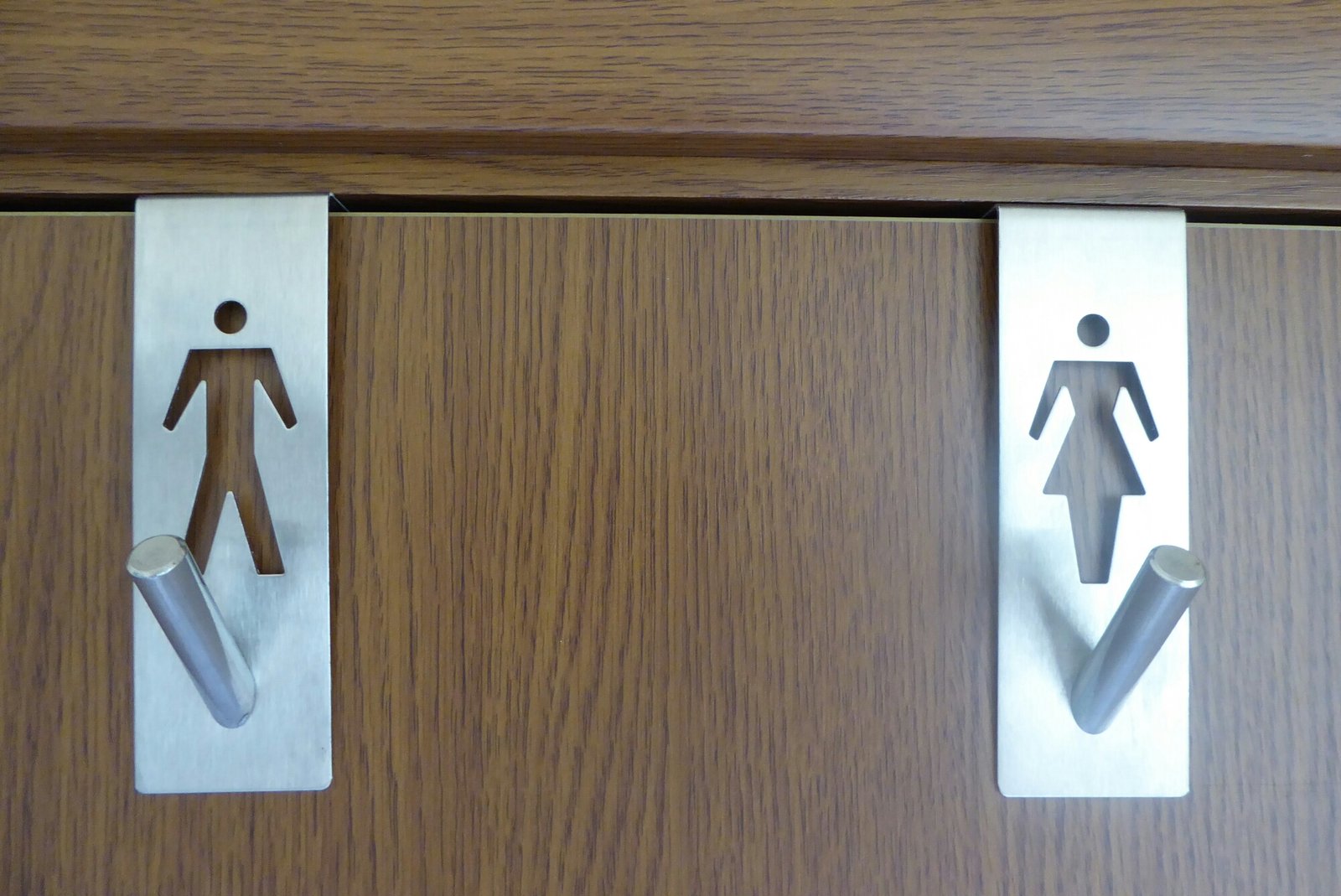
• Women Only Train Carriages and All Women Shortlists

    Here’s the thing – I’ve actually been on a women only train carriage.

    Just before being ordained I won a scholarship to travel to an orthodox country and went to Egypt to meet the Coptic Church. Actually, the truth is, I chose Egypt because I needed to come up with such a glittering application for the scholarship in order to win it and get some time away from my ordination training in Edinburgh. In the end, I discovered that the scholarship had only one applicant and that I could have won it and had a lovely time skipping around Greek islands instead of going to the Egyptian desert which was a much more tricky trip. However, the nature of tricky trips in countries like Egypt is that they are character forming and no mistake.

    Mistake is very much what I accomplished when trying to take a ride on Cairo’s metro system however. I ran down the platform to catch a train that was just about to leave and jumped on just in time. Just in time to see about 100 female eyes swivel in my direction as the doors closed behind me and I realised that I was on a women only carriage. (The last carriage on the train was designated for women and children).

    I’ll be honest and say that I’m quite enjoying Jeremy Corbyn’s ability to think outside the box. He said today he would be interested to hear what people (particularly women) thought about women only carriages as a way to safer travel.

    I’m against the idea myself. I can understand anyone wanting to be able to travel in greater safety than they may feel they can currently travel. However, I think that women only carriages are the thin end of a rather destructive wedge. I can’t see that it is good for society to take policy decisions that are predicated on the idea that men are beasts and can’t help themselves. Zero tolerance to violence must be the answer I think, not purdah. The argument for women only carriages is not far from an argument for women wearing burqas. And yes, I’m aware of feminist Muslims feeling empowered by shrouding themselves from the gaze of men but no, I’m not convinced that’s a balanced, proportional or even particularly effective way of challenging sexism and male violence.

    Interestingly, whilst the women only train carriages idea has caught the public imagination, I’ve become aware that a political party that I once was a candidate for is debating the introduction of women only shortlists again. And again, I’m not in favour. It seems to me that the idea that you can challenge the sexism that leads to women not being elected for things by introducing sexism against men is daft. However, it isn’t only daft, it is unlikely to succeed. And I think that because, unlike quite a lot of people in the Lib Dems these days, I’m a liberal. That means I believe in tackling root causes. The root cause of women not being elected is sexism within political parties and within society. I don’t buy the idea that sexism would disappear all of a sudden with a few more women leaders. I think that’s patronising in a number of directions. People who can’t sort out sexism in their own political party should not in my opinion be given a share in running the country. All women shortlists are not the answer to sexism. Challenging sexism is the answer to sexism. It isn’t easy but fights worth winning never are.

    Incidently, I’m opposed to gay only shortlists and black and ethnic minority only shortlists too even though I often argue in favour of greater representation and visibility in both areas than we have seen hitherto.

    From time to time people have a go at me about why we’ve not got any women bishops here in Scotland. They changed the rules in England and got women as bishops very quickly. We changed the rules ages ago and haven’t got one.

    My answer is always the same. Which of our current bishops do my interlocutors think should be bumped off and which women do they think would be automatically elected in their place? We’ve got no vacancies for any new bishops at the moment and haven’t had many elections in recent years. There’s only been one election in which there was a female candidate and the electors chose a different candidate anyway – my current bishop. I was there at that election and don’t believe gender played any strong part in the selection. Most of the electors were bewildered that the world’s press came and camped on the cathedral doorstep and befuddled when they were told that it was because one of the candidates was female. “Really? Really?” was the common cry as people came in to vote pushing past the press peoplemen.

    I’m often surprised that my church world is more diverse than other worlds I encounter. My congregation looks and feels a good deal more diverse than the people I encounter at the opera or theatre. It is also more diverse than the recent cohort of leaders in training that I met on Common Purpose.

7 responses to “The BA Cross Story”

  1. Tim Avatar

    Hmmm. You’re the first person I’ve seen to view it this way around.

    Different, and I agree about “witnessing to the passengers” (I don’t particularly want proselytising, least of all on a plane) but I’m not sure I agree with your conclusion.
    A cross need not be particularly outlandish; many people wear them, some of whom don’t even regard themselves as christian (heirloom, etc), and who’s going to ask their motives before declaring it still a religious symbol?

    It’s unfortunate that this has come about with someone who sees the cross as her witness, but if this stands, companies will be allowed to have discriminatory uniform policies, and it doesn’t matter who the parties are, it’s just discrimination whichever way I cut it; all the more so when it leads to *a society* in which one hides from others rather than embracing them.

  2. kelvin Avatar
    kelvin

    As I understand it, the BA uniform policy has applied to all jewelry hanging around someone’s neck. It would not be fun to get one’s Cross, Crescent, Star of David or string of pearls caught in the check-in machinery.

    It is interesting that the principle sign of Christian membership in most parts of the various churches is essentially ephemeral – baptism by its very nature is invisible in material form once performed.

    When I was in Egypt, I was quite impressed with the tattoos that many Christians had done in order to identify themselves to one another. At more than one Christian gathering I went to, the locals were vetted at the door by showing their tattoos – the presumption being that no member of any group that the Church people were frightened of would ever have a cross tattooed on their skin.

  3.  Avatar
    Anonymous

    Yes, you’re quite right. A uniform is a uniform. If one absolutely wanted to wear something other than a uniform at work, then joining the Army mightn’t be the best place for me.

    Similarly, if joining the BA ranks implies wearing a uniform, and I insist on wearing some additional contraption, then , patently, possibly a position without a uniform would be better. Possibly as a clergy person?! That is if I were a compulsive proselytiser.

    Anent compulsive proselytising. There is this church building on the facade of which a sign threatens one and all with everlasting hell fire. No doubt those of that congregation consider it to be their loving duty so to do. However, to my mind, it is a most egregious assault on the urban landscape … and myself, every time I have cause to walk by.

    Yes. Yours is a most refreshing viewpoint. All the more so as it comes from within the ranks of the clergy. Possibly a reason why I’ve kept on coming back to this your blog…

    All the very best,

    Clyde Lad

  4. Alex Avatar
    Alex

    The real problem is that BA’s policy is inconsistent: turbans are allowed, hijabs are allowed and apparently Hindu bangles are allowed.

    For a uniform policy to be reasonable I think it either has to allow all, or allow none. I’m not fussed which they choose, but consistency is important.

  5. Ali Avatar
    Ali

    I think the difference between turbans, hajibs and bangles are the difference between a requirement of following a particular faith (or, rather, a conservative branch of a particular faith as with the hajob and the bangle), or a desire because of one’s faith. A cross is worn out of choice, rather than a requirement of orthodoxy.

    I talked a little about this in the sermon this morning – on a day where the church celebrates the feast of Christ the King, surely a greater sign of being a member of that Kingdom, or a follower of Christ, is the way in which we treat this planet given into our care and all who inhabit it, rather than becoming sidetracked in petty bickering about which poppy is the most Christian or the “right” to wear a cross at work regardless of uniform policy.

  6. Alex Avatar
    Alex

    “A cross is worn out of choice, rather than a requirement of orthodoxy.”

    I’m not sure that this is a difference that removes the inconsistency from BA’s uniform policy. Whether or not the turban, hijab or bangle is perceived as a ‘requirement’ of membership of a faith, it is still my choice whether or not to observe it.

    This is not to say that I think Ms Ewelda has taken the best course of action. My personal view is that she has made a mistake – instead of a greater witness, she has contributed to the perception of Christians as petty and whinging. I may have my differences with Paul(!) but I think his “Greek to the Greek, Jew to the Jew” approach has a lot to be said for it.

    But our disagreement with her position on how crucial to the Christian life is the wearing of the cross doesn’t change the fact that the policy applied treats her differently from members of other faiths.

  7. Mysterious stranger Avatar
    Mysterious stranger

    I am with you on this one.I do not like all the badges,ribbons,bands etc with uniforms.I also felt extremely uncomfortable with yesterdays interview.She has been offered the right to wear the cross on her lapel not round her neck.She can wear it inside her uniform and go with the lapel badge.

    Her fundamentalism grated.Sorry.

Leave a Reply

Your email address will not be published. Required fields are marked *

Previous Posts

  • End of Synod Coverage

    The Primus thanks members of synod for this meeting, retiring conveners and ecumenical friends who have come to the synod. Thanks chairs and the Indaba design group. Thanks his assessor, Paul Romano. Kennedy and David Fraser for IT, me for twittering, Cursillo for doing the tea and coffee and the Church Officers here at Palmerston…

  • Final Session – Budgets and Quota

    There will be a phased reintroduction of Building Grants. 3% increase in quota is proposed and expectation is that deficit will be eliminated.

  • Administration Board

    Michael Lugton: previously it has been reported that the board should consider Banking on Bloodshed. A member of the Board has been to a conference on Banking on Justice. The Board has in March this year considered this matter. The fundamental question is the extent that the church wishes to look at relationship between finance…

  • Diaconate Working Party

    John Armes: deacons are part of the three historic orders. In our system, a deacon remains a deacon but most become priests. Our system of recruitment is not disposed to discerning the vocations of those who feel called to a vocational diaconate. Working group has come to the view that this matters. SEC is part…