
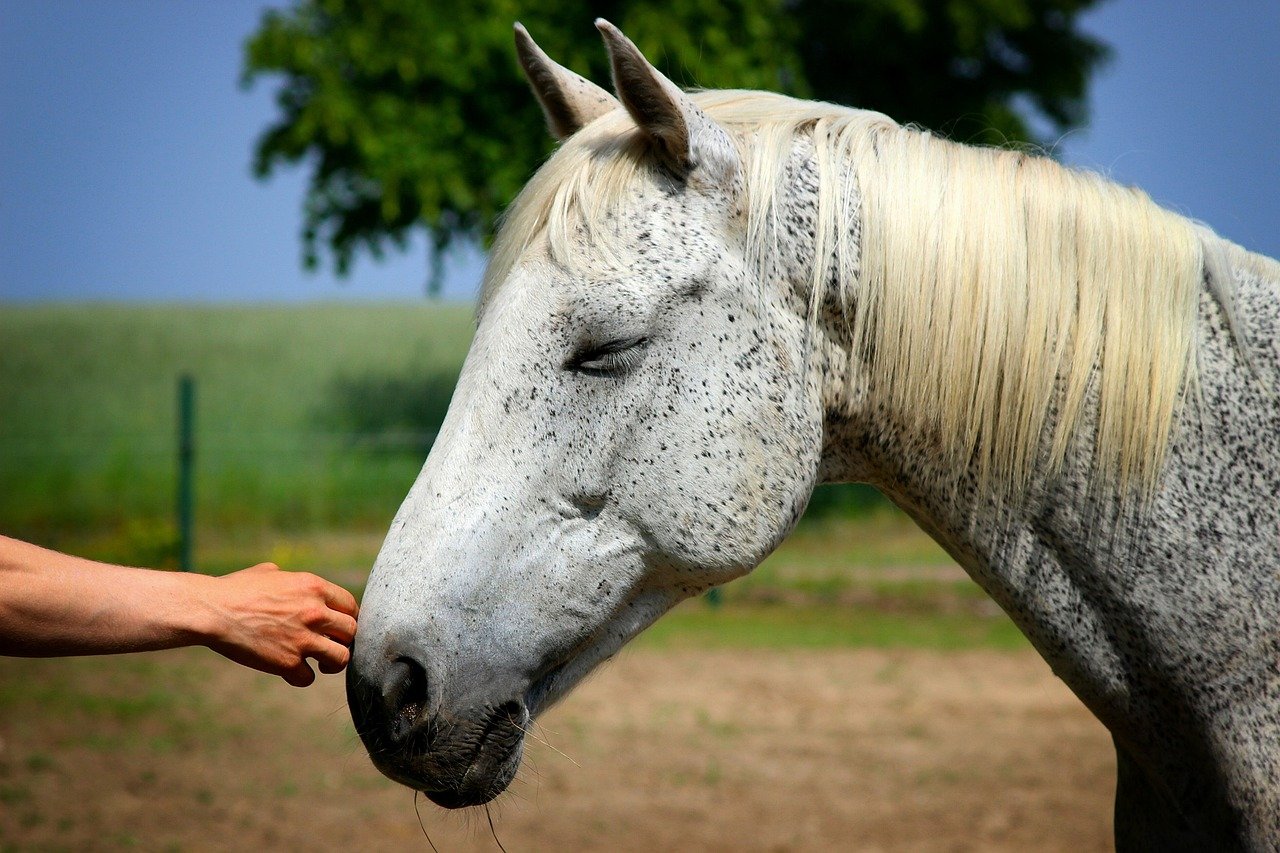
“And lo, after the Four Horsemen of the Apocalypse of Decline had ravaged the Church of God, there appeared on the horizon the Four Horsemen of Growth. They stalked the land offering terrifying hope, and succour to the needy”.
There are only a limited number of ways that a church can grow. These apply both to denominations as well as to local churches.
Last week I was at the General Synod of the Scottish Episcopal Church where we were asked to engage with the idea of becoming a growing church.
So far as I can see there are only four major ways in which this can happen. The Four Horsemen of Growth have names. They are Immigration, Conversion, Assimilation and Procreation.
They do not always arrive individually or sequentially. They tend to arrive in one another’s company. They are social. They are amiable. They enjoy one another’s company.
The pathway to becoming a growing church is not one that is simple. It is not a trivial task to bring this about either in a local church or in a denomination. And I think that it is important to get to know the Four Horsemen of Growth and to become their friends.
One of the first things that I would say about this is that I am talking about visible, measurable numerical growth. Yes, I believe that spiritual growth matters. Yes, I believe that serving the needy matters. But sometimes we do need to talk about actual numerical growth and decline in the life of the church. I sit with groups regularly who have to decide where best to spend the resources at our disposal. As I do so, I bear in mind other forms of growth but I am aware that spiritual growth and other non-numerical forms of growth will be wiped out without thinking a little bit about how churches can or can’t grow numerically.
When thinking about this in my context, the first thing that people need to do is to put on their Hats of Holy Humility and take a long hard look at church statistics. They offer little for our comfort. This is not to say that there isn’t hope. There is hope and it is important to be able to identify where it is hiding and bring it out into the open. The reality though for my denomination is that it has been declining at a fairly steady rate since the 1920s. The patterns of decline that I live amongst were already in place long before I was born and long before I joined the church. Shifting them is not a trivial task or a quick fix. The most likely thing is that those patterns are here to stay.
But let us grab hold of a bit of hope before thinking about the names of the Four Horsemen of Growth.
There is something that I think need to be said clearly and unambiguously. This is that church growth is possible both in individual local congregations and also in denominations. My own congregation is bigger than it was 20 years ago when I came here. Significantly so. I can easily name other churches that have grown over a timescale of decades. Ps and Gs Church in Edinburgh and St Mungo’s, Balerno are two within my own denomination that have stories to tell about how they grew significantly. Note that those of us who do have those stories to tell also have stories to tell about how difficult things have been since the pandemic and would probably all note that it is too soon to say what the effect of that major disruption has been. But there are signs of hope in individual congregations even since that time too.
I rejoice that there is obvious renewal and measurable growth at my neighbouring Episcopal congregation – St Bride’s, Kelvinside. (Which isn’t in Kelvinside for reasons involving a traction engine). I know of other churches in this diocese that are talking about growth as something that they are experiencing too. St Oswald’s in Maybole is another one with a story to tell. And there are others too.
I can see growth in congregations of different sizes and which worship in different ways.
When we think about denominations, I am aware of confidence in at least some parts of the Free Church of Scotland. I am aware of significant interest in Orthodoxy too though that remains relatively small when looking at the bigger picture of faith patterns in this country.
I have a fairly fundamental belief that it might be important to listen to the voices of those who can speak confidently about their congregations growing.
I also have a fairly fundamental belief that where there is weekly worship in which people encounter God in a way that is transformative for their lives and meet clergy whom they would like to spend an hour a week with then growth is very likely to happen.
This is one of the reasons why I always want to talk about worship and clergy whenever we have conversations about growth and mission and all that stuff. Some people really don’t want to talk about those things. But I know that I do.
But where revival comes, how does it come?
Well that brings us to the Four Horsemen of Growth.
Let us deal with them one by one and name their names.
Firstly the Horseman of Immigration.
One of the ways in which churches can sometimes grow is through the movement of people from one place to another. This is not a growth in the number of Christians in the world but it can look encouraging locally.
There have been historic attempts to harness the horse belonging to this horseman but not always successfully. In this diocese there was a huge effort put into building churches for immigrants to the area from Northern Ireland. (Several were not that far from me, particular the church in Anderson built to serve the docks). Scottish Episcopalians spent quite a lot of money putting up churches to welcome these workers new to the area. However, these workers new to the area seem to have preferred the rather more reformed charms of the plain local Kirk to the exotica of Scottish Episcopalianism. Most of these churches are now long gone. It was a bold attempt to do something and we should be bold in our doings. In the long term though, the demographic changes didn’t lead to lasting change.
However, more recently, there have been hugely positive changes to some local churches in which the Horseman of Immigration has played his part.
In my own congregation, Anglicans from Africa – particularly from Nigeria have arrived and enriched our experience of church hugely.
Even more recently, there have been arrivals from Iran who have become beloved members of our local fellowship.
Our life is greatly for the better for those who have arrived from afar.
Here in the West End of Glasgow it often feels as though we are our own Anglican Communion with people present from India, South Africa, Japan, Canada, Mexico, the USA and West Africa.
The Horseman of Immigration is our friend in these parts.
Some of those arriving in my own congregation from both near and afar though have not always been Christians, never mind Anglican Christians.
Their arrival is due to the work of the Holy Spirit stirring up their hearts at the prompting of the Horseman of Conversion.
Conversions still happen. I see them fairly regularly. This is a surprise to many people.
A couple of years ago I started to notice an interesting change in the pattern of people being baptised here. For what I suspect was the first time in the modern history of this congregation, the number of people being baptised as adults (or at least as children who could answer for themselves) was greater than the number of children being baptised as babies. I suspect that it is possible that we’ll soon see a year when all the baptisms here are of those who can answer for themselves.
People still choose Christianity as a way of life. People still choose Christ. People still find themselves, sometimes to their surprise, looking to the church to find spiritual nourishment and a way of living.
I can easily point to people who have arrived from other countries who have wanted to explore the faith of the country in which they have found themselves. (The Horsemen of Immigration and Conversion are the best of friends). I can also point to people engaging through online encounters with the church finding that they have faith where previously they had none. It used to be that I knew more people who had tried yoga, Buddhist practice and various new age expressions of faith before pitching up here. I still encounter them but now I find myself meeting people who arrive having tried to find a thoughtful way of living through exploring philosophy but now find themselves looking for something more.
The Horseman of Conversion is surprisingly active these days and has not grown nearly as old and weary as some would suspect.
Trotting next into view is the big, bold Horseman of Assimilation. He’s the one about whom we most rarely speak.
This aspect of Church growth (again not the building up of Christianity but of local expressions of the church) is all about people having been brought up or having encountered other expressions of Christian faith and finding themselves drawn towards a new one.
Here at St Mary’s the Horseman of Assimilation has blessed us with many joys over the years.
When we do our Rough Guide to St Mary’s afternoon, something we do every three or four months, we find that most people who come to it do not have much of a background in Episcopalianism or Anglicanism. We also find that they are astonished to discover that people such as themselves make up the majority of the congregation. And when we tell them that this is also the experience of most of the clergy that they encounter including the Provost and the Vice Provost, they fall off their chairs in amazement. (Well, they teeter on the edge of their chairs in amazement but I exaggerate a little for comedic and holy effect – comedy and holiness being a pair of friends that we may explore more in another post).
People come to us from other churches. They tend to be looking for a relatively small number of things. They are looking for worship that makes them feel more alive and which allows them to experience joy and which will provide a comfort for their sorrows when comfort is needed. A big signifier of that is the musical life of the congregation but it isn’t the only signifier by any means. They are also looking for an open, inclusive and welcoming ethos. Here and hereabouts this tends to be signified to them by an explicit acknowledgement of LGBT equality and of women and men having equality of opportunity and practice in the congregation and in our denomination. They are also looking for a faith that is neither represented by finger-wagging nor an anything-goes free for all. In some things we are in the middle of the road and in others we are very much on one side of the road and not the other. And people know what they are looking for. If they don’t find what they are looking for here, I’m very happy to help them find it elsewhere. There will be plenty more people in this world who are looking for what happens here.
The Horseman of Assimilation is nudging people our way all the time. But we don’t talk about it much and in my denomination we are a little afraid of making it clear that those who have first encountered God in other churches are welcome to bide with us whenever they want to walk through the door.
The Horseman of Assimilation may find his work easier to do now that ecumenism is changing from the expectations of the 1970s to something fresh and new. In the past it was harder to keep company with this horseman because lots of people thought that denominational boundaries and distinctions were going to melt inevitably away leaving some kind of new uniting church that would hold everyone together. This hasn’t happened and the expectation that it will is on our rear horizon not the one that is in front of us.
And so finally we come to the Horseman of Procreation.
We can grow the church by having children and bringing them up in such a way that they find faith compelling in later life. This is not a short term strategy for growth!
Many of our expectations about growth depend on this Horseman. Many of these expectations will not be met in our lifetime.
I found myself looking around at the General Synod and wondering how many of those present would be able to engage meaningfully with embracing this Horseman of Growth as the major driving force behind real growth in the congregations that they come from. I have a feeling that the Horseman of Procreation has his work cut out amongst us at this time. Contraception has made his work a little harder. Modern ways of being men, women and other people have made his life a little more complicated. But he’s still at work. Children are still born. Children are still baptised. And in churches which draw them into active participation in the liturgical life of the congregation, children are part of God’s bountiful growth.
So there we are. Four Horsemen of Growth whom we should befriend, as they befriend and help one another. If I’ve missed any other means of growth out, I’d be interested to hear about it.
And when we talk about becoming a growing church again, though some of them may seem to be in the distance, I’d like us to be talking about which of the Horsemen of Growth we see galloping enthusiastically towards us.


Leave a Reply