
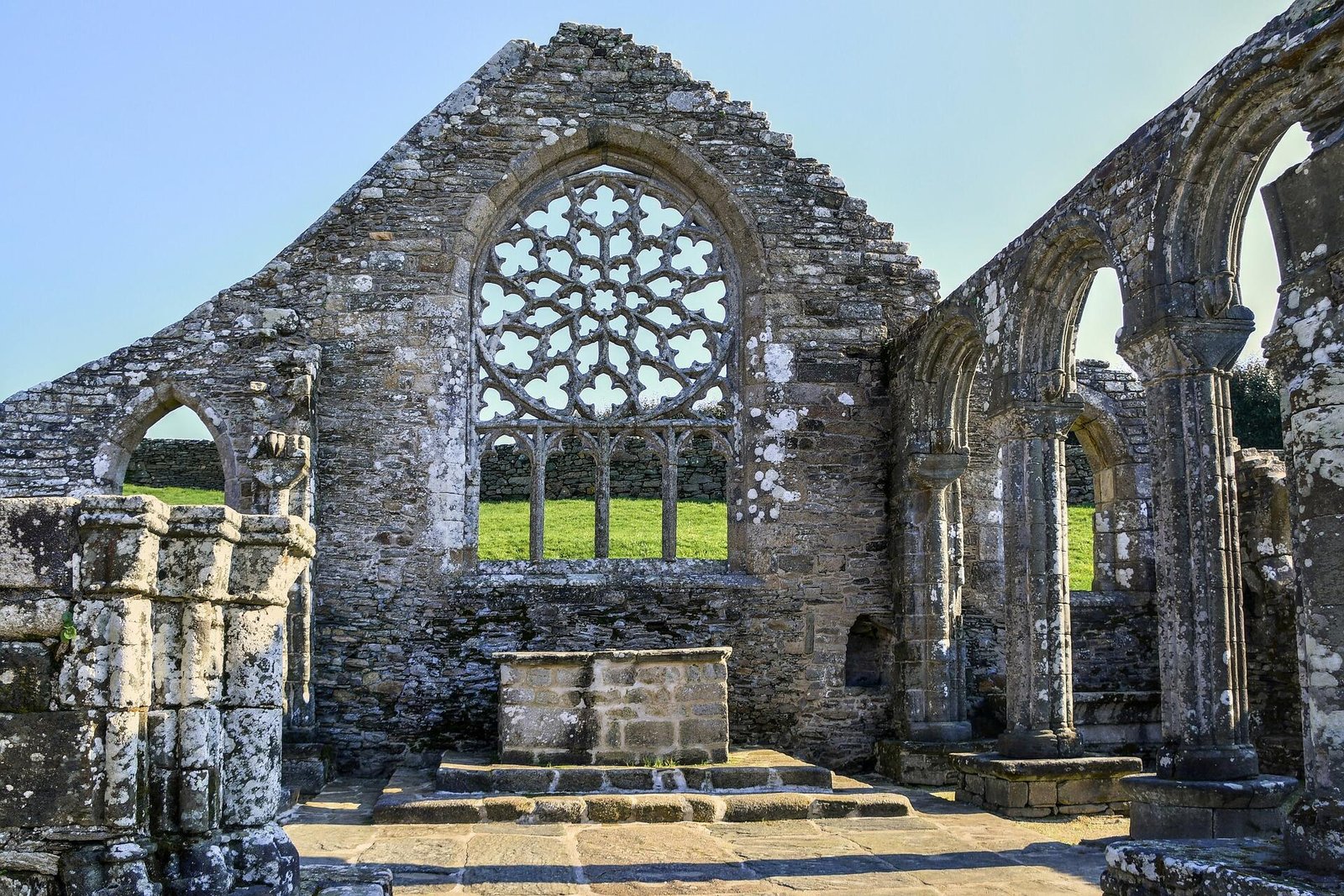
• What’s really happening to the churches in Scotland

    Ruined Church

    Over the last few weeks there’s been a number of articles that have appeared in the press highlighting decline in the religious life of Scotland and claiming in particular that it indicates a sudden decline in interest in organised religion in Scotland.

    On the face of it, this seems difficult to argue with. Fewer people are going to church, church buildings are being closed and sold off up and down the land and therefore organised religion must be in decline. However, I think that the picture is complex. In particular, within the three largest church denominations there is clear and obvious decline in all of them but the reasons for, and the character of that decline, seem to me to be quite different across those churches.

    Let’s take them one by one.

    Firstly, my own denomination, the Scottish Episcopal Church. There is no doubt that the numbers of Episcopalians are declining though they have been doing so since about the 1920s. What is the nature of the decline here at this time though? Certainly, we’ve had problems within our senior leadership in recent years and that isn’t limited to one high profile case in one diocese. For several different reasons, some of our dioceses have had patterns of stable leadership disrupted in recent times. Now, whilst it is not my belief that bishops are solely responsible for either decline or growth in their dioceses, for a church which names the Episcopate as its defining characteristic in its name, this must matter.

    It is very difficult to understand how many members of the Scottish Episcopal Church there actually are. The number of communicants on a Sunday has been steadily declining. The number of non-communicants who have some kind of adherence to the church has dropped off incredibly fast. However, the number of people in the Scottish census who claim to be Anglican or Episcopalian or who claim to belong to church with which we are in full communion is very significantly higher. As with all the church denominations that I’m discussing in this article, there are churches which buck the trend and are growing and attracting new worshippers. We find it very difficult to celebrate such successes and very difficult to learn from them. Not paying attention to what is working seems to me to be characteristic of decline. Many people I know in the Scottish Episcopal Church are quite upbeat though, notwithstanding the terrible statistics that we report each year. (And we’ll ignore the cries of those who want to count the dog training classes in the church hall as reasons to pay no attention to the decline of people actually turning up to worship God). The upbeat mood is partly because I think that quite a lot of clergy really do believe that the SEC has what many religious people in Scotland need right now. Liturgical worship and ethical values that align with the population are a great starting point. However, the quality of our worship is something we find difficult to talk about and our inability to communicate to local populations that something that will give them life in all its fullness is right on their doorstep is part of our story. I don’t think that continuing decline at current rates is inevitable but we need life-changing worship and a clearer narrative if things are going to change for the better.

    The Scottish Episcopal Church has been the third largest church in Scotland for a long time. The next largest has traditionally been the Roman Catholic Church though that may change depending on how you count. It wouldn’t surprise me if there were more Roman Catholics at mass on a Sunday than there are members of the Church of Scotland at worship. And I’m sure that it is the case that there are more people receiving communion from the Roman Catholic Church in Scotland than from the Church of Scotland. See what I mean about it being difficult to know how to count Christians?

    The Roman Catholic Church has been declining in Scotland for some time as it has in most Western countries. Abuse scandals here and abroad have rocked confidence in the hierarchy of the church. Decline is real. People are not going to mass as they used to do and again, local churches are being closed down and sold off. However the Roman Catholic Church has its own distinctive pattern of decline. As an outsider, one of the things that I see most strongly is that there is a stronger cultural tie within Roman Catholic Communities than there is in other denominations. What that means is that those who grew up Roman Catholic are still quite likely to describe themselves as Roman Catholic long after they’ve stopped going to church. I suspect that members of the Church of Scotland who stop going, stop thinking of themselves as part of the Kirk much more readily. The Roman Catholic Church also benefits from the immigration of Roman Catholics from many different parts of the world. Congregations, particularly in the cities, are eclectic and diverse. The Pope’s emphasis on Mercy is a way of speaking which is beginning to change how people think about that church. It speaks well to Roman Catholics who have lost touch with parish life. Recent attempts to introduce synodality into the church – a more consultative way of being the church, have yet to see any fruit, but who knows…maybe there are glimpses of something fresh and new in those conversations. However, the Roman Catholic Church has within it its own worst enemies. Far-right populist Roman Catholicism seems on the rise. It doesn’t attract people like me but then it isn’t aimed at attracting people like me. The Roman Catholic Church has as its named charism the unity of a truly catholic gathered people. Unfortunately, that very ethos is challenged by division and factionalism that could put protestants to shame.

    Finally, the Church of Scotland. It is the sell off of many Church of Scotland properties that seems to have attracted the attention of journalists in the secular press. The landscape of Scottish religion is changing right now by the disappearance of the Church of Scotland from many local areas. Buildings are being sold off at an amazing pace. Some of them have great history. It is worth taking a look at the list of buildings being sold to get an idea of the scale and pace of change. Many of these buildings have great history. Many of them are significant parts of the built heritage of our land. They are being transferred to private hands.

    The decline of the Church of Scotland seems different to me to the decline of the other churches. Its speed is astonishing. Again, the defining characteristic of the denomination is being challenged by the decline – it is hard to claim to be The National Church when large areas of the country don’t have local congregations. The decline of the C of S seems to me to be more like what happened to the Scottish Episcopal Church in 1689 than what has been happening to the Scottish Episcopal Church over the last 100 years of decline. In 1689, Scotland decided that it didn’t want the Episcopalians. People lost local clergy and buildings and we disappeared from national life. This is what is happening to the Church of Scotland right now and it is a hugely significant thing to happen to this nation.

    Many things are very different to 1689 of course. It is the Church of Scotland’s own policies which are driving the sell-off of buildings rather than national politics. Those policies are brutal and more than one friend in the Church of Scotland has commented that people in the General Assembly voted for them because they thought that a managerial approach needed to be taken to the church and that lots of churches needed to be closed though the very same people never thought it would happen to their own worshipping communities. People up and down the land have stories about the Church of Scotland closing up in precisely the places that one might have expected local parish churches to thrive.

    In the midst of all this, it is important to say that the smaller denominations in Scotland would not all share the narrative of decline of the larger ones. The Free Church seems to have a confidence about it that many would not expect it to have. The tiny Orthodox communities in Scotland see conversions to Orthodoxy more often than many would suspect.

    The message I get from this is that churches which have a strong sense of identity and have a clear way of communicating that identity are likely to do well in 21st century Scotland.

    These reflections are merely those of someone in one part of the country, there may well be people who see different things happening in different places. Ecumenism is often limited to church leaders making bland statements these days rather than people from different churches meeting one another to engage on matters affecting church and state. Interfaith engagement somehow seems more interesting than ecumenical contact which has largely stalled. We like one another more than we used to do but we don’t do much together.

    So there you have it. Decline is real but it is different in different churches. Only by being interested in it and thinking carefully about it do we stand much change of changing things.

    Perhaps I’ll write a bit more again this year about how we might get out of the doldums.

    In the meantime, it may be that others want to comment on their own perspective of what is happening to the churches in the comments below.

10 responses to “Where does the Church of Scotland stand?”

  1. Robin Avatar
    Robin

    I understand your sentiments, but both on this issue and on the ordination of women in the Church of England the weary words of Mrs Boyle in Sean O’Casey’s ‘Juno and the Paycock’ in reply to her son, who scorns the Irish Free State and wants an Irish Republic or nothing, are inclined to come to mind:

    “To be sure, to be sure — no bread’s a lot better than half a loaf.”

  2. Nick Brindley Avatar

    I think you’re right to think this is a disastrously wrong-headed attempt to avoid having to think the issue through, although we may not agree on what would be involved in such thinking (almost nobody agrees with me!)

    I think we need to revisit some pretty fundamental problems on the nature of the moral authority of the Bible, the meaning of “salvation” and what ministry is to make any real progress with this issue and there appears to be depressingly little appetite to do this in a spirit of mutual trust and of trust in the leading of the Spirit guiding our interpretation of scripture

    http://loveswork.wordpress.com/2013/05/21/failing-to-be-biblical-reflections-on-church-of-scotland-sexuality-debates/

  3. Frank keefe Avatar
    Frank keefe

    This is what happens when you water down Gods truth so the secular world will think what a progressive church you are.When a small secular wedge is pushed under a church door you can bet a larger one will be pushed under it in the not to distant future.I believe a liberal minded church like the Church of Scotland is more dangerous to the Christian faith than atheists like Richard Dawkins and his followers. Jesus found it hard to convince the Pharisees of their misguided beliefs if He walked our earth today He would find those modern day Pharisees in the Church of Scotland even harder to convince.

    1. Rosemary Hannah Avatar
      Rosemary Hannah

      Well, there you go – I think the exact opposite – that Jesus, who plucked corn, and healed, on the Sabbath, would be out partying tonight with all sorts of disreputable people. The Pharisees were the people who stuck rigidly to the law, breaking it even as they kept it. Jesus was the one who re-interpreted it.

      1. Frank keefe Avatar
        Frank keefe

        I find it amazing how those who look for sin to be accepted would try and use Jesus to back them up.First Jesus said the Sabbath was made for man not man for the Sabbath.The Pharisees abused Gods law with their legalism.Its why He said about the rescue of a sheep on that day.He didnt re-interpret it He was showing them how it SHOULD BE KEPT as God ALWAYS intended it.Its the church who is doing the interpretation and Jesus certainly wouldnt be “out partying” such disrespect of our Lords holiness is often the way with liberal ” Christians” Instead of the church being a light to the world that worlds darkness is putting out that light.

        1. kelvin Avatar

          Bless you for your faith, Frank. May it bring you happiness and joy.

  4. Graeme Cowie Avatar

    It’s a fudge, no doubt. And one which, far from preserving the “traditional” Kirk actually serves to undermine it in a number of ways, particularly concerning the status of “doctrine” and who gets to determine what it is, or at least what practical meaning it is for something to be “doctrine” rather than merely a personal religious sentiment. Explicitly to permit complete deviation from “doctrine” by congregations is not very Presbyterian, and the “traditionalists” either didn’t seem to realise that, or they care about preserving substantial doctrines at the expense of, well, what makes the Kirk the Kirk.

    To an extent, though, you could see it coming. I think the traditionalist wing sensed they would lose if it was a straight choice (unfortunate phrase) between 2A and 2B, and so tried to push for something that retains a symbolic attachment to historical doctrine whilst letting liberals have the lion’s share of the cake they want, which is to be able to ordain those in committed same-sex relationships and to be done with it. I know for a fact that a fair whack of liberal commissioners were swayed by 2D (not including my parents, who are CofS ministers who voted with option 2A), many seeing it as a way of letting the traditionalists have some sort of phyric victory whilst in fact enabling ministers to be in civil partnerships without any lasting problems. It is much more likely that 2D will make it through Barrier Act procedure now that it’s got the traditionalists’ name on it, and notwithstanding the extra year it’s going to take to turn it into a proper overture, I think the consensus of the Kirk is that they really want to stop talking about this.

    The new system ought to be fairly robust once the Legal Questions Committee have had their teeth dug into it. The clear intention was conceded by the movers that they did not intend for Presbyteries to be able to discipline or annul decisions made by Kirk Sessions seeking to be allowed to appoint ministers in civil partnerships, and for a lot of liberals (and actually, a lot of those on the conservative wing too) this will be seen as a critical part of the compromise if it is to be laid to rest. My only real concern is that if the traditionalists are for any reason unhappy with the implementation by LQC it could lead to the whole debate re-opening in GA 2014.

    It’s clearly not enough for many liberal ministers, elders and members of the Church of Scotland, for whom this still presents a partial sense of “separate not equal” for congregation and minister alike, and it probably makes it more difficult for the theological position of the kirk formally to be moved away from same sex relationships being sinful, now that the “practical harms” are in a significant sense out of the way, but by Church of Scotland standards, it’s a major step forward for a very broad church, and one which has probably saved it from a major schism (though a handful of churches may still leave over and above The Tron and Gilc South). For those of us in the Kirk 5 years ago, this would have been virtually unthinkable, and momentum has picked up since the Rennie case 4 years ago. The good fight goes on, and hurdles remain, but if it gets through Barrier Act procedure I think the practical objectives, in a Kirk which already offers substantial liberty of personal opinion in matters of doctrine which do not enter into the substance of faith, have largely been met, albeit in a roundabout way.

    For more of my thoughts on this matter, see:

    http://www.predictableparadox.co.uk/2013/05/church-of-scotland-religious-progress.html

    and

    http://www.predictableparadox.co.uk/2013/05/presbyterianism-cracking-at-seems-cost.html

  5. Margaret of the Sea of Galilee Avatar
    Margaret of the Sea of Galilee

    And it still does not properly address how LGBTQ people (single or in civil partnerships) will be dealt with (dealt to?) when they offer themselves to Presbyteries as feeling called to the Ministry of Word and Sacrament. Will they be asked about their orientation? Questioned? Interrogated? What responses will allow them to or prevent them from pursuing that call?

    Who is this Albert Bogle anyway – is he about to become the first to be beatified by the Kirk and for what exactly? By-passing (even disregarding) Kirk “Order”, convincing his important friends to let him bulldoze ahead and his less important friends to print off 700 and something copies of a Deliverance which is incoherent and unimplementable.
    Off to read Revelation for other signs of The End Times…
    .

  6. Peter W Nimmo Avatar

    Kelvin, you make lots of good points in your post. But just to clarify- what is the doctrine and practice of the Scottish Episcopal Church on this issue? Does your doctrine approve of persons in civil partnerships being clergy, and is that put into practice?

    1. kelvin Avatar

      Yes – there are quite a number of clergy in civil partnerships. In England, Anglican clergy in civil partnerships are supposed to declare that they are “celibate”. That isn’t the case in Scotland.

      The pension scheme in Scotland recognises Civil Partnerships by giving such partners the same benefits as wives or husbands in marriages. Civil Partners also are treated in the same way with regard to housing as a straight spouse if a relationship breaks down.

      Any candidate for ordination who is in a Civil Partnership is expected to be honest about that at selection.

      The bishops of the church announced a few years ago that they would not consecrate anyone as bishop who was in a Civil Partnership. They were clear at the time that this was a moratorium. However it is not clear to me whether that moratorium still stands. I do expect there to be questions about that at the coming Synod.

Leave a Reply

Your email address will not be published. Required fields are marked *

Previous Posts

  • Rigoletto Review – Scottish Opera 18 October 2018 – ***

    Scottish Opera has chosen to begin its season of main stage operas this year with a revival – the production of Director Matthew Richardson’s Rigoletto which was first seen in 2011. If anything the passage of time makes both the opera itself and this particular production all the more relevant. This is a piece that…

  • Can the Epi Scopal Church speak of the love of God?

      In the name of the Father and of the Son and of the Holy Spirit. Amen. Identity matters. It always has of course but these days it seems to matter a huge amount. And one of the most difficult things for Scottish Episcopalians is to explain to others who we are. The name doesn’t…

  • Who would true valour sing?

    I had the opportunity this week to abide for a while and think by Bunyan’s grave in Bunhill Fields in London. I was on my way back from holiday (Budapest, Sophia, Istanbul, London) and had scarcely thought of work at St Mary’s for most of the time that I had been away. But finding myself…

  • Sermon – 19 August 2018 – The Hostile Environment and who is missing

      There were some bits missed out. Not by the reader but by the compiler of the lectionary. Whole verses. Whole themes. Whole characters. Whole murders. Missed out in the twinkling of an eye. The eagle eyed amongst you will have noticed that the first reading was two verses from the second chapter of 1…