• The Questions

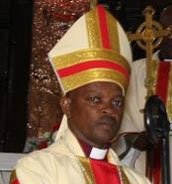
    I’ve just done one of those Knowing Me, Knowing You sessions that I do from time to time that allow members of the congregation to get to know me a bit and ask any questions about who I am and where I come from.

    I asked the group for permission to share the questions. Here’s what they asked me.

    • How did you get from the Salvation Army to the Scottish Episcopal Church?
    • Why were you into politics and why did you leave it behind?
    • How has the congregation changed and why?
    • What was your curacy like? Were you really in charge of a cathedral when you were a curate?
    • Is there a God shaped hole in everyone?
    • Do you have a boyfriend?
    • Where in Yorkshire do you come from?
    • Where in Scotland do you come from?
    • Did you come here as Provost?
    • What do you mean when you say you hated your training?
    • What are the good points and the bad points of being Provost of St Mary’s?
    • How do have you used the Maths and Computing skills you got in your first degree?
    • Do you want a new cat?
    • Where are you going next? And when?
    • Do you believe in Predestination?
    • Is there space for more razzmataz at St Mary’s?
    • Salvation Army vs High Church. Is it very different?
    • Prayer? How do you pray?
    • How do Bishops and Provosts get on?
    • What’s a Canon?
    • How do you relax?
    • What did Chaplaincy work teach you?
    • Where would you like to work?
    • Where have you been overseas?
    • What TV do you like?
    • What’s the difference between the role and the person?

    Great questions and as always a really interesting session. I think a lot of congregations would like their rector to do an any questions session from time to time. It is always worthwhile.

    Want the answers?

    I’m repeating it in September.

7 responses to “Revised Commenting Policy”

  1. Darren Moore Avatar
    Darren Moore

    I try to stick to the policy, whilst commenting on it.

    Most of it pretty understandable/standard. But,
    1.using Scripture as a weapon/quoting isolated verses. To a point I agree, but surely as well as the whole has to be understood as part of the whole, the whole is made us by parts. People misuse the Bible by taking a verse out of context, but they can easily be shown up. Otherwise we can’t use the Bible at all, other than saying – read all of it – there’s something that relates to what I’m saying.

    2. How does the disclaimer square with not being able to comment on PSA? Is that a given (i.e. that it’s nonsense)? Are other opinions banned? Like Roman Catholic views. Even if (highly unlikely) it’s a minority view, are other historically minority views banned (charismatics, baptists) and non-Christians and all liberals – as there views are pretty minority.

    3. Likening gay people to murderers. Unpleasant I agree. Although if (if I may quote a verse – but not to prove a point), this a reference to the 2nd 1/2 of Romans 1, the list includes people who disobey parents and the greedy. Presumably they’re still fair game?

    Just not sure this quite stacks. It’s why people ask, “What are you afraid of?” when it comes to PSA?

    1. Kelvin Avatar

      Darren – thank you for your interest. However. the question is not whether you think this commenting policy quite stacks but whether I do.

  2. John Sandeman Avatar
    John Sandeman

    Kelvin,
    When reading about theories of the atonement, there is a real risk of continually reading things that have been said many times over – as you point out. But can I credit you with something reasonably original? “We’ve already established that like most Christian people I don’t believe in it.” I have never worked out how to determine the proportions of Christians who believe the various atonement theories. Is there some research out there?

    1. Kelvin Avatar

      Thanks John – I’m not aware of any research though I’d be interested in any there was. When I wrote that, I was thinking not simply of who believes what now but also of Christians through time. The history of these various ways of understanding the (or an) atonement is fairly well attested and it is clear that some have risen and fallen through time.

      My presumption is that most of the people in the great blocks of the Roman Catholic and Orthodox Churches (both now and through history) don’t believe in penal substitution – or at least, don’t believe it in the same way that a classical evangelical might believe in it as doctrine which must be personally accepted in order to lead to individual salvation. However, as you rightly point out, who believes what may not be so simple.

  3. Darren Moore Avatar
    Darren Moore

    There are a few bits of research on this, but mostly from the context of PSA
    E.g. Chapter 5 of “Pierced for our Transgressions”, by Jeffery, Ovey & Sach (IVP), which is a quite survey of theologians, east & west, a dozen of which are pre-reformation, starting with Justin Martyr.

    Henri Blocher, “Biblical Metaphors of the atonement”, in the journal of the evangelical theological society, 47 (2004), pp629-645
    “The divine substitution: The atonement in the Bible and history” by Shaw & Edwards (Day One).

    I get the your blog, your rules. Just doesn’t sound like decent is welcome.

    1. Darren Moore Avatar
      Darren Moore

      Bit of a PS,
      Robert Letham’s, “Through Western eyes”
      Looks at the differences & common ground with E-orthodoxy on lots of things, including salvation. Letham (Reformed), thinks there’s lots to get from the East re:-Trinity in worship, incarnational stuff, divination (rightly understood), but still holds that his “Reformed”

    2. Kelvin Avatar

      Well, Darren, I’ve found that there are quite a number of people who do want to meet and chat without the Atonement Thought Police stepping in to correct them all the time. In fact, though I expect you’ll be surprised to hear it, to those who don’t believe that particular doctrine, comments rather like your own can appear to be quite aggressive and verging on bullying.

      So, you may not feel welcome to behave exactly as you like here. You are not. And there’s a comminity of folk who like it that way.

Leave a Reply

Your email address will not be published. Required fields are marked *

Previous Posts

  • He is come

    He is come, he is come. Wrapped in swaddling clothes and lying in a manger. Our God is amongst us.

  • How to be single at Christmas

    I find myself wanting to write something about being single at Christmas. After all, I’ve got some experience to draw on. There was a time when I used to find being on my own at Christmas a tricky thing to think about, but these days its one of the times of the year when I…

  • +Richard on the new atheists

    Don’t miss Richard Holloway’s  book review on The Atheist’s Guide to Christmas. Here’s the full link. And here is a highlight: That said, this book is fun, especially if you read it as a prospectus for a complex and varied religious position. The comedians in it – and there are too many of them –…