
• The Four Horsemen of Growth – their names and their characteristics

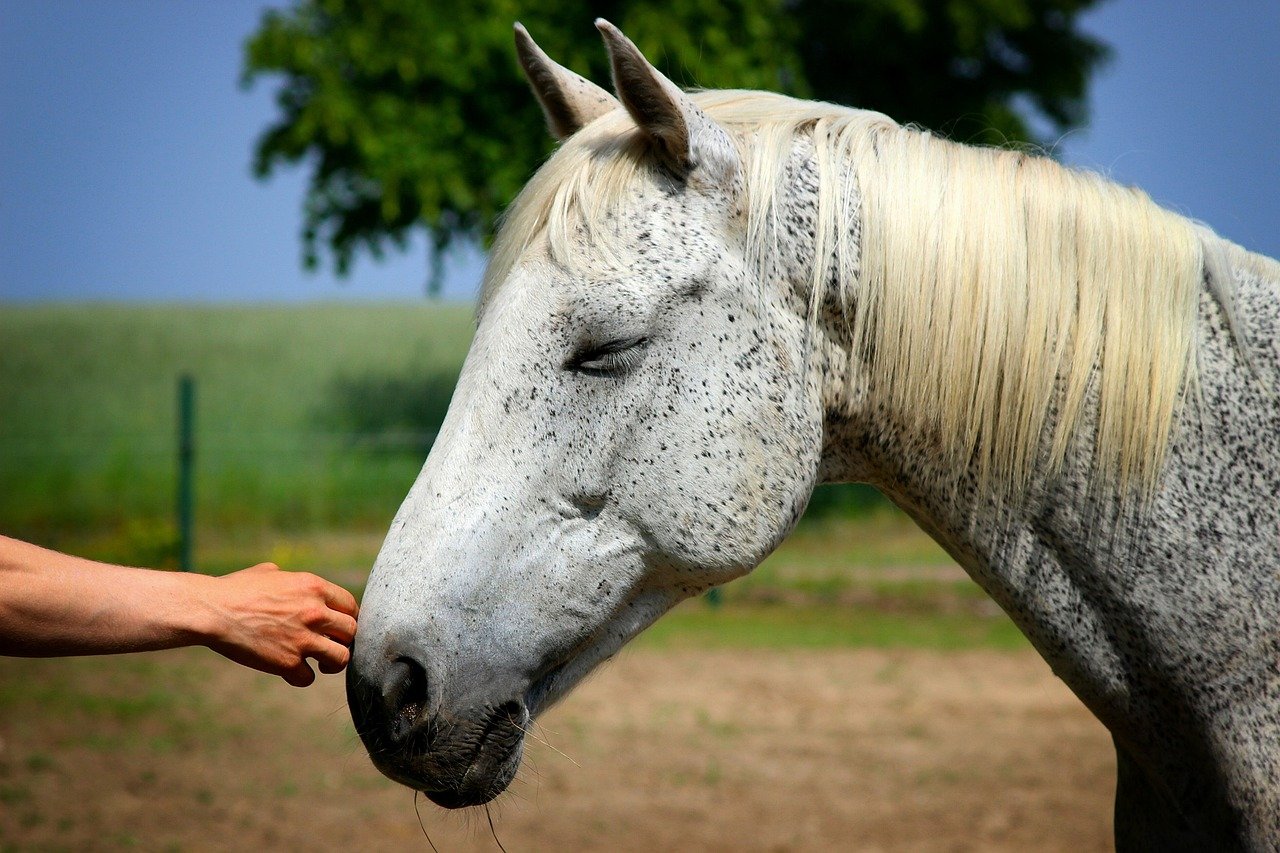
    Horse with a hand reaching out to it

    “And lo, after the Four Horsemen of the Apocalypse of Decline had ravaged the Church of God,  there appeared on the horizon the Four Horsemen of Growth. They stalked the land offering terrifying hope, and succour to the needy”.

    There are only a limited number of ways that a church can grow. These apply both to denominations as well as to local churches.

    Last week I was at the General Synod of the Scottish Episcopal Church where we were asked to engage with the idea of becoming a growing church.

    So far as I can see there are only four major ways in which this can happen. The Four Horsemen of Growth have names. They are Immigration, Conversion, Assimilation and Procreation.

    They do not always arrive individually or sequentially. They tend to arrive in one another’s company. They are social. They are amiable. They enjoy one another’s company.

    The pathway to becoming a growing church is not one that is simple. It is not a trivial task to bring this about either in a local church or in a denomination. And I think that it is important to get to know the Four Horsemen of Growth and to become their friends.

    One of the first things that I would say about this is that I am talking about visible, measurable numerical growth. Yes, I believe that spiritual growth matters. Yes, I believe that serving the needy matters. But sometimes we do need to talk about actual numerical growth and decline in the life of the church. I sit with groups regularly who have to decide where best to spend the resources at our disposal. As I do so, I bear in mind other forms of growth but I am aware that spiritual growth and other non-numerical forms of growth will be wiped out without thinking a little bit about how churches can or can’t grow numerically.

    When thinking about this in my context, the first thing that people need to do is to put on their Hats of Holy Humility and take a long hard look at church statistics. They offer little for our comfort. This is not to say that there isn’t hope. There is hope and it is important to be able to identify where it is hiding and bring it out into the open. The reality though for my denomination is that it has been declining at a fairly steady rate since the 1920s. The patterns of decline that I live amongst were already in place long before I was born and long before I joined the church. Shifting them is not a trivial task or a quick fix. The most likely thing is that those patterns are here to stay.

    But let us grab hold of a bit of hope before thinking about the names of the Four Horsemen of Growth.

    There is something that I think need to be said clearly and unambiguously. This is that church growth is possible both in individual local congregations and also in denominations. My own congregation is bigger than it was 20 years ago when I came here. Significantly so. I can easily name other churches that have grown over a timescale of decades. Ps and Gs Church in Edinburgh and St Mungo’s, Balerno are two within my own denomination that have stories to tell about how they grew significantly. Note that those of us who do have those stories to tell also have stories to tell about how difficult things have been since the pandemic and would probably all note that it is too soon to say what the effect of that major disruption has been. But there are signs of hope in individual congregations even since that time too.

    I rejoice that there is obvious renewal and measurable growth at my neighbouring Episcopal congregation – St Bride’s, Kelvinside. (Which isn’t in Kelvinside for reasons involving a traction engine). I know of other churches in this diocese that are talking about growth as something that they are experiencing too. St Oswald’s in Maybole is another one with a story to tell.  And there are others too.

    I can see growth in congregations of different sizes and which worship in different ways.

    When we think about denominations, I am aware of confidence in at least some parts of the Free Church of Scotland. I am aware of significant interest in Orthodoxy too though that remains relatively small when looking at the bigger picture of faith patterns in this country.

    I have a fairly fundamental belief that it might be important to listen to the voices of those who can speak confidently about their congregations growing.

    I also have a fairly fundamental belief that where there is weekly worship in which people encounter God in a way that is transformative for their lives and meet clergy whom they would like to spend an hour a week with then growth is very likely to happen.

    This is one of the reasons why I always want to talk about worship and clergy whenever we have conversations about growth and mission and all that stuff. Some people really don’t want to talk about those things. But I know that I do.

    But where revival comes, how does it come?

    Well that brings us to the Four Horsemen of Growth.

    Let us deal with them one by one and name their names.

    Firstly the Horseman of Immigration.

    One of the ways in which churches can sometimes grow is through the movement of people from one place to another. This is not a growth in the number of Christians in the world but it can look encouraging locally.

    There have been historic attempts to harness the horse belonging to this horseman but not always successfully. In this diocese there was a huge effort put into building churches for immigrants to the area from Northern Ireland. (Several were not that far from me, particular the church in Anderson built to serve the docks). Scottish Episcopalians spent quite a lot of money putting up churches to welcome these workers new to the area. However, these workers new to the area seem to have preferred the  rather more reformed charms of the plain local Kirk to the exotica of Scottish Episcopalianism. Most of these churches are now long gone. It was a bold attempt to do something and we should be bold in our doings. In the long term though, the demographic changes didn’t lead to lasting change.

    However, more recently, there have been hugely positive  changes to some local churches in which the Horseman of Immigration has played his part.

    In my own congregation, Anglicans from Africa – particularly from Nigeria have arrived and enriched our experience of church hugely.

    Even more recently, there have been arrivals from Iran who have become beloved members of our local fellowship.

    Our life is greatly for the better for those who have arrived from afar.

    Here in the West End of Glasgow it often feels as though we are our own Anglican Communion with people present from India, South Africa, Japan, Canada, Mexico, the USA and West Africa.

    The Horseman of Immigration is our friend in these parts.

    Some of those arriving in my own congregation from both near and afar though have not always been Christians, never mind Anglican Christians.

    Their arrival is due to the work of the Holy Spirit stirring up their hearts at the prompting of the Horseman of Conversion.

    Conversions still happen. I see them fairly regularly. This is a surprise to many people.

    A couple of years ago I started to notice an interesting change in the pattern of people being baptised here. For what I suspect was the first time in the modern history of this congregation, the number of people being baptised as adults (or at least as children who could answer for themselves) was greater than the number of children being baptised as babies. I suspect that it is possible that we’ll soon see a year when all the baptisms here are of those who can answer for themselves.

    People still choose Christianity as a way of life. People still choose Christ. People still find themselves, sometimes to their surprise, looking to the church to find spiritual nourishment and a way of living.

    I can easily point to people who have arrived from other countries who have wanted to explore the faith of the country in which they have found themselves. (The Horsemen of Immigration and Conversion are the best of friends). I can also point to people engaging through online encounters with the church finding that they have faith where previously they had none. It used to be that I knew more people who had tried yoga, Buddhist practice and various new age expressions of faith before pitching up here. I still encounter them but now I find myself meeting people who arrive having tried to find a thoughtful way of living through exploring philosophy but now find themselves looking for something more.

    The Horseman of Conversion is surprisingly active these days and has not grown nearly as old and weary as some would suspect.

    Trotting next into view is the big, bold Horseman of Assimilation. He’s the one about whom we most rarely speak.

    This aspect of Church growth (again not the building up of Christianity but of local expressions of the church) is all about people having been brought up or having encountered other expressions of Christian faith and finding themselves drawn towards a new one.

    Here at St Mary’s the Horseman of Assimilation has blessed us with many joys over the years.

    When we do our Rough Guide to St Mary’s afternoon, something we do every three or four months, we find that most people who come to it do not have much of  a background in Episcopalianism or Anglicanism. We also find that they are astonished to discover that people such as themselves make up the majority of the congregation. And when we tell them that this is also the experience of most of the clergy that they encounter including the Provost and the Vice Provost, they fall off their chairs in amazement. (Well, they teeter on the edge of their chairs in amazement but I exaggerate a little for comedic and holy effect – comedy and holiness being a pair of friends that we may explore more in another post).

    People come to us from other churches. They tend to be looking for a relatively small number of things. They are looking for worship that makes them feel more alive and which allows them to experience joy and which will provide a comfort for their sorrows when comfort is needed. A big signifier of that is the musical life of the congregation but it isn’t the only signifier by any means. They are also looking for an open, inclusive and welcoming ethos. Here and hereabouts this tends to be signified to them by an explicit acknowledgement of LGBT equality and of women and men having equality of opportunity and practice in the congregation and in our denomination. They are also looking for a faith that is neither represented by finger-wagging nor an anything-goes free for all. In some things we are in the middle of the road and in others we are very much on one side of the road and not the other. And people know what they are looking for. If they don’t find what they are looking for here, I’m very happy to help them find it elsewhere. There will be plenty more people in this world who are looking for what happens here.

    The Horseman of Assimilation is nudging people our way all the time. But we don’t talk about it much and in my denomination we are a little afraid of making it clear that those who have first encountered God in other churches are welcome to bide with us whenever they want to walk through the door.

    The Horseman of Assimilation may find his work easier to do now that ecumenism is changing from the expectations of the 1970s to something fresh and new. In the past it was harder to keep company with this horseman because lots of people thought that denominational boundaries and distinctions were going to melt inevitably away leaving some kind of new uniting church that would hold everyone together. This hasn’t happened and the expectation that it will is on our rear horizon not the one that is in front of us.

    And so finally we come to the Horseman of Procreation.

    We can grow the church by having children and bringing them up in such a way that they find faith compelling in later life. This is not a short term strategy for growth!

    Many of our expectations about growth depend on this Horseman. Many of these expectations will not be met in our lifetime.

    I found myself looking around at the General Synod and wondering how many of those present would be able to engage meaningfully with embracing this Horseman of Growth as the major driving force behind real growth in the congregations that they come from. I have a feeling that the Horseman of Procreation has his work cut out amongst us at this time. Contraception has made his work a little harder. Modern ways of being men, women and other people have made his life a little more complicated. But he’s still at work. Children are still born. Children are still baptised. And in churches which draw them into active participation in the liturgical life of the congregation, children are part of God’s bountiful growth.

    So there we are. Four Horsemen of Growth whom we should befriend, as they befriend and help one another. If I’ve missed any other means of growth out, I’d be interested to hear about it.

    And when we talk about becoming a growing church again, though some of them may seem to be in the distance, I’d like us to be talking about which of the Horsemen of Growth we see galloping  enthusiastically towards us.


25 responses to “Same-Sex Marriage Consultation Responses”

  1. Rosemary Hannah Avatar
    Rosemary Hannah

    I was so proud to be a member of St Mary’s when I read this, especially as I knew that for some vestry members it was very contentious issue. It is so good we can have strong views and hold together despite them. It is also good to know that we are unafraid to actually say something – something real.

  2. Lallands Peat Worrier Avatar

    Your last point on the situation vis-a-vis transgendered people is well made, though would require the Gender Recognition Act of 2004 to be revisited and amended, since it is that (which is, admittedly, propped up by the current definition of marriage) which requires the dissolution of marriages and civil partnerships where one partner’s gender is legally changed. That being the case, we can’t eliminate the potential injustice to transgendered people you refer too without updating the legislation on civil partnerships alongside changes to marriage. I enlarged somewhat on that point here:

    http://lallandspeatworrier.blogspot.com/2011/11/in-defence-of-degendering-civil.html

  3. Duncan Hannah Avatar
    Duncan Hannah

    It is heart-warming to read this. It is the compassionate side to Christianity that can be seen too infrequently. It does make me proud, to be even vaguely associated with the Episcopal church, reading something so positive regarding same sex marriage. It speaks volumes for St. Mary’s that the vestry as a whole produced this response.

  4. Elizabeth Avatar
    Elizabeth

    I echo Rosemary’s comment. It’s a good day for St Mary’s.

  5. william Avatar
    william

    It is understandable that ‘pride/heart warming’ feelings have taken over in St Mary’s this week among those who genuinely believe that they are advancing equality etc and so offering more fulfilling days for those who engage in homosexual activities.
    The silence of another perspective which lies behind Rosemary’s statement [for a spectrum on this issue exists in every christian church, albeit not so wide as in society in general] “for some vestry members it was very contentious issue” suggests that it doesn’t seem to be what one does in St Mary’s,namely, to express openly[at least in this blog], any serious concerns about the trajectory being pursued. Or any concern that the approach being followed may be incurring God’s displeasure, and may be leading many well meaning members to find themselves under God’s judgement.
    Surely in any christian church one cannot just assume or have a settled conviction that such a God is not the God with whom we have to do. If that is the only view that is espoused at St Mary’s then again is that because the opprobrium which would follow [as this comment will produce] is too powerful to withstand.
    As in CoS I recognise that the Episcopal hierarchy are representing the broader view, and St Mary’s own statement recognises another understanding – but this blog is not yet exhibiting that balance, hence my encouragements to another outlook to make known its thinking to the world.
    Let me add, however, that the aim of such an encouragement is not simply to expose diversity, rather it is to encourage genuine biblical dialogue, so that the christian church may exhibit to the world the mind of its King and Head, the Lord Jesus Christ.
    The apostle Paul, quoting earlier prophets in Israel, had to say of those who were known in the ancient world as God’s people that the name of God was being blasphemed among the Gentiles because of their hypocritical behaviour.

    1. kelvin Avatar

      William – can I suggest that you simply read this blog post a little more carefully. You seem to be missing the point of what the Vestry has said.

    2. Ryan Avatar
      Ryan

      Do only Christians get married William? Of course not. Do only anti-gay Christians have an interest in getting married? Again, of course not. I’d imagine also that St.Mary’s vision statement shares some of your theological language and is considerably grander (in the best sense) and less dehumanising than ” offering more fulfilling days for those who engage in homosexual activities.” (which frankly sounds more suitable for a 70s-based STD clinic) . Your attempted contrast between the “biblical” view and the mere “broader” (and presumably broad for broad’s sake?) alternative understanding of relevant opinion is absurd.

    3. Rosemary Hannah Avatar
      Rosemary Hannah

      You know, William, Kelvin is being just too nice. (Words he never thought he would see me write, those). The whole point is that the Vestry has recorded that there was more than one opinion among it members, and recorded both or all sides, and yet put forward the majority view. The point is that mature people can disagree, and still respect each other, still further the views which they do not share.

      Gay people marry for the same reasons that straight people do – they love each other. Ad yes, you are right – it is more fulfilling to live with somebody you love rather than to meet them for brief, clandestine moments. I wish I could be sure you will be able to understand why – the reason is that it is hard to live with somebody, and to keep putting their needs and interests first. It is a whole heap easier to live alone, and have cornflakes for tea if that is what you want, and not have anybody else to consider, but just casual sex if you fancy it. Only, that way one tends not to grow up very much. Go figure. And go spot the links between paragraphs one and two of this little post.

  6. william Avatar
    william

    Rosemary, Kelvin is always nice, and even when we don’t agree, not only can we respect one another but love one another enough so that we would want to take each other’s thinking forward together as we seek to approximate to the mind of Christ. Didn’t Paul set that paradigm before us in his epistle to the Romans?
    That’s the nature, indeed the purpose of us together forming the body which is the church of Jesus Christ – a living organism united by the same Holy Spirit.
    “Gay people marry for the same reasons that straight people do ”
    There’s a statement which needs not only explication of at least four of its terms, but more particularly exploration of its intent – and that’s the matter that was not being explored in this current blog theme of ‘heart warming’ contentment.
    I am not calling for people to be direspectful of those with whom they ‘disagree’, or of the majority perception in St Mary’s of ‘same sex relationships’, but for robust biblical dialogue – but nobody seems to feel free, in the present regime there, to identify with any other perspective than the ‘majority’ one espoused in St Mary’s Response.
    Maybe it’s because Kelvin is too nice!

    1. kelvin Avatar

      I think you will find William that quite a lot of people are attracted to St Mary’s because they find it to be a church where the kind of pseudo-biblical judgementalism that you advocate is almost entirely absent, even when we are discussing things where we have clear differences of view. It just isn’t how people behave here. I’m guessing that folk here would generally find that positive rather than negative. There are plenty of churches where people behave in the kind of manner that you seem to want to impose from afar on St Mary’s. The truth is, people here just don’t behave like that.

      That’s what the deal is, you see. That’s one of the reasons people turn up.

      That’s why we are growing too.

      Though I fit into that ethos rather well, for once in my life I can say with all honesty: “It isn’t all about me.”

      It is who we are.

    2. Beth Avatar

      This is part of what I wrote to one member of the Vestry prior to that response coming out: “I think that part of what makes us an inclusive church and something that we as a church do tend to be quite good at, not just on this topic but on most topics, is that we don’t always agree with each other and that we do always make room for one another’s opinions.”

      William, as you seem to be reading only what you want to read, let me spell this out:

      The Vestry response to the question on same sex marriage contains an introductory paragraph explaining that there are differing views on this within St Mary’s. It then spends 77 words explaining the views of those in favour of same-sex marriage, and 101 words explaining the views of those who are not in favour of same-sex marriage.

      I do not understand how you can possibly read that in such a way as to think that only one view is expressed in the response or interpret it to mean that nobody within St Mary’s feels free to express differing opinions.

      1. william Avatar
        william

        Beth, I never had any doubt about the Vestry consultations, as Rosemary indicated – nor did I fail to recognise the differing views incorporated within St Mary’s Response –
        [ my blog 8 Dec “St Mary’s own statement recognises another understanding “].
        I was responding to this blog theme of “heart warming/ pride” which initially and is right up to your comment not exploring the view held by the majority in the christian church – even the Scottish Episcopal Church – that the bible may not sustain a ‘revisionist trajectory’, to use Church of Scotland language.

      2. Ryan Avatar
        Ryan

        William:

        That would be the same Scottish Episcopal Church that, back in 2005, said it had no problem with gay people (and no, not only the celibate kind) being clergy? And that in all of Glasgow has precisely one church that beats the anti-gay drum in the manner you’d deem biblical? And of course, one hopes that you are busy informing said anti-gay churches that really ought to listen to the voices of gay people in the interests of “balance”.

        1. kelvin Avatar

          Ryan, where exactly does one get an anti-gay drum? Do they come from anti-gay drum shops?

      3. Beth Avatar

        William, you are contradicting yourself.

        You did allude to the fact that the St Mary’s response recognises a ‘different understanding’, but the way you have written that sentence suggests (to me) that you’re saying that the St Mary’s response is different to that of the SEC hierarchy. You have elsewhere in this thread said that “nobody seems to feel free under the present regime [at St Mary’s] to identify with any perspective other than the ‘majority’ one espoused in the Vestry response”, that “some views are not expressed too openly at St Mary’s”, and that “it doesn’t seem to be what one does in St Mary’s, namely, to express openly any serious concerns about the trajectory being pursued”. The point that I am trying to make is that, contrary to what you have said here, various members of the congregation identify with perspectives that disagree with the Scottish Government proposals, they have expressed these views openly, and their opinions have been incorporated into the Vestry response.

        Perhaps part of the issue is that you seem to be having trouble differentating between this blog and St Mary’s and therefore trouble understanding that there is a difference (an enormous chasm of a difference, in fact) between the expression of one’s views on a personal blog and the dictatorial imposition of those views on one’s cathedral.

  7. william Avatar
    william

    Kelvin, I think you’ve just exposed why some views are not expresed too openly at St Mary’s – the ethos implies that such thinking is “pseudo-biblical judgementalism”
    And even the unwritten assumption “That’s what the deal is, you see”
    I am not trying to ‘impose’ anything in St Mary’s from afar, but it would seem you certainly are.
    The fact that numbers are growing – I wonder why you chose to enter that fact? – as you well know, proves nothing, albeit I’m encouraged to hear that any church has an increasing attendance these days.
    Every blessing.

    1. Rosemary Hannah Avatar
      Rosemary Hannah

      What you need to do william is to come and worship at St Mary’s – where you will find a warm welcome and an un-cowed congregation loudly expressing all of its views very openly. I don’t think imposing views is something Kelvin is much tempted to – but if he was I would advise him to find another congregation on which to do it. However, you will also find a lot of gay people. People know we have gay as well as straight clergy, and that means gay people know they will be welcomed there and not looked-down-on. Since that assurance is a moderately uncommon thing, we attract gay Christians. And it is, by and large, a very liberally-minded congregation. It means that somebody like me can worship there and know that I am not going to be harangued or looked-down-on for my views either, or find I am alone in openly expressing my views, which is exhausting. And not just views on equal marriage. I was made to feel criminal in another church for disliking one particular theory of atonement, and by the priest too. This freedom to think and argue is the very thing that makes it a congregation likely to hold views closer to Kelvin’s than to yours.

      1. kelvin Avatar

        Ooh, that reminds me, Fr Vice Provost did a workshop on atonement theories the other night that sounded really good. I think he described it to me as an Atonement Supermarket – several different theories all laid out in the room and people invited to position themselves in the room according to what theory or theories attracted them most. Excellent idea – worth repeating, I think.

      2. Rosemary Hannah Avatar
        Rosemary Hannah

        It seems I can’t reply to your reply to my reply. OOOh – no wonder I love St M’s – you will be intuitively there before me when I say I am not great on cosmic child abuse.

    2. kelvin Avatar

      Threaded comments only go two deep I think.

      I’m not surprised by you saying that at all. I’m very much attracted by a palatte of atonement theories though.

  8. Ryan Avatar
    Ryan

    I gather that they’re impossible to get a proper rhythm from, thereby frustrating the gays and their inate fabulous dancing skills 😉

  9. Pam R Avatar
    Pam R

    I was at the Atonement Supermarket on Wednesday night and it was fabulous. Definitely worth repeating.

    1. PamB Avatar
      PamB

      Was there any dancing?

  10. […] arguments against changing the law. She finds support from What’s in Kelvin’s Head? who reports that his congregation have sent in a response that’s in favour of the […]

Leave a Reply

Your email address will not be published. Required fields are marked *

Previous Posts

  • Predictions 2026

    A rocky road to the enthronement of the next Archbishop of Canterbury. Further turmoil and scandal in the Anglican Episcopates of the United Kingdom. No progress for those hoping for Equal Marriage in the Church of England. More talk about the Quiet Revival which will continue not to show up in denominational statistics. Success for…

  • How did I do with last year’s predictions?

    Here’s a run down of how I did at last year’s predictions. Good results for Nigel Farage following the English local elections in May. Terrible results for Conservative Party. Exactly what happened. YES No progress towards the marriage of same-sex couples in the Church of England Exactly what happened. Indeed, I think things may have…

  • AI Ethics Questions for Preachers

    The first time that I encountered ChatGPT was three years ago when I was staying in a seminary in the USA. It was a place dedicated to teaching theology and particularly to training Episcopal clergy. The ChatGPT preview release was let loose on the world on 30 November 2022, so I must have discovered it…

  • We are not stewards

    A long time ago, back in the mists of nearly twenty years ago, I started to think that it was important that there was a liturgical celebration of creation. I thought long and hard about it and decided that instead of celebrating that modern invention the Harvest Festival, we would celebrate Creation instead, rolling a…