
• Pilgrimage Days – Who on Earth Are You?

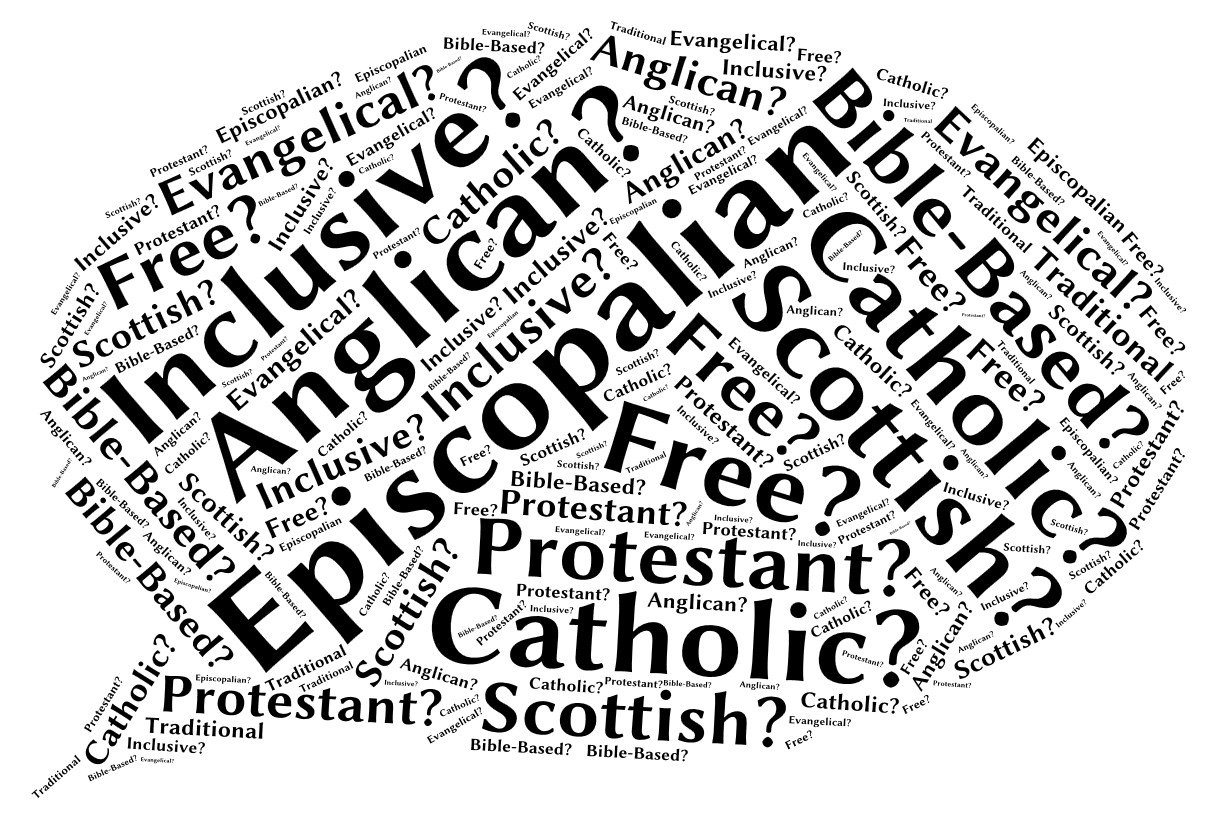
    Wordcloud graphic

    I’m looking forward to hosting two Diocesan Pilgrimage Days at St Mary’s on 20 and 27 February 2016 exploring the theme “Who on earth are you?”

    It is difficult to think of a better week for exploring our identity as Episcopalians but it isn’t going to be all about the Columba Declaration. We’ll be focussing on the things that we enjoy about our faith and the things that make us cherish the Scottish Episcopal Church as our place to live out a Christian identity.

    The day will include conversation amongst the pilgrims about where they have come from and things that inspire them. There will be a forum conversation with me about why I am an Episcopalian and how I came to value belonging to this church. In the afternoon there will be an Any Questions panel. Throughout the day there will be gentle worship and a chance to enjoy being together in the cathedral.

    If anyone wants to join it, all they need to do is bring a packed lunch – tea and coffee will be provided.

    The days begin at 10.00 and will end by 16.00.

    If you are coming, it would be helpful for you to let us know – please fill in the form on the cathedral website – www.thecathedral.org.uk


9 responses to “The Lament Question”

  1. kimberly Avatar

    ask it in the singular, and the answer is: because you’re a four.

    you’ll have me playing the funeral ikos next.

  2. kimberly Avatar

    the other answer is about possibility being revealed in limits.

  3. kelvin Avatar

    Its not just me though, and not just fours.

  4. Aaron Orear Avatar

    I think because sorrow touches the core of the human condition – we are mortal but can perceive immortality. “He has made everything suitable for its time; moreover he has put a sense of past and future into their minds, yet they cannot find out what God has done from the beginning to the end.” (Eccl. 3:11)

  5. Erp Avatar
    Erp

    I understand Aristotle talks about catharsis and various philosophers have followed up on that idea.

    Perhaps it arouses sadness both from the art itself but also from our own sources festering within and allows us to let go. We feel better for the letting go, the lessening of our own internal sadness, and so perceive the art as beautiful.

  6. RosemaryHannah Avatar
    RosemaryHannah

    Kimberly was there before me. However, even I, a nine, can sometimes see the beauty in sad things. For me they do two things (may be more but two are most obvious). The first is the catharsis thing. The second is to make me less lonely. Look, here am I weeping, but all around me people sit in the same sorrow. It is not just my sorrow – I am not alone.

    I have long thought there is another answer, one I do not properly understand but I have (I think – and who am I to think it). Deep in God there is a huge well of sorrow. Unless we experience sorrow we cannot understand God. When we sorrow we tap into that well, and become closer to him.

    And being a nice cheerful nine, I will now add that I live in hope that having sorrowed with him, we will share also and even more fully in the joy which swallows the sorrow. Delete this last paragraph from your mind on reading, it will only spoil the joy of the sorrow.

  7. Elizabeth Avatar
    Elizabeth

    Edgar Allan Poe said the most beautiful thing in the world is a beautiful, dead woman. Nice, eh?

  8. Ritualist Robert Avatar
    Ritualist Robert

    Surely it’s because the concept of beauty is independent from concepts such as ‘sadness’ and ‘happiness’ – just as a G major chord might be loud or soft, but that volume has no effect on its G major-ness.

  9. Steve Avatar
    Steve

    I remember Augustine saying (don’t ask me where) that for a picture to be beautiful it requires dark colours as well as bright.

    There is also a hint of an answer in this poem by Edwin Muir:

    Yet still from Eden springs the root
    As clean as on the starting day.
    Time takes the foliage and the fruit
    And burns the archetypal leaf
    To shapes of terror and of grief
    Scattered along the winter way.
    But famished field and blackened tree
    Bear flowers in Eden never known.

    Blossoms of grief and charity
    Bloom in these darkened fields alone.
    What had Eden ever to say
    Of hope and faith and pity and love
    Until was buried all its day
    And memory found its treasure trove?
    Strange blessings never in Paradise
    Fall from these beclouded skies.

Leave a Reply

Your email address will not be published. Required fields are marked *

Previous Posts

  • Murder. Crime. Poverty.

    Someone I met when I was down in Londonshire last week asked me where I was from. On receiving my reply, he pulled a face. “It’s a great city,” I spluttered, more out of petulance than anything else. “All I know about it is murder, crime and poverty,” was the response. Now, we all know…

  • Looking at pictures

    It is good to see Kimberly blogging again a little more – and I very much enjoyed her picture challenge. Particularly good for Epiphany and there is quite certainly more to be said. Worth joining in with here: http://wonderfulexchange.wordpress.com/2012/01/16/turning-point/ And don’t miss her follow up comments here: http://wonderfulexchange.wordpress.com/2012/01/17/res-miranda/

  • To London, to London

    Well, actually, I’m back now. I’ve still a bit of my post-Christmas break to enjoy before I properly get back to work on Thursday, but I’m back in Glasgow after three nights in London. Want to know what I was up to? Sure you do. Well London has tended to be a kind city to…

  • Online Evening Prayer

    The details for this week’s Online Evening Prayer service, including downloadable pdf liturgy are available here. The service takes place on Saturday at 5pm.