
• How twitter and facebook can save your blog rather than kill it

    One of the things that anyone keeping a blog must be aware of at the moment is that things are not the same as they were. At one time you simply had to put up something even vaguely interesting and people all over the world would read and comment. Blogging was like the Wild West – for the attention seeker there was gold to be mined her.

    I remember Mother Ruth saying to me before she started blogging, “All you have to do is ask ‘Who teaches cats yoga?’ and you’ve an audience”. If you could supply an entertaining picture of the cat in question, you were immediately set to dominate the blogging world.

    Nowadays, things are more difficult. One-liners like that have long since moved over to social media. Facebook and twitter are a more appropriate place for compact wit and if you are initially trying to reach friends and friends of friends then the social media platforms are the way to go. It is, to a large extent, what they are for.

    I made a prediction in one of my new year posts that the number of active bloggers would decrease but the influence of those who remain blogging would continue to increase. I still think that is true and I can see when I look through my blog feeds in a morning that there really are far fewer people making the effort. The fad has past but there are some who continue. Those who continue tend to be those who have learned to harness social media and quite often those who have  given up have simply moved to social media instead. Perhaps blogging gave them connections with people that they are happy to retain in a different way.

    For some people, starting a blog is about keeping up with those whom you know. For others it is like taking a few tentative steps into the limelight and tottering onto a very public stage. It is the latter type of bloggers who are persisting and they have even greater potential now to become global voices. The blogosphere is becoming free of some of the clutter. Now the cat pictures have moved to facebook and twitter, maybe posts with more substantial thinking matter more.

    It is very obvious that quick witty thoughts are going on social media whereas blogs are now being used for more substantial thinking. Successful blogs these days quite often seem to have fewer posts than they once would have done but the posts themselves are more substantial.

    Who would have guessed that blogging would have reinvigorated the essay as a writing style?

    Anyway, it seems to me that you can write as much as you like these days, if you are not engaging on social media then you are unlikely to see many readers.

    Here’s how to make social media work for you and keep the readers flowing in.

    • Post links to your latest blog entry on twitter and facebook (it isn’t rocket science, that’s where your readers are).
    • Note the plural! – Post a link in the morning to get the morning audience, one in the afternoon (for when America is waking up, if you are in Europe) and another one later in the day.
    • Don’t be ashamed to work for your audience.
    • Remember that email is a form of social media and offer people the chance to sign up to receive your posts. This way of reading blogs is growing.
    • Remember to provide an RSS feed for those who receive blogs that way. (For readers, I recommend Feedly now that Google Reader is long gone).
    • A witty link on twitter that gets retweeted is the gold you are chasing
    • A photo of a cat doing yoga is never wrong.
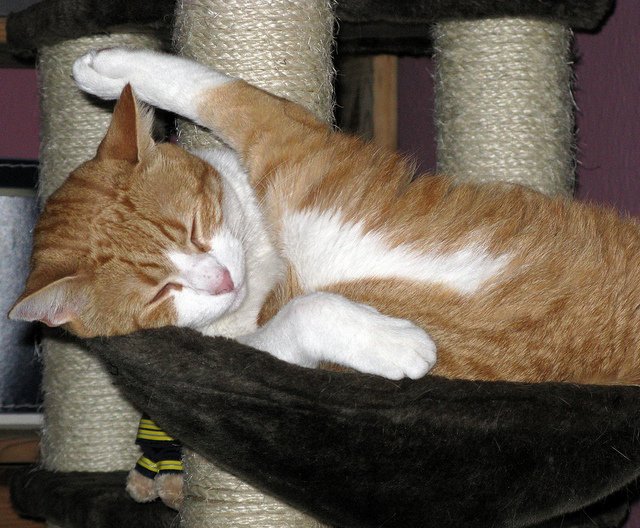
     

    4951372883_299d70bc2b_z

    • Oh and one last thing. Why do you think it is important to ask questions on a blog?


    Picture credit – Mel on Flickr  Copyright (CC BY-ND 2.0)


3 responses to “Brexit – Five First Quick Thoughts”

  1. Rosemary Hannah Avatar
    Rosemary Hannah

    Almost everybody I meet on a regular basis, except my family and one educated friend, were voting out. and that in Scotland. I am shattered but unsurprised. My partner reports that, in her office, those with a degree and under 35 all intended to vote remain, and those without and over 35 to leave.

  2. Ruth Gillett Avatar
    Ruth Gillett

    Some people I know didn’t vote at all because they were annoyed that their ‘first ever in their fairly long lives’ voting experience (Independence) didn’t go the correct way. Strangely two friends who spend half the year living in Europe (and benefit from the reciprocal healthcare arrangements) voted leave and I’m bewildered by a dear friend of 60 years who unexpectedly climbed angrily aboard the anti immigration juggernaut. I’d dared to hope (and ignore the signs online) because everyone else I knew seemed to be voting remain…

  3. Guy Whitehouse Avatar
    Guy Whitehouse

    I fear ultimately that Brexit won in part because the EU became a rather soulless bureaucracy to which people could not emotionally attach. Financial benefit does not always secure attachment on a large-scale and if enough people start to perceive themselves to suffer and not participate in those benefits then the inevitable happens.

    I fear the UK is going the same way but for different reasons. Since the 80s there has been a tendency amongst those seeking power to focus on groups and not the country as a whole; remember election night and the swingometer and the presenter saying things like “such and such an area has gone red but in order to win the Conservatives just need to win over Essex man and Worcester woman….”? Of course Labour did something similar in 1997 and in later elections.

    So any uniting sentiments have been undermined which means that the problem is no longer just with politicians but with the electorates also.

    I liked what Kelvin said in his referendum sermon, and more than ever the churches need to discover their ministry of reconciliation and think about what it means to try to offer everyone a spiritual home. It would be ironic if the church became the main place that differences could be dropped. but I have to confess I’m rather gloomy about even that looking at the way other controversial issues within the church have been dealt with.

Leave a Reply

Your email address will not be published. Required fields are marked *

Previous Posts

  • Prayer Resources for Advent

    I’ve updated the Daily Prayer page with some new resources, specifically two bookies containing Evening Prayer for Advent. In the Scottish Episcopal version of Daily Prayer, we have prayers with the title Anticipation which we use for Advent. There are two files for evening prayer. One for the first three weeks of Advent and another…

  • Glorious Failure

    A very dusty hour and a half was spent on Friday trying to get audio from the church to be heard in the hall for the benefit of parents and those working with children who sometimes use the hall and meeting room during part of the 1030 service on a Sunday. I had come up…

  • St Silas Webcam

    Don’t miss the webcams looking at the St Silas building project. Our friends in our nearest Scottish Episcopal Church are undertaking a big programme to build hall space. It is an ambitious project which they have been working at for months. Its great to see the work actually taking shape. The webcams are a brilliant…

  • web outage

    I’m back online at home following an unexpected web outage. Something blew up. Back online now using a spare something from the cupboard.