
Can someone work out who is in charge?
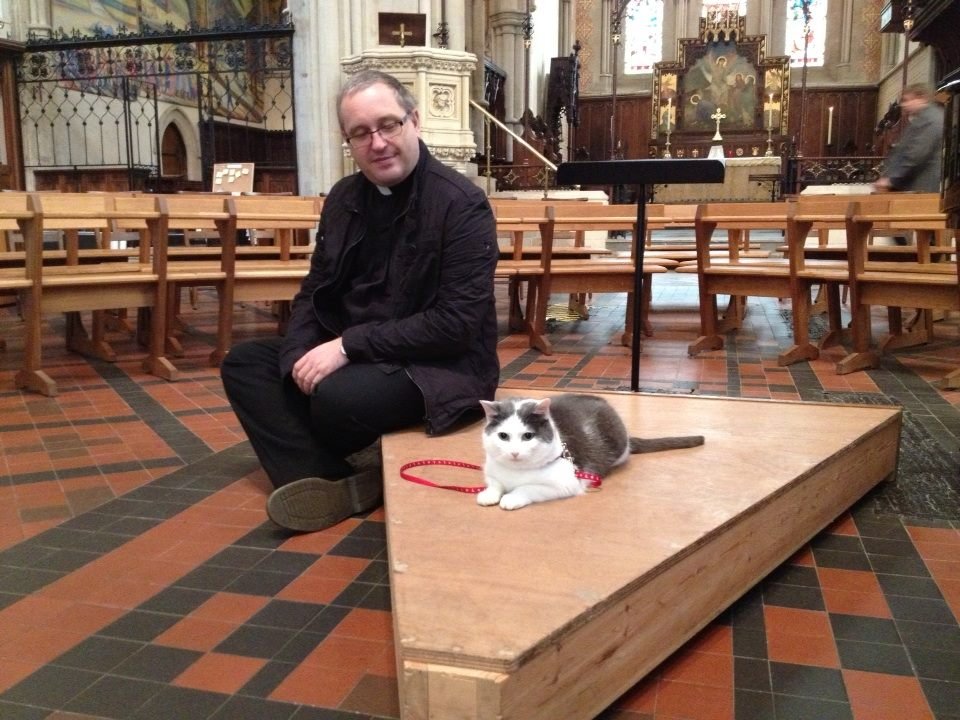
Can someone work out who is in charge?

If Dan Brown, rather than the New Testament is to be believed then, how about, Jesus and Mary of Magdala? Or, to be more Orthodox – Jesus and His Bride – the One, Holy, Catholic and Apostolic Church?

I think we are now being silly.
Not at all silly if you take seriously the Revelation of St. John the Divine and the penitential season of Advent. “Wake, O Wake!” Dean Kelvin “The hour has come, we hear them saying, where are ye all, ye virgins wise? The Bridegroom comes in sight, Raise high your torches bright! Alleluia! The wedding song swells loud and strong; Go forth and join the Festal throng.” So, do please make sure that you have oil in your lamp to keep on burning and be ye not numbered among the foolish virgins.
Alternatively, how about the anonymous couple who were married at the Wedding Feast at Cana? Simply because they are not named they could stand for each and every married couple willing and ready to make their sacred and binding marriage vows. Judging by the amount of wine that was available post transformation, they must have had one hell of a Wedding Breakfast.

Perhaps good marriages do not make fascinating stories. Bad or odd marriages, on the other hand…..
One of the questions that came up last week at our Vestry day away was, “Where is the internal discourse of the congregation going on?” It was a good question and interestingly, several of those present said that the internal discourse of the congregation was partly going on here on this blog. I agree with…
Quicklinks Damian Thomson has – Its all over for the Archbishop. This contains the memorable accusation that in forcing Jeffrey John to resign, Archbishop Rowan became the man who laid down his friend for his life. All the more vulgar for being true. Gaping Void has an excellent piece about blogging which contains this: “Having…
Well, it would be nice to do it again, on Easter Day. Yes, it would. The only problem is, the congregation always want to join in. Mmm. They start humming along at first and then they start singing. It would be fun on Easter Day though. Yes, it would. As the Gradual? Oh yes, definately,…
The House of Lords has passed the Sexual Orientation Regulations which will come into effect in April in Scotland. I’ve already written a lot about the attitude of certain religious adoption agencies to these, and I will not repeat that now. There has been such a focus on adoption, that a lot of the detail…
Leave a Reply