• Social Media and Ministry – Will I be your friend?

    Here’s where I’m at with social media.

    Twitter

    You’ll find me here: www.twitter.com/thurible

    I follow whoever I like and I let anyone who wants to follow me. Twitter is the wild west – you do what you like. Part of the fun is following people who wouldn’t dream of following you back.

    There are just over 500 accounts that I follow. These show up in my timeline and I keep a reasonable watch on what is going on. I miss some things in my timeline but I check twitter every day. Indeed, for some parts of my day, twitter is open in another monitor on my desk. Some of the people I follow are people who are close to me but most are not. I follow some people because they telegraph news that I’m interested in far quicker than any other media. I know things far sooner by following twitter than I would otherwise. Because I use it in this way, it is my responsibility to learn to sift and sort out what is likely to be true and what can be discarded as speculation or downright lies. As in other forms of communication, reputation is principally what determines whether I trust someone and I have huge responsibilities in working all this out. I need to be familiar with the genre to understand what I am reading.

    [An example of that has just happened whilst I’m writing this post – a journalist I trust has just tweeted that Baroness Warsi has resigned over Gaza. I’m interested in that and I’m seeing that some time before  I will hear it on the news.]

    People ask me whether this takes a lot of time. My answer is that it takes hardly any time. And it takes all my time. It is just going on. It is part of life.

    I tweet @thurible and I tweet on behalf of St Mary’s @thecathedral. The latter account doesn’t have my personality, but reflects the institution. The former account does reflect my personality. That means you get to hear what I think about God and what I think about Kylie’s head-dress. I also retweet things from people I find interesting and people I generally trust. You might hear things from me that you won’t hear in the newspapers and some people follow me for that reason. Some people presumably follow me because what I say entertains them in some way. But it is a free for all – those who want to follow get to do so without me bothering much about who they are. Three times as many people follow me as the number of people I follow.

    If my tweets are retweeted by others, and they often are, then they will reach tens of thousands of people. What I think or say about the Scottish Episcopal Church, Kylie’s head-dress or Baroness Warsi could reach very many people. This is so powerful I have to think about what I say. Believe me, I do.

    If I know you, or if you interact with me in ways that are clever, funny, witty, amusing, intelligent or even belligerent, there is a reasonable chance that I’ll follow you.

    Facebook

    Well, facebook used to be the social network to build up vast lists of friends. I’m not interested in that any more. Since twitter came along, I’ve no particular interest in adding people as friends unless I’ve got good reason to do so. I get quite a few friend requests from people I don’t know at all and I realised a few months ago that I just wasn’t interested.

    You see, if I accept you as a friend, I’ll see what you have to say in my timeline. Experience suggests that those whom I don’t know will be reposting lots of things from other people that I think of as drivel.

    I’m interested in you on facebook if I know you or if I’m interested in what you’ve got to say. I am far less interested in your kitten picture. However, if I know your kittens, I’m beguiled. I’m much more interested in what you have to say or in in the picture that you have taken than in things that you have reposted from other “clever” people.

    A while ago, Facebook introduced the concept of following. This is more sophisticated than twitter. You can follow me without me having to be your friend and a bunch of people do that. It means you can see all my public postings but I don’t have to see the photograph of your kitten. Everyone wins.

    I work fairly carefully to keep my facebook connections in good order. I use the “lists” facility to make sure I know who is receiving what I’m posting. Thus, I can continue to use Facebook when I’m on holiday but don’t let members of the congregation see my postings whilst I’m away because a holiday is a holiday and we need time off from one another. It isn’t difficult to do that with Facebook. Most people who complain about facebook haven’t bothered to learn how to use it.

    [I’m starting to see comment from politicians, journalists and friends about Baroness Warsi’s resignation – some see it as principled, some see it as opportunist – I sit and think about it.]

    I’m more than aware that “friends” are not friends. However, I think that it is silly for people to say that “friends” have nothing to do with real friendship and community. (As the Church of Scotland Moderator appeared to do at the end of the General Assembly). I get lots of my community online. I like living that way. Some of the people I am closest to relate to me in this way. I have known them for many years and enjoy the daily company of good friends whom I would have lost touch with years ago without this way of communicating. I’ll be praying this morning at Morning Prayer for someone whom I’ve known since 1989 whom I see from Facebook is waiting news from a significant MRI scan. Don’t tell me that’s not real.

    I’m on facebook at www.facebook.com/thurible – if you are someone I know, are in my congregation, are someone I’ve met in my ministry then yes, I am likely to add you as a friend if you request that. I don’t generally befriend people in the congregation who are under 16. I don’t generally befriend people whom I don’t know at all. I get regular requests from people who have a number of mutual friends in common. I’m afriad if I see that our only mutual friends are a few of the dozen or so LGBT activists that I know well then you probably need to follow me rather than expect me to befriend you.

    [BBC have a Breaking News note on their website saying that Baroness Warsi has resigned – nothing else].

    Google+

    I’m only on Google+ because it gets you access to google’s video hangouts and we host online evening prayer there. I only know one person who regularly posts on Google+ and they post their photographs elsewhere too. I don’t monitor Google+ and I’m unlikely to add you to my account. Not because I don’t want to be your friend but because there is no-one there. You are not there asking me to be your friend anyway. Presumably google will one day pull the plug on some of this – they can’t be making money out of it.

    Pinterest

    Oh, I do love pinterest and I’m on that sporadically. (You’ll find my profile here: http://www.pinterest.com/kelvinthurible)
    It allows you to build up collections of pics that are on the web.If you want to see my collection of Religious Hat pictures you need to find me there. If you want to gaze in wonder at my board of Baldacchinos, ombrellinos, and religious shades then there’s nowhere else to go. And as for my carefully curated moodboard of TISECesque worship – then if you’ve not seen it you don’t know what you are missing. No friends here – if I pin something on a public board you are welcome to pin it to yours. We’ll hope that pinterest have plenty of well paid lawyers to sort out the copyright issues. And we’ll enjoy it whilst it lasts – again I don’t see how they are making any money. This is the social media network of choice if I’m off sick.

    Interestingly, Pinterest is a social network with significantly more women on it than men. I keep an eye on some of the “Dream Wedding” stuff for fear of what is coming my way.

    Flickr

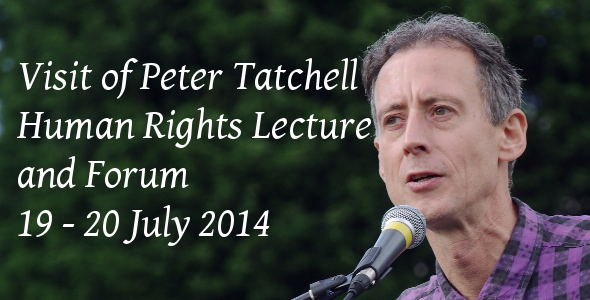
    Flickr is a social network I have a profile on but hardly ever post to. I’m much more likely to post pictures to facebook. However I do use Flickr for finding pictures which people have already given their permission to be copied. I use these on the cathedral website sometimes. For example, when Peter Tatchell was with us recently I needed a good pic of him and found one on Flickr that had the appropriate copyright permissions allowing me to use it so long as I acknowledged where it had come from. Such generosity is a blessing unto us all.

    LinkedIn

    I always think I ought to love LinkedIn more than I do. I have a profile but don’t know what to do with it. Maybe it just doesn’t work for the church.

    Others

    I don’t have an instagram account but I might do one day. I don’t have any accounts on scruff, grindr, blendr or anything else which attempts to find me something carnal 300 ft from where I am. I also don’t think regular online dating can work for me but that is perhaps a post for another day. I don’t do social bookmarking though I can see the point. I don’t run any micro social networks of my own though from time to time I explore the options for the congregation. I use email so much that I’ve forgotten that it is a social media network though I’m quite sure that it is. I used to have a profile on Friends Reunited and presume it is still there but have to admit that Facebook beat it hands down. I have a spotify profile and think that it is very clever to try to make music into social media but resist most of their attempts to do so.

    [The BBC now have a full report on Baroness Warsi’s resignation – pictures and responses from other people. I look at it and feel I’ve seen it all before. No-0ne links to it.]

    Conclusion

    Social Media and Ministry mix rather well. I don’t know what I’d do without some of it. It undoubtedly drives people to my blog and to the church website and both of those push some people towards the church. (They will push some people away too, but that’s OK – why waste the time of those who won’t be interested). Personality and ethos are gloriously muddled online. That’s the way the world is and I like it.

    So that’s what I’m using social media for.

    You?

37 responses to “The Peace and Unity and Order of the Church”

  1. Ross Kennedy Avatar
    Ross Kennedy

    Kelvin,
    I should, of course, have written ‘on this site’ rather than ‘appear in this blog’ because such derogatory terms have been used in the main by some of the correspondents.

    However, as to your use of the term ‘misogynist’, while certainly not applying it to any individual you seemed to be suggesting that all who held such views on headship were misogynist – a word which my dictionary defines as a hater of women. I happen to know a number of clergy who take this view and while agreeing that they are seriously mistaken , in no way can they be described as women haters – a serious and unfair accusation.

    Your also referred in your comments on the Bishops’ New Statement to ‘homophobic bullying’ which I also find objectionable. Today, of course if one dares, even with good reason, to remonstrate with anyone it is very likely that an accusation of bullying will be made and if they happen be gay then it is just as likely to be accused of being homophobic.

    Finally the term ‘arch conservative’ was used by someone who contributed a comment. I apologise for giving the impression that it was a term used by you.

    The point I was trying to make is that the use of such intemperate language cannot be conducive to reasoned discussion or argument. It reduces the whole thing to name calling.

    1. Cynthia Avatar
      Cynthia

      “It reduces the whole thing to name calling.”

      What is church leadership calling ME when they treat me as lesser in the eyes of God and the church? What is the result of hateful and hurtful language? Depression, LGBT teen suicide, homeless LGBT teens who are cast out by their religious families, sexual abuse of these homeless LGBT teens, hate crimes, human rights abuses…

      The truth of the suffering caused at the hands of the church needs to be told. It isn’t a pretty story, nor is it a polite one.

  2. Kelvin Avatar

    Ross, I’ve done an electronic search and I can’t find many instances of the term arch conservative on this blog. I happen not to think it too terrible, not least because I can imagine people using the term arch liberal to describe me. Although that would be inaccurate, I’m not sure that I’d be that offended to be honest.

    But that’s not the point. I can find only one instance of someone commenting on this blog using that phrase. That’s one comment in 10500 comments. It doesn’t seem to me to be a phrase particularly commonly used on this blog.

    The terms homophobe and misogynist have sometimes been used, but I’m struggling to find any instances of them being used to describe any individual. Again, I’m not of the view that they’ve been particularly commonly used in those 10500 comments. There simply aren’t that many instances of the words being used on this blog at all.

    Generally speaking, I think it is OK to debate ideas – it seems to me to be reasonable to be able to describe homophobic ideas or actions. Generally it is not helpful to call people homophobes. There is a difference that I know and tend to be quite careful around.

    I stand by my description of last week’s guidelines as homophobic bullying. Indeed, I can’t think of a better example of such behaviour. However, I’m not in the business of calling people homophobes and the accusation that I am and even that I do so habitually, seems to me to be far from secure.

  3. Ross Kennedy Avatar
    Ross Kennedy

    Kelvin

    I accept your comment about my comment about the use of the word ‘archconservative!! Apologies for overstating the case.

    Having re-read the Bishops’ statement I cannot for the life of me understand how you can suggest that any part of the document can be suggestive of homophobic bullying. Its obvious intent is to clearly state what the current situation is which is important given that there could be legal implications for any clergy who decides to act outwith the confines of the stated law of the land (i.e the Act permitting same sex marriage.)
    I’m not really sure what you expected the Bishops to do.

    I appreciate how emotive and divisive this whole issue is. Inevitably the peace and unity of our church is going to be (and is) seriously disturbed to the detriment of its mission.

    1. Kelvin Avatar

      No-one can be surprised at the bishops letting people know they should not do anything illegal.

      However the surprise has come from clergy being told that they themselves should not marry. If the bishops knew they were going to say this previously then they should have said so before the General Synod and particularly before the Cascade Process began. Both the debate at General Synod and the Cascade would have been different if this had been known.

      It particularly targets anyone who is in training to become a priest or lay reader who may have been accepted for that training whilst being open and honest about being in a civil partnership. To publish this with just one week to go before the law changed was, to say the least, unhelpful.

      People make plans. Most things to do with marriage are planned more than a week in advance.

  4. Ross Kennedy Avatar
    Ross Kennedy

    My final comment -you’ll be pleased to know!

    But surely any ordinand who is in the situation you describe will be fully aware of the doctrine of the SEC regarding Christian marriage as expressed by Canon 31. At their ordination/licensing they can hardly promise to render due obedience to the Code of Canons if they plan not to abide by them.

    When I was ordained in the Church of England candidates for ordination were barred if they were divorced and had remarried. Through time the situation was changed. I would not be surprised if, in a few years time, the SEC changes its stance on same-sex marriage – I wouldn’t be surprised but I would not be happy. As I have commented before, as an Anglican my faith is based on Scripture, Reason and Tradition, all three of which bear witness to the truth that Christian Marriage can only be between a man and a woman.

    1. Kelvin Avatar

      If someone in a same-sex marriage cannot subscribe to the Code of Canons because their manner of life puts them outside of the definition of marriage in Canon 31, then I can’t see any way that someone who is divorced can subscribe to the canons for the same reason.

      I personally think that someone’s subscription to the canons represents them accepting that this is the doctrine of the church. It is on that basis that I can subscribe to the Canons. Clearly I don’t believe the definition in Canon 31 to be adequate and have said so many times and very publicly.

    2. Lawrence Rosenfeld Avatar
      Lawrence Rosenfeld

      Ross, Parts of various articles in Ian Bunting’s collection, Celebrating the Anglican Way, can be paraphrased thus:

      “Anglicans understand the Old and New Testaments as “containing all things necessary for salvation” and as being the rule and ultimate standard of faith. ‘Reason’ and ‘Tradition’ are seen as valuable means to interpret Scripture (a position first formulated in detail by Richard Hooker), but there is no full mutual agreement among Anglicans exactly how Scripture, Reason and Tradition interact (or ought to interact) with each other.”

      To the best of my understanding, it is Tradition alone (and not a terribly old one, when compared with the Hebrew Bible as “Scripture”), that declares “that Christian Marriage can only be between a man and a woman,” given that for a great deal of the past millennium there may, indeed have been one man and one woman, but the rest of what was called “marriage” bore no resemblance to what we in the late 20th and early 21st Centuries recognize. I refer to women as chattel, marriage for political purposes, etc.

      I’m sorry that you are not happy, but I’m sorrier that you are subtly suggesting that, since I affirm that my Reason and reading of Scripture trump “Tradition,” that I am somehow less of an Anglican than you.

  5. Rosemary Hannah Avatar
    Rosemary Hannah

    Surely the Canons are not articles of faith. They are laws to be abided by, not a creed to be believed. There is a huge difference between the two.

    1. Kelvin Avatar

      My understanding is that it is something of an anomaly to have a doctrinal statement in a canon. The canons should indeed be regarded as the law of the church and not a doctrinal statement.

  6. Ross Kennedy Avatar
    Ross Kennedy

    Apologies for making another comment after I stated that I had made my final one on this issue.

    I agree that canons are not doctrinal statements or articles of faith but they must and do reflect the belief of the church. As the Bishops’ Statement puts it ‘The doctrine of marriage of the SEC, as currently expressed in Canon 31 of the Code of Canons, is that marriage is “a physical, spiritual ad mystical union of one man and one woman.”

    I would, therefore, have to disagree with Rosemary’s claim that there is a ‘huge difference between the two.’ They are obviously very closely linked to each other and with the practice and life of the church

    1. Kelvin Avatar

      The important point to remember is that the statement regarding marriage in Canon 31 is “The Doctrine of this Church is that Marriage is a physical, spiritual and mystical union of one man and one woman created by their mutual consent of heart, mind and will thereto, and is a holy and lifelong estate instituted of God.”

      If it isn’t possible for those who advocate same-sex couples being able to enter marriage to edit that definition to suit their own ends then it can’t be possible for anyone else to do so either.

      If it isn’t possible for someone to subscribe to the canons because they happen to be in a marriage with someone of the same gender then it can’t be possible for someone to subscribe to the canons who is in a second or third marriage either.

      The way our church has dealt with divorce (which is also controversial for some people) has been to allow people to minister who are in relationships which fall outside the definition of marriage in Canon 31.1

    2. Lawrence Rosenfeld Avatar
      Lawrence Rosenfeld

      “Huge” or not “huge”? Rather than debating the size of a subjective term, perhaps we can try to find a more objective method for determining the relationship between the two.

      It seems to me – and I welcome debate on this point – that the Canons ought to flow from our faith (“reflect the belief of the church”). Assuming that is the case, then after we deal with the question of “what IS the belief of a church that encourages reason over dogma?”, we get to wrestle with the potentially circular nature of putting statements of belief into a governance document.

  7. Ross Kennedy Avatar
    Ross Kennedy

    Not so. Canon 31.4 allows for a Diocesan Bishop to permit the marriage of person/s whose previous marriage has been dissolved and where one of the previous partners of that marriage is still living.

    1. Kelvin Avatar

      Yes, Ross. The Canon allows for a bishop to permit a marriage after divorce.

      However, that says nothing at all about subscription to the canons or anything about whether such a person should be fit for ordination.

      If it isn’t possible for someone to subscribe to the canons if they happen to be marrying a person of the same gender due to Canon 31.1 then I can’t see how a person can subscribe to the canons if they are in a second marriage which also falls outside the boundaries of Canon 31.1 regardless of whether such a thing was permitted in church.

      I think that a second marriage should not be an impediment to ordination. However, the Bishops’ recent guidelines have implications beyond those who happen to be gay and lesbian.

      These are all inconsistencies that come from a time when the Canon was revised to suit some circumstances (divorce) but before other circumstances (marriage of same-sex couples) were even thought about. We shouldn’t expect such Canons to answer questions they were never designed to ask.

      Notwithstanding that, one of the reasons that it was presumed by many that being in a same-sex marriage (which does indeed fall outside the doctrinal definition of marriage in the canon) would not be a bar to ordination is precisely because being in a second marriage (contrary to the doctrinal definition of marriage) isn’t. One can’t have it both ways.

  8. Seph Avatar
    Seph

    It seems to me that a bishop can either be a ‘focus for unity’ (a seriously dubious phrase in my opinion) or show real leadership—I don’t see how it is possible for one person to do both.

    I can’t see much evidence of either from the SEC bishops at the moment.

Leave a Reply

Your email address will not be published. Required fields are marked *

Previous Posts