
• Ditching the sermon – a dialogue for Holy Innocents

    dialogue with bishop
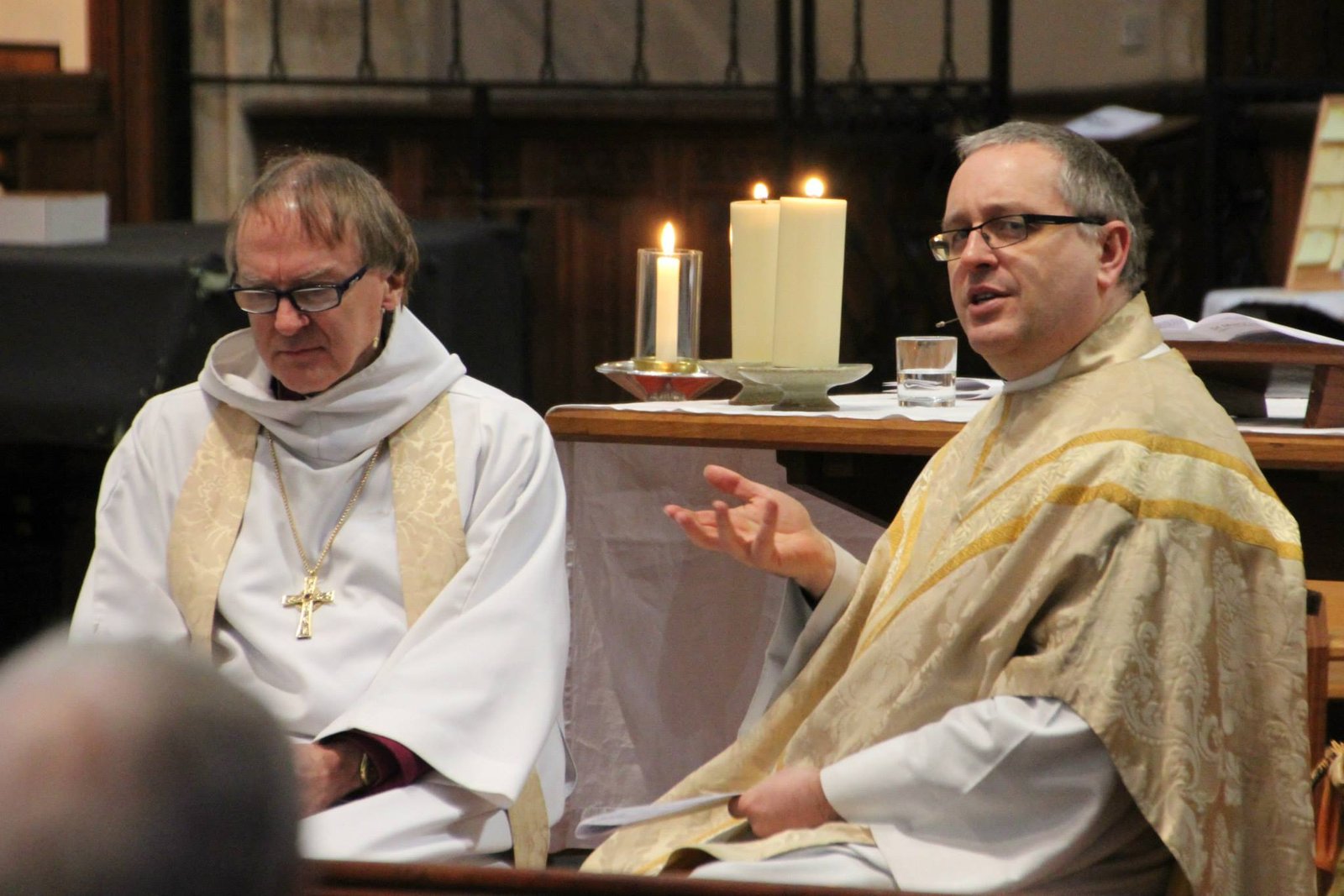
    This morning I decided to ditch the sermon in favour of a dialogue with Bishop Gregor.

    It has been a difficult Christmas in Glasgow with a major tragedy in the centre of the city as people were doing their last minute Christmas shopping. Bishop Gregor was himself there in the square just after the incident involving the bin lorry. In this conversation he describes what he saw, what he was asked to do and how he responded.

    Together we reflected on how Christians find God.

    This happened in the context of the Sunday morning Sung Eucharist instead of a sermon. It seemed the right thing to move the Feast of the Holy Innocents back to this day, it having originally been scheduled to be celebrated here tomorrow morning.

    As I said at the beginning of the service, Jesus wasn’t born into a fairy story, nor into a Christmas card – he was born into  the real world and sometimes we need to think about what that really means.

    Here’s the video:

    Dialogue between Kelvin Holdsworth and Gregor Duncan in Glasgow on 28 December 2014 from Kelvin Holdsworth on Vimeo.

One response to “Eid, Pride and Abraham’s Sacrifice”

  1. Tim Avatar

    As one who grew up(?) in churches leaning toward the view “it’s a tough story for a tough world, how else would God be just?” in varying degrees, I agree the face-value-narrative understanding of the story is repellant.

    One thing stood out for the first time during Sunday’s reading: the plurality in Abraham’s line – “…and we will return to you”. I’ve been idly wondering about that since.
    It doesn’t make the story wholly acceptable as Abraham still ploughs on ever closer.
    But if one’s goal is to find a “by faith, Abraham” in there, better to say it’s the prior confidence that things will somehow work out well (which I thought was how Hebrews was trying to define it), than to locate the commendable quality in violence (which, by rabbiting on about resurrection, Hebrews does).

    In the absence of other clear & wholly mitigating contexts in which to place the story, certainly it’s simplest, easiest and probably best to file it under “that’s how they saw God back then” and move swiftly on.

    Oofft.

Leave a Reply

Your email address will not be published. Required fields are marked *

Previous Posts