
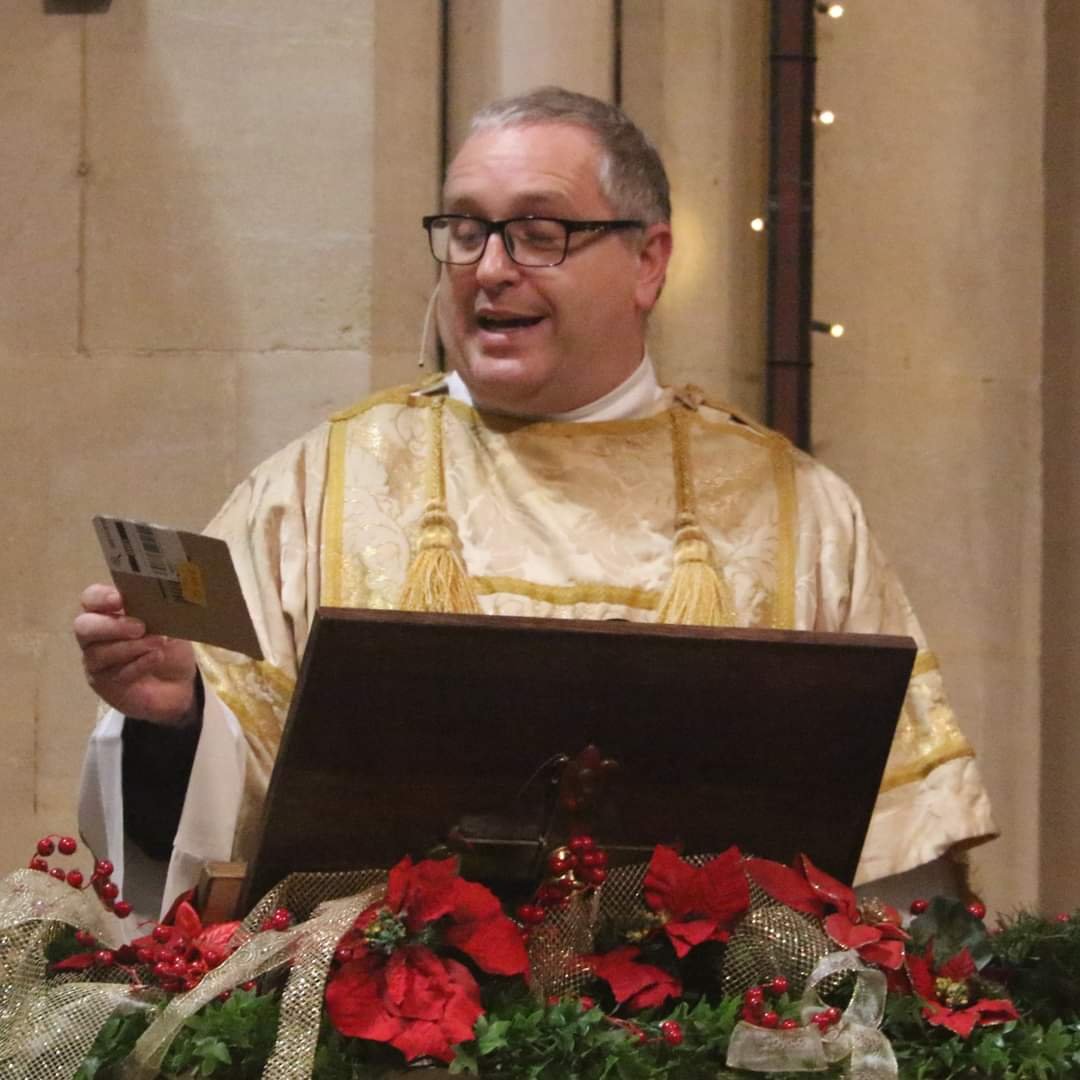
At the moment, I’m on sabbatical and am not preaching regularly. However, I recently had the opportunity to preach to a congregation largely made up of apprentice preachers – those who are training for ordained and lay ministries in the church in the future. A number of them have asked me to share some wisdom on how I prepare a sermon. One even asked me to share my ‘homiletic method’. I don’t know about that, but here’s a few things I’ve been learning about preaching. I’ve written posts like this before, but here’s where I am in 2022.
- In good sermons there should be a beginning, a middle and an end. In the best sermons, they don’t come in that order.
Start somewhere unexpected. Bewilder. Entrance. Beguile. - A thousand biblical commentaries will not make a preacher a thousand times better.
I have a huge admiration for those who write biblical commentaries but I have to confess that I very rarely use them when I’m writing a sermon. I remember a biblical scholar who used to be a member of one of the congregations that I’ve belonged to telling me that he had spent months trying to work out what my sources were and what commentaries I was reading.
“Ah,” I said, “I’m just making it all up”.
“I knew it!” he replied.
The only caveat I would add to this is that I don’t think I would be able to make it all up without having been taught theology by inspirational teachers in university. - Good preachers listen to good preachers.
I’m lucky in that I hear good preaching within my own congregation from other members of the team. However, everyone can listen to good preaching these days. This internet thingy looks like it is here to stay. - Reflecting on the biblical texts is not just for sermon prep.
Regularly thinking about what’s in the bible is part of the life of a preacher, it isn’t just for when you need to get into the pulpit. For me, I’ve come to realise that hearing the bible read aloud when saying the daily office with others is a key way that I get to think about what’s in it. Being part of a group of people who regularly read the bible out loud together means that you get to be in a group that can talk about the horrible and outrageous bits honestly and say what you feel about them. This is important. The bible isn’t always nice. - It is OK to use other people’s ideas but not their words.
Don’t copy and paste. You’ll get found out. Anyone who knows you will know if you use material that isn’t in your own voice. They will wonder whose voice it is. And nowadays they will find out. - Be serious about being funny if you want to make people laugh.
I’m very lucky in being someone who preaches in Glasgow where people have an amazing sense of humour. It always used to be said that stand-up comedians dreaded playing Glasgow as audiences could give them a hard time. However, one of a number of reasons that the Glasgow Empire was called the comedians’ graveyard was because the audience was funnier than some who trod the boards and they knew it.
Different things make people laugh in different places and it is worth working out what those things are. For example, the word, “Edinburgh” is intrinsically funny in Glasgow. The word, “Glasgow” will barely raise a smile in Edinburgh.
There’s a big difference between being genuinely funny in the pulpit and telling a joke. By and large, formulaic jokes are not nearly as funny as reflecting on real life.
The way you speak matters. Your voice will be different when you make people laugh to when you make people cry or think or get cross.
Yes, sometimes preachers should make people cross.
Rhythm is crucial. Think about preaching whilst doing something rhythmic – walking, swimming, knitting or …. well, you can think of something else that you need rhythm for. - Preaching is a form of striptease.
I’ve said this before and it always makes people feel uneasy. What I mean by it is that good preachers tend to reveal a lot about themselves. Congregations come to know the person they are listening to week after week. Show them another layer. Reveal something new every time.
You know and they know that there’s parts of your personality that you’ll never quite reveal but they don’t know which those bits are. Not knowing quite what’s coming next is all part of the excitement.
Tell stories about yourself but only stories in which you are the fool. - Art begets preachers art.
I’m sure that my preaching would be a lot more dull if I didn’t go to the theatre or listen to the spoken word on the radio. People craft words and use them to tell stories. Some of them are very good at it and they have much to teach us in church. People who see good opera and theatre are never going to be satisfied whilst putting on dull liturgy and preaching dull sermons.
Remember what Peter Brook said: “A stage space has two rules: (1) Anything can happen and (2) Something must happen.”
A pulpit is a stage.
The altar sits in the middle of another one.
Oh, and go to art galleries and look at things you don’t immediately understand. Preaching is a visual art, just one in which the paintings and the sculptures are made with words. - Have one idea at once. Save the other ideas for another day.
My bishop once said to me after I’d preached at some bigfangled service or another, “I don’t know how you do it, you only ever have one idea in every sermon.” He’s right. I do. And if I find I’ve got lots going on in a sermon I try to weed out the thoughts that are getting in the way of the one idea that I’m trying to get over and leave them for another time.
People in the pews know that a sermon that is a few sentences too short is a hundred times better than a sermon that is a few hours too long. Preachers need to learn the difference too. - Always chose the difficult text if presented with a choice to preach on.
Some of the stories in the bible are difficult. Some vicious. Some violent. Some perplexing. Some outrageous. Always prioritise preaching on the hard stuff and worry away over it. The best sermons I ever write are about the most difficult texts. Preaching on the difficult stuff is hard. Preaching on the lovely stuff is impossible. Who ever preached a sermon that improved on or elucidated 1 Corinthians 13 anyway?
Someone once told me that I made the hard stuff easy and the easy stuff difficult.
I take that as a compliment.
Never be frightened of admitting that a passage is difficult. Never patronise people in the pews by withholding from them Big Modern Ideas that you came across in your theological education. Christians can cope with new ideas. Christianity isn’t about to be wiped out by theology. - Record sermons. Share sermons. Be the first to watch your own sermon.
I’ve probably learned more from watching and listening to my own sermons than from anyone else. Not because I’m a homiletic genius but because I’m not. Listening to how I paced the sermon, how I used the dynamics and speed of my voice and above all, listening for the reactions of the congregation, is crucial to leaning how to do it better. Most people don’t like listening to recordings of their own voice. However, if you want to get better at preaching then get over yourself as quickly as you can. If you can’t cope with listening to yourself you cannot reasonably expect others to listen to you.
I realised this week after I’d preached that if I’d just rephrased one of the lines and paced it differently I’d have got a belly laugh out of the congregation instead of a mere titter.
That’s not a failure.
Spotting that and tucking it away for another time is a success. - Everyone who preaches can become a better preacher
There is no-one who speaks in public who couldn’t get better at it than they currently are. Don’t be frightened of thinking about doing it better, no matter how early (or how late) you are in your preaching career. Quality and excellence are mission values these days, something a lot of people are very frightened of indeed – which I may write about more in another post.
I remember years ago someone telling me that they thought I’d be a great preacher one day. I was furious – I thought I was pretty good at the time. I eventually came to realise that it wasn’t me who had the word of wisdom that day, it was the person who was speaking to me.
Nowadays I share their hope that I’ll be a great preacher some day. In the mean time, I’m still learning.

Leave a Reply