• Can you preach about the Road to Emmaus?

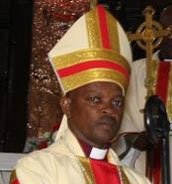
    This sermon was preached on 19 April 2015 in St Mary’s Cathedral, Glasgow using ideas that were also explored in the sermon preached for Fr Chucks Iwuagwu in Haslemere, Surrey.

    Sermon preached by Kelvin Holdsworth on 19 April 2015 from St Mary's Cathedral, Glasgow on Vimeo.

    There are a number of texts in the bible about which it is almost impossible to preach. If I were to ask you which texts were there which preachers really shouldn’t attempt to tackle then I fancy that you might come up with some of the genealogies – the lists of who begat whom. Or maybe some of the more obscure purity laws in Leviticus which have little to do with our lives in a modern world.

    And it is true – some of those texts are next to useless for anyone trying to preach the gospel.

    But there are also a small number of texts about which sermons are pretty tricky for the opposite reason. If I’m honest, I’ve never heard (or preached) a sermon on the good Samaritan which actually improved on the story itself. It is the same with the Love Chapter – that glorious paean to love which St Paul sent to the fractious church in Corinth. No matter how badly it is read at so many weddings the ultimate truth shines out.

    Love is patient, love is kind. (And that just can’t be improved upon.

    And the same might be said of Psalm 23 – when did you ever hear a sermon on it that improved on the poetry or the pathos of the human condition so precisely observed.

    And so it is with the gospel reading this morning.

    The road to Emmaus is the Easter reading par excellence – it is familiar and comforting and disturbing all at once because it contains within it the surprise of recognising the Lord himself who appears, as is our experience with the breaking of bread and the fellowship that results from the breaking down of barriers between people.

    But who can improve on the story?

    What preacher ever beat Luke at his own game?

    The answer, if there is one is to presume that we’ve never heard Luke telling of the story at all.

    The answer is to put ourselves into the shoes – or probably the dusty sandals of the two who made their way to this place called Emmaus.

    And the thing to remember is that they’ve not heard the story. They’ve no idea what’s about to happen to them much less any idea that we might still be talking about them these centuries later.

    As they walk along, can we walk with them and overhear their conversation.

    Before the stranger catches up with them, what are they saying?

    Luke just tells us that they were talking about what had happened. Jesus had been put to death and Jesus had been buried. He was gone. No doubt there was a lot to talk about.

    If we read this as pious Christians who know how the story turns out then we might presume that they were having prayerful discussions about how Jesus’s death fitted in with the prophecies of the Hebrew scriptures. If we read the story as empathetic fellow travellers on a spiritual tradition we can probably see into their grief and share it.

    But what makes us so sure that is what they were talking about.

    What makes us so sure that they were not angry with Jesus for provoking just about everyone and finally going that one step too far and getting himself killed off long before his time.

    They may not have been experiencing pious thoughts at all. They may have been really rather cross.

    And surely they must have been wondering what was coming next.

    They’d been part of a great movement. And they’d lost their Messiah – what comes next? Who will replace him?

    How do you replace a Messiah anyway?

    Well, it’s obvious, isn’t it? You just put an advert in the Church Times for a new one. Maybe that’s what they were talking about as they made their way along the road.

    How to write the advert for a new Messiah.

    I’ve got this week’s edition of the Church Times here. This is how those adverts usually sound.

    • City based church seeks Messiah. Our priorities are missional leadership, imaginative outreach and children and young people. We seek a Messiah who has a personal relationship with God. (These adverts are all written in code).

    • Here’s another one – Honorary Assistant Messiah needed for 8 rural parishes in Norfolk. House provided but no stipend. Must be self-motivated.

    • Messiah required to be rector of beautiful rural parish in the Garden of England. Good schools, lovely people, well-appointed Rectory. Resolutions A, B and C have been passed. (That’s code for – no female Messiah’s need apply).

    It is funny the things they put in these adverts.

    If I’m ever tempted to read these out in the office on a Friday morning when the Church Times comes I have to make sure that there are no coffee pots near to the Vice Provost. He has been known to get over excited and break crockery in his fury at what they say.

    You would think sometimes that the Christian Gospel had been spread for 2000 years by mission development plans, people able to accomplish goal based ministry and those who have a passion for “innovative work with families and children”.

    Fortunately, I think that I worked out some time ago that this simply isn’t true.

    The Christian Gospel is spread by kindness, good humour, by people who bear the marks of Christ in their souls to enable them to reach out to a world that needs to know more about God’s love. It is spread by the enthusiastic witness of those who know the love of God to be true and to be the most wonderful thing in the whole world. But somehow the adverts don’t usually mention those things.

    The stranger reached over the table and picked up the bread and gave thanks and broke it and their eyes were opened.

    Opened I suspect to the good company that he had been on the road. The good humour he had exhibited that made them invite him in. The kindness he had shown them at a difficult time. Familiar factors. Familiar signs. Familiar symbols.

    And all of a sudden their eyes are opened. And all of a sudden he doesn’t seem to be there.

    Or is he?

    All of a sudden they have a burning desire to rush back to Jerusalem. All of a sudden they have a burning desire to tell their friends that all it not lost. Love has not died. Kindness has not gone. The one who broke bread with them before has broken into their world again.

    They don’t need a new Messiah.

    It is worth remembering sometimes that the church doesn’t need any new Messiahs. One was always enough and he’s still around.

    Still around and still turning up where bread is broken, stories shared and God’s people with humour and kindness celebrate the greatest news in the world – that God is love.

    Turned up there in Emmaus. And turns up here.

    For if Christ were not risen, we would not be gathered here in the name of the Father and of the Son and of the Holy Spirit.

    Amen.

19 responses to “Preferring me dead”

  1. chris Avatar

    Well said, Rosemary. As for this business of everyone’s having to remain quiet and reasonable while unspeakable things are spoken … I’m sorry. I have this whined at me more times than I can count, so that my own calm goes out the window and I want to rage, rage, and the advocates of calm sit in their dispassionate heaven and think all will be well if people just shut up for another generation. It’s an affront to any society that this discrimination is still allowed to be seen as anything other than monstrous, and we need to raise a storm of protest that will make this obvious to even the most chilly political mind.

  2. Rosemary Hannah Avatar
    Rosemary Hannah

    For the comfort of Kelvin, however, let me add this. The people who promote discrimination against queer folk very frequently neither want them dead not yet unborn. What they actually (though mistakenly) believe, is that gay people would be just the same if they were straight. That the person would be just the same, because who you desire is some kind of bolt-on accessory which you can pick from the shelf and have or not have, like adding an MP3 player to your car, or just having a tape deck. Now I know that is a terrible misunderstanding, but it is not actually quite as terrible as wishing that the essence of people was somehow different.

    FWIW I do remember teaching a session on this to students, having asked them to imagine what people 100 years from now would think of our attitudes, and having one student tell me that in 50 years all gay people would be ‘cured’, and my suppressing my fury then and trying to explain why I did not want my friends and relatives ‘cured’ – and all the emotion catching up with me in my room at midnight, resulting in tears and all-but lying on the floor banging my heels and screaming. I suppose it was less actionable than banging a student’s head off the wall…..

  3. […] debates at the recent meeting of the Church of England’s General Synod under the stark title, Preferring me dead. More jauntily, the damsel of the dancing scones writes about blogging’s transformative […]

  4. Elizabeth Avatar
    Elizabeth

    I wanted to post on this when I first read it (via Google Reader) but for some reason the internets wouldn’t let me on the site.

    It’s hard to read this difficult words, but I think it’s very important that they’re said. I have only the smallest glimmerings of imagining how difficult it must be to be be a gay or lesbian priest now and fear that all too often I am prone to ignore the wider actions of the Anglican Communion because I’ve found it too painful and aggravating. But ignoring it is my privilege and no good in the long run.
    And on this issue, as on others, I find it unhelpful to advocate a quite and slow approach. Movement is not always uni-directional and I agree with Kelvin that we seem to be moving backwards, at least, as far as the SEC College of Bishops and the Anglican Communion leadership is concerned. The softly, softly approach is not justice and is not by any stretch of the imagination the only means by which justice is reached. On this issue, as on others, the question is, if not now, when?

    And I really, really dislike gay and lesbian Anglicans being sacrificed on the altar of loyalty to the ++Rowan. This is what happened in The Episcopal Church across the pond in 2006 and thank God General Convention saw fit to reverse the decision in 2009. Loyalty tests of such kind are horrendous!

  5. Rosemary Hannah Avatar
    Rosemary Hannah

    And bluntly the only loyalty worth giving is loyalty to Truth and God.

  6. Revd Ross Kennedy Avatar
    Revd Ross Kennedy

    I didn’t listen or read about anything voted on at the recent C of E Synod so can’t comment.

    But frrankly I’m bored with all the obsession with sexuality – I just wish we could obey our Lord’s command to love one another.
    But let me say this to lFr Kelvin, I for one certainly don’t want you dead. Life would be so dull without you – I would miss your blog and your excellent sermons ( which I must confess I sometimes plagiarise – bless me Father for I have sinned….) Don’t agree with much of what you say on sexual ethics but accept without question your devotion to our Lord and your ministry at St Mary’s.

    Prejudice and intolerance certainly smother any real opportunity for real debate. However, I have experienced this as much from those on the theological left (including correspondents to this site) as well as those on the theological right.

    The fact is that we are just as likely to find prejudice among liberals as well as conservatives in the church. I remember Bishop Richard Holloway discussing the ordination of women on the Television in the 1990s and making the insulting claim that most of the men opposed were probably homosexuals.

    I’ve also heard many liberals express a definite wish for all those who dare to oppose the consecration of women to the Episcopacy to get out of the Church… or maybe even to drop dead.

    The fact is that lots of people experience prejudice for a variety of reasons – a friend of mine who trained as a male nurse in the 1960s experienced a great deal of prejudice from his female superiors and as a result an absolute block to any promotion.

    Others are discriminated against because they are too short or too tall or too fat , or not intelligent enough or didn’t attend the right university and even for daring to choose to be a ‘closet gay’!

    There is a whole suffering world out there to which we are called upon to bring hope and help in the name of Jesus. So let’s stop focusing on our own personal problems and obsessions and get on with preaching the Good News.

  7. ryan Avatar
    ryan

    >>>The fact is that we are just as likely to find prejudice among liberals as well as conservatives in the church. I remember Bishop Richard Holloway discussing the ordination of women on the Television in the 1990s and making the insulting claim that most of the men opposed were probably homosexuals.

    If +Richard was talking about Forward in Lace types then he might have had a point ;-).

    More seriously: can you cite any ‘liberal’ church that is suggesting denying the sacraments to conservatives? Or pining for an age when violence and discrimination against evangelicals was accepted as a good? These days, people have less tolerance for ‘I’m not racist,but…’ or ‘I don’t *hate* Jews, but….” or “the sexes are equal, but” rhetoric but anti-gay discrimination on religious grounds often goes unchallenged. So while it is of course important to challenge all forms of prejudice, there are no major ‘Christian’ Institute type lobbies endeavouring to defend and legitimise persecution of the fat, tall,or short.

  8. David McCarthy Avatar
    David McCarthy

    Oh, I know that in the secret halls of the likes of Facebook, there are many who feel free to exhibit prejudice against churches and individuals who don’t fit the bill. That reveals what is truly in the hearts of people. I’d hope that no-one would permit such diatribe and speak out against it, just as I have done to those on ‘the right’ who speak and behave badly.

    As for you, dear Kelvin, there are many who disagree with you, but in our wee bit of the Church, I seriously doubt if there is anyone who would “prefer you dead”. You are a gifted minister – we’d miss you!

Leave a Reply

Your email address will not be published. Required fields are marked *

Previous Posts

  • Christmas Sermon

    Here is what I said in the pulpit on Christmas Day There’s a whole slew of new sermons on the preaching page.

  • He is come

    He is come, he is come. Wrapped in swaddling clothes and lying in a manger. Our God is amongst us.

  • How to be single at Christmas

    I find myself wanting to write something about being single at Christmas. After all, I’ve got some experience to draw on. There was a time when I used to find being on my own at Christmas a tricky thing to think about, but these days its one of the times of the year when I…