
• Ditching the sermon – a dialogue for Holy Innocents

    dialogue with bishop
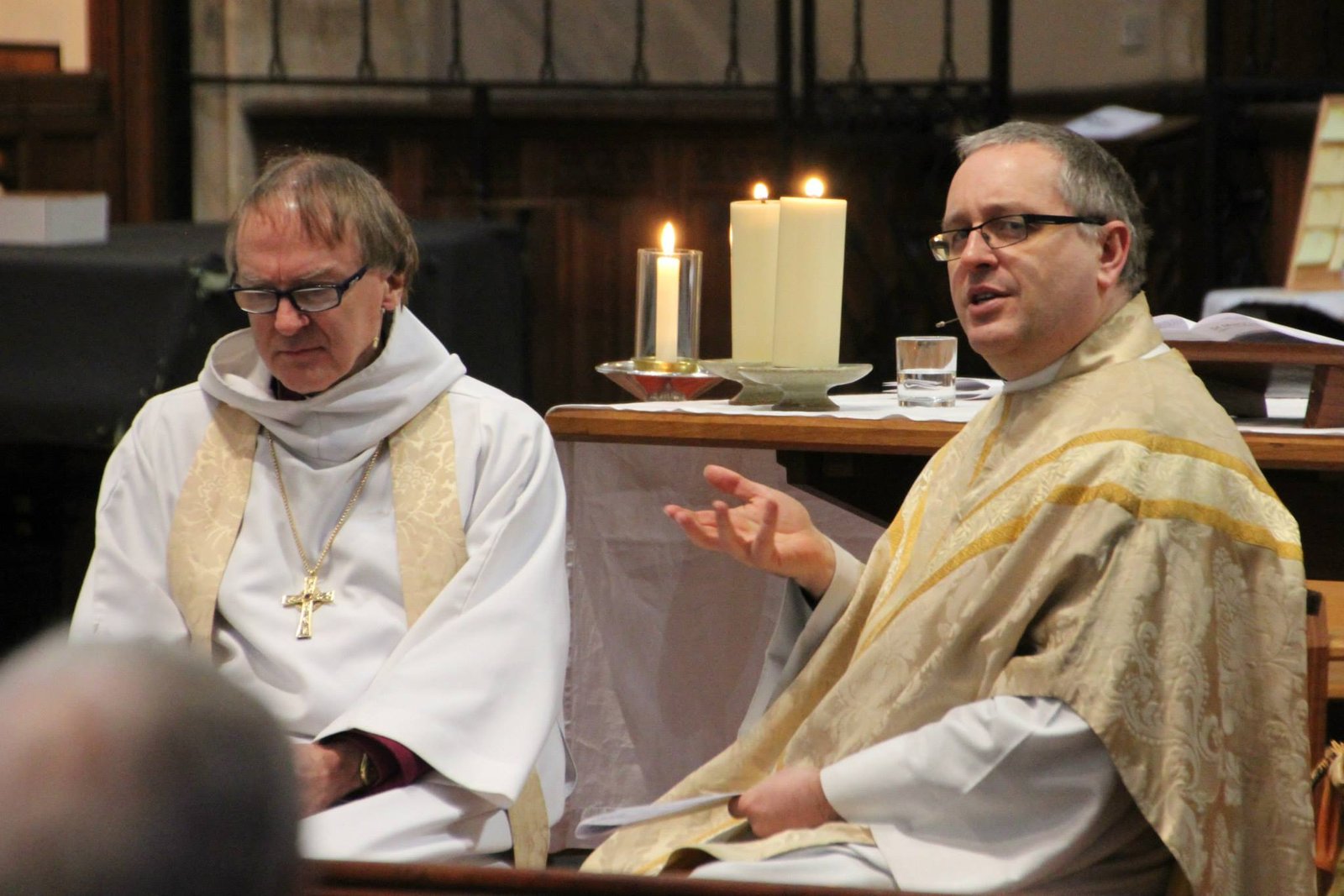
    This morning I decided to ditch the sermon in favour of a dialogue with Bishop Gregor.

    It has been a difficult Christmas in Glasgow with a major tragedy in the centre of the city as people were doing their last minute Christmas shopping. Bishop Gregor was himself there in the square just after the incident involving the bin lorry. In this conversation he describes what he saw, what he was asked to do and how he responded.

    Together we reflected on how Christians find God.

    This happened in the context of the Sunday morning Sung Eucharist instead of a sermon. It seemed the right thing to move the Feast of the Holy Innocents back to this day, it having originally been scheduled to be celebrated here tomorrow morning.

    As I said at the beginning of the service, Jesus wasn’t born into a fairy story, nor into a Christmas card – he was born into  the real world and sometimes we need to think about what that really means.

    Here’s the video:

    Dialogue between Kelvin Holdsworth and Gregor Duncan in Glasgow on 28 December 2014 from Kelvin Holdsworth on Vimeo.

14 responses to “Liturgical sadness”

  1. Robin Avatar
    Robin

    Has anyone else been following the series in ‘The Tablet’ taking the Latin Sunday Collects from the Roman Missal (Ordinary Form), printing alongside them the official English translations and then commenting on the Collects?

    The effect the series has on me is not what was intended. I spend much of my time being puzzled and irritated by the looseness of the translations from the Latin – words and phrases left out, new ideas included, and sometimes translations which are at best a paraphrase.

    The point of mentioning this is that what I’ve seen of the new English translation of the Roman Mass is undoubtedly more faithful to the Latin, which is, after all, the definitive form.

    This will be important to some and, I expect, an irrelevance to others. However, an ecumenical gesture we could make (pause for breathtakingly unpopular suggestion!) would be to incorporate the new relevant parts of the new translation in our own Liturgy. That really *would* show ecumenical goodwill.

  2. David |Dah • veed| Avatar
    David |Dah • veed|

    “…the Latin, which is, after all, the definitive form.”

    That is certainly debatable. I fail to see that the purpose of the liturgical reforms of the 70s and 80s which resulted in many new liturgical books for most major denominations and prayer books for Anglicans, was to get us all back to the Latin Mass.

    Rome has pretty much cut the rest of us “free” so to speak, as irredeemable for all the heresies of women’s ordination and now GLBT ordinations and same sex blessings, and I am fine with that. I would not go anywhere near the Tiber, but I share Kelvin’s sense of loss of something we pew sitters shared around the world.

  3. Robin Avatar
    Robin

    Just to clarify, when I wrote “…the Latin, which is, after all, the definitive form” I meant that it was the definitive form for Roman Catholics.

  4. Ritualist Robert Avatar
    Ritualist Robert

    Vicky wrote: “… it is unlikely new conversion areas such as China would find Latin accessible.”

    A Roman friend of mine who probably would know said to me the other day that the Catholics in China use the Latin mass because they missed out on the reforms of Vatican II. Does anybody know if this is true?

    I went recently to a Latin mass here in Sydney with the same friend and most of the servers and the priest were from Vietnam … and a good deal of the back-to-the-future seminarians one sees at the papist cathedral seem to be Korean … so I am not sure that the formality of the Latin mass, or a more formal English one will put off Asian converts.

    It’s a pity that the ecumenical implications of this translation exercise haven’t been pondered a bit more.

Leave a Reply

Your email address will not be published. Required fields are marked *

Previous Posts