
• Same-sex Marriage Date for Scotland – 31 December 2014

    SONY DSC

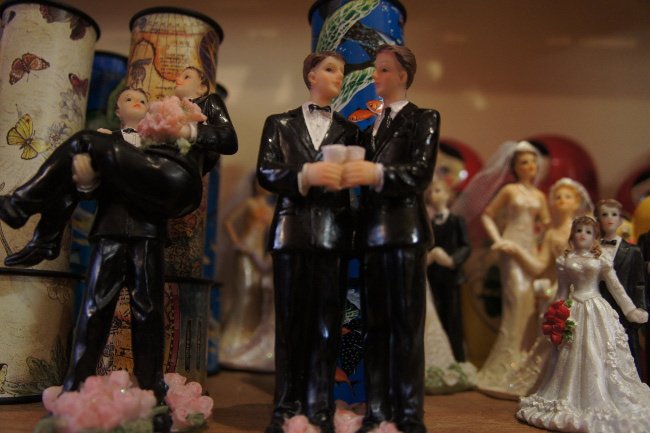
    Exciting news this morning – we have a date for the first same-sex marriages in Scotland. The date is within this year – just. The first day on which most couples will be able to get married will be 31 December 2014, the day known in Scotland as Hogmanay. There’s going to be some parties north of the border that night, I can tell you.

    The law will actually change in mid-December, as expected but the Scottish Government has delayed its proposal to increase the notice period to 28 days. Thus, same-sex marriage becomes legal on 16 December 2014. If a couple have been married in another jurisdiction (eg England) then they will be regarded in Scotland as being in a Civil Partnership until midnight on 15 December and regarded as a married couple on 16 December. Couples can give notice to marry on that day and a couple of weeks later can get married on 31 December 2014.

    From 16 December 2014 a couple in extenuating circumstances will be able to apply to be able to get married more quickly – this usually applies if one partner is near to death. It is entirely possible that such a couple may be the first to be married but the big celebrations will come right at the turn of the year.

    From 16 December, trans people can get gender recognition without having to be divorced.

    Couples who have entered a Civil Partnership will be able to apply to a Registrar to convert that to a marriage from 16 December 2014 and it will be free to do so for the first year. (You pay for the marriage certificate just like anyone else but there is no processing fee). Alternatively, couples may pay the usual fees for a marriage ceremony. Couples will be able to be married in a Register Office or by religious or humanist celebrants in certain circumstances.

    Couples will be able to be married in the Scottish Episcopal Church with the permission of the House of Bishops, the House of Clergy and the House of Laity meeting in General Synod.

    Any couple who has entered into a Civil Partnership who converts it to a marriage is welcome if they wish to bring the certificate to St Mary’s where it can be laid on the altar at a Eucharist in thanksgiving for the partnership and for this change in the law.

    Civil Partnerships will continue to be available to same-sex couples (but not to straight couples) and I am more than willing to go on blessing such couples.

    I’m also willing to bless all couples who have married by a Registrar, using the Service of Benediction that I drew people’s attention to earlier.

    Here’s the prayer I will be using to bless couples in church:
    God the Father,
    God the Son,
    God the Holy Spirit,
    bless, preserve and keep you;
    the Lord look upon you with favour and mercy
    and so fill you with all spiritual benediction and grace,
    that you may so live together in this life
    that in the world to come you may have life everlasting.
    Amen

    Straight couples marrying who wish to express solidarity with gay couples who wish to get married in Scottish Episcopal Churches should get married in a Register Office and come to church for the Benediction of their marriage just like anyone else wanting to get married.

    I’ve yet to decide whether or not to continue to perform legal marriages for straight couples in church after 31 December 2014.

    Congratulations are in order not only to those who will be getting married soon but also to all those campaigners who worked to change the law, to parliamentarians who voted for it and civil servants who have been working on it. The brilliant campaigning of the Equality Network has been a powerful force in bringing about change. And inevitably, my mind turns in awe to the members of St Mary’s Cathedral, particularly those belonging to the LGBT group who went out collecting signatures to bring in petition to the Scottish Parliament long before the big campaigns got going.

    We changed the world.


    Picture Credit – Peter Kolkman Copyright – Creative Commons Some Rights Reserved

14 responses to “Liturgical sadness”

  1. Robin Avatar
    Robin

    Has anyone else been following the series in ‘The Tablet’ taking the Latin Sunday Collects from the Roman Missal (Ordinary Form), printing alongside them the official English translations and then commenting on the Collects?

    The effect the series has on me is not what was intended. I spend much of my time being puzzled and irritated by the looseness of the translations from the Latin – words and phrases left out, new ideas included, and sometimes translations which are at best a paraphrase.

    The point of mentioning this is that what I’ve seen of the new English translation of the Roman Mass is undoubtedly more faithful to the Latin, which is, after all, the definitive form.

    This will be important to some and, I expect, an irrelevance to others. However, an ecumenical gesture we could make (pause for breathtakingly unpopular suggestion!) would be to incorporate the new relevant parts of the new translation in our own Liturgy. That really *would* show ecumenical goodwill.

  2. David |Dah • veed| Avatar
    David |Dah • veed|

    “…the Latin, which is, after all, the definitive form.”

    That is certainly debatable. I fail to see that the purpose of the liturgical reforms of the 70s and 80s which resulted in many new liturgical books for most major denominations and prayer books for Anglicans, was to get us all back to the Latin Mass.

    Rome has pretty much cut the rest of us “free” so to speak, as irredeemable for all the heresies of women’s ordination and now GLBT ordinations and same sex blessings, and I am fine with that. I would not go anywhere near the Tiber, but I share Kelvin’s sense of loss of something we pew sitters shared around the world.

  3. Robin Avatar
    Robin

    Just to clarify, when I wrote “…the Latin, which is, after all, the definitive form” I meant that it was the definitive form for Roman Catholics.

  4. Ritualist Robert Avatar
    Ritualist Robert

    Vicky wrote: “… it is unlikely new conversion areas such as China would find Latin accessible.”

    A Roman friend of mine who probably would know said to me the other day that the Catholics in China use the Latin mass because they missed out on the reforms of Vatican II. Does anybody know if this is true?

    I went recently to a Latin mass here in Sydney with the same friend and most of the servers and the priest were from Vietnam … and a good deal of the back-to-the-future seminarians one sees at the papist cathedral seem to be Korean … so I am not sure that the formality of the Latin mass, or a more formal English one will put off Asian converts.

    It’s a pity that the ecumenical implications of this translation exercise haven’t been pondered a bit more.

Leave a Reply

Your email address will not be published. Required fields are marked *

Previous Posts

  • Bible Study for Preachers

    Just back from Bearsden where I had been at a day on the Gospel of Luke which we start reading in church from Advent Sunday. It was a day for preachers from all around the diocese and very well spent. John Riches from St Mary’s was our facilitator for the day. Introduction to what is…

  • New Blogger – Cliff Piper

    Could you all go over and see Cliff Piper over at http://morayrosscaithness.blogspot.com/ He is obviously not getting enough attention as the Dean of Moray, Ross and Caithness so he has started a blog. He is taking his first steps in the Blogosphere and needs our encouragement and compassion. He says on twitter that its scary.…

  • Swedish Consecration

    I note the report on Sweden’s Local news-site that bishops from England and Ireland are boycotting the consecration of the next Bishop of Stockholm. (Tip of the biretta to Fr Madpriest). Does anyone know which Scottish bishop is going? We are usually quite good at turning up to things in Sweden.

  • Relics

    I nearly preached about relics for our All Saints Festival on Sunday. No, I’m not talking about the congregation, who are far from being relics, I am talking about, you know, holy relics. (Not that the congregation are not holy, either). It was that tour of the relics of Thérèse of Lisieux that made me…