
• How twitter and facebook can save your blog rather than kill it

    One of the things that anyone keeping a blog must be aware of at the moment is that things are not the same as they were. At one time you simply had to put up something even vaguely interesting and people all over the world would read and comment. Blogging was like the Wild West – for the attention seeker there was gold to be mined her.

    I remember Mother Ruth saying to me before she started blogging, “All you have to do is ask ‘Who teaches cats yoga?’ and you’ve an audience”. If you could supply an entertaining picture of the cat in question, you were immediately set to dominate the blogging world.

    Nowadays, things are more difficult. One-liners like that have long since moved over to social media. Facebook and twitter are a more appropriate place for compact wit and if you are initially trying to reach friends and friends of friends then the social media platforms are the way to go. It is, to a large extent, what they are for.

    I made a prediction in one of my new year posts that the number of active bloggers would decrease but the influence of those who remain blogging would continue to increase. I still think that is true and I can see when I look through my blog feeds in a morning that there really are far fewer people making the effort. The fad has past but there are some who continue. Those who continue tend to be those who have learned to harness social media and quite often those who have  given up have simply moved to social media instead. Perhaps blogging gave them connections with people that they are happy to retain in a different way.

    For some people, starting a blog is about keeping up with those whom you know. For others it is like taking a few tentative steps into the limelight and tottering onto a very public stage. It is the latter type of bloggers who are persisting and they have even greater potential now to become global voices. The blogosphere is becoming free of some of the clutter. Now the cat pictures have moved to facebook and twitter, maybe posts with more substantial thinking matter more.

    It is very obvious that quick witty thoughts are going on social media whereas blogs are now being used for more substantial thinking. Successful blogs these days quite often seem to have fewer posts than they once would have done but the posts themselves are more substantial.

    Who would have guessed that blogging would have reinvigorated the essay as a writing style?

    Anyway, it seems to me that you can write as much as you like these days, if you are not engaging on social media then you are unlikely to see many readers.

    Here’s how to make social media work for you and keep the readers flowing in.

    • Post links to your latest blog entry on twitter and facebook (it isn’t rocket science, that’s where your readers are).
    • Note the plural! – Post a link in the morning to get the morning audience, one in the afternoon (for when America is waking up, if you are in Europe) and another one later in the day.
    • Don’t be ashamed to work for your audience.
    • Remember that email is a form of social media and offer people the chance to sign up to receive your posts. This way of reading blogs is growing.
    • Remember to provide an RSS feed for those who receive blogs that way. (For readers, I recommend Feedly now that Google Reader is long gone).
    • A witty link on twitter that gets retweeted is the gold you are chasing
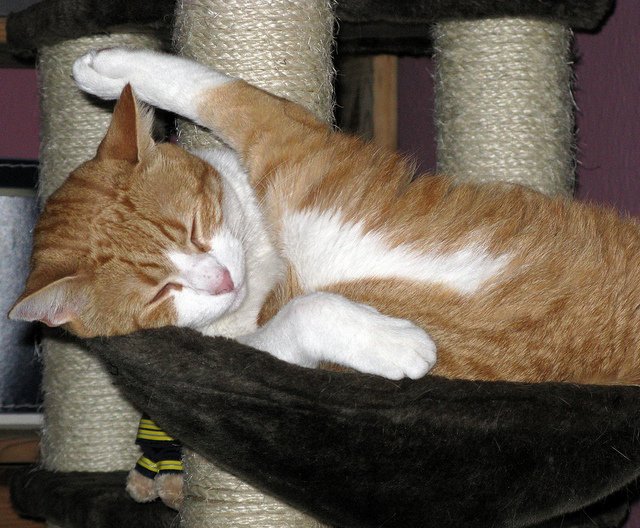
    • A photo of a cat doing yoga is never wrong.
     

    4951372883_299d70bc2b_z

    • Oh and one last thing. Why do you think it is important to ask questions on a blog?


    Picture credit – Mel on Flickr  Copyright (CC BY-ND 2.0)


5 responses to ““Issues” is no more”

  1. Cedric Avatar
    Cedric

    Oh I well remember the day ‘Issues’ landed with a loud thud through the letter box. I had been ordained for over 10 years by then. And I reeled in reading it.
    Before then the general culture of conversation about sexuality in the Church was ‘don’t ask, don’t tell’. And most bishops acknowledged that among their most able and effective clergy many were gay men, some in relationships, and often deployable in parishes where others would not contemplate living and working.
    But remember the context. This was also a period when AIDS was an international emergency and in Britain the Thatcher government sought to outlaw the ‘promotion’ of homosexuality through section 28 of the Local Government Act. And for sure, ‘Issues’ was a direct consequence of the passing of the amended Tony Higton General Synod private members’ motion declaring all ‘homosexual acts’ as sinful. The consequent noise of the shutting of closet doors was deafening.
    In my diocese the bishop asked one of the archdeacons to convene regular confidential meetings with a few gay clergy to offer them an opportunity to talk about the effects of all this on their lives and ministry. Some would not trust the Church to participate in such enterprises. Understandably. And huge numbers of vocations were thwarted and lost. And are to this day, as the toxic debates continue in the C of E in a social context which has changed beyond imagining.
    So thank you Kelvin, as ever, for your insightful questions.

    1. Beth Avatar
      Beth

      Cedric, I recall you speaking to the LGBT Network at the Cathedral about Issues and that it was reaffirmed by the C of E around about that time too. I wasn’t so aware of it when it was published (being about eight years old at the time and also a Roman Catholic), but I remember so clearly from what you said how devastating it had obviously been and still was. I remember thinking at the time of that reaffirmation, “oh, I can never go home”. It became so clear to me that the Church of England wasn’t somewhere I could feel welcome as long as it was allowed to stand.

  2. Ian Paul Avatar

    Kelvin, I can understand why you are glad that the offensive language of Issues has gone. Ironically, it was actually a statement written by liberals of the day; the main author was Richard Harries.

    And conforming to Issues was never the real question. The real question is conforming to Canons B30 and C26, so that the pattern of life of clergy should reflect the doctrine of the Church ‘according to the teaching of Jesus’. All Issues did was make that clear and unambiguous (though in an unhelpful and obsessive way) with regard to sexual intimacy. Ironically, it was the liberal ‘don’t ask, don’t tell’ policy which cemented Issues in place as a response.

    And of course, with Issues gone, the Canons remain in place, and the demand is the same. The good thing about GPCC is that it sets this one issue in the context of many others, which is much healthier.

    But on the question in hand—nothing has changed. You seem to have missed that.

    1. Kelvin Avatar

      No Ian. It isn’t that I’ve missed that. It is that I don’t believe that.

      Issues was a massively offensive document that coloured absolutely everything the Church of England had to say about sexuality. Changes to Canons will look significantly different in the light of its removal.

      A great deal is changed by its removal.

  3. Mike Burnett Avatar
    Mike Burnett

    Jesus preached love, but he also forgave sins with the instruction ‘to sin no more’.
    Deciding not to sin when the sin in question is something that we enjoy so much that life may feel miserable without it, is a real sacrifice. It really is ‘bearing your cross’ to follow him. But that is what Christians are called to do.
    We may wish to question our translation of the Bible, or quibble over the exact meaning of a phrase we find challenging, but Christianity is not a ‘pick and mix’ faith where we just have to accept the bits we like and can ignore, or condemn, the bits we don’t like. We do not get to negotiate – we must take it or leave it.

Leave a Reply

Your email address will not be published. Required fields are marked *

Previous Posts

  • Sermon – All Saints – All Souls

    I managed to resist the temptation to preach on the text, “Lazarus, Come Out!” this morning. Instead, here is what I did say: I want to begin this morning, not with a story, but with a stained glass window. It isn’t a window in this building. No, it is in the place where I first…

  • SPRED visit

    I spent part of this afternoon at the 25th anniversary of Glasgow SPRED. Know what that is? I certainly didn’t, but I do now. It is an initiative in the Roman Catholic Archdiocese and it was lovely to spend the afternoon in the company of the RC Church at its best. To be precise, the…

  • All Saints and All Souls

    One of the things that I have to be aware of at St Mary’s is that there are always quite a lot of people there who have not come from an Episcopal background. That means that when it comes to festivals, there are folk who don’t know what to expect. (Former Roman Catholics are exceptions.…

  • What's a-happening

    People connected with the Scottish Episcopal Church who go abroad sometimes tell me that they find the blogs a great help in keeping in touch with what’s going on back home. Here is today’s news. Fr Dougal has been posting about the scandal of Rowan Williams (and others) not speaking out about human rights abuses…