
• How twitter and facebook can save your blog rather than kill it

    One of the things that anyone keeping a blog must be aware of at the moment is that things are not the same as they were. At one time you simply had to put up something even vaguely interesting and people all over the world would read and comment. Blogging was like the Wild West – for the attention seeker there was gold to be mined her.

    I remember Mother Ruth saying to me before she started blogging, “All you have to do is ask ‘Who teaches cats yoga?’ and you’ve an audience”. If you could supply an entertaining picture of the cat in question, you were immediately set to dominate the blogging world.

    Nowadays, things are more difficult. One-liners like that have long since moved over to social media. Facebook and twitter are a more appropriate place for compact wit and if you are initially trying to reach friends and friends of friends then the social media platforms are the way to go. It is, to a large extent, what they are for.

    I made a prediction in one of my new year posts that the number of active bloggers would decrease but the influence of those who remain blogging would continue to increase. I still think that is true and I can see when I look through my blog feeds in a morning that there really are far fewer people making the effort. The fad has past but there are some who continue. Those who continue tend to be those who have learned to harness social media and quite often those who have  given up have simply moved to social media instead. Perhaps blogging gave them connections with people that they are happy to retain in a different way.

    For some people, starting a blog is about keeping up with those whom you know. For others it is like taking a few tentative steps into the limelight and tottering onto a very public stage. It is the latter type of bloggers who are persisting and they have even greater potential now to become global voices. The blogosphere is becoming free of some of the clutter. Now the cat pictures have moved to facebook and twitter, maybe posts with more substantial thinking matter more.

    It is very obvious that quick witty thoughts are going on social media whereas blogs are now being used for more substantial thinking. Successful blogs these days quite often seem to have fewer posts than they once would have done but the posts themselves are more substantial.

    Who would have guessed that blogging would have reinvigorated the essay as a writing style?

    Anyway, it seems to me that you can write as much as you like these days, if you are not engaging on social media then you are unlikely to see many readers.

    Here’s how to make social media work for you and keep the readers flowing in.

    • Post links to your latest blog entry on twitter and facebook (it isn’t rocket science, that’s where your readers are).
    • Note the plural! – Post a link in the morning to get the morning audience, one in the afternoon (for when America is waking up, if you are in Europe) and another one later in the day.
    • Don’t be ashamed to work for your audience.
    • Remember that email is a form of social media and offer people the chance to sign up to receive your posts. This way of reading blogs is growing.
    • Remember to provide an RSS feed for those who receive blogs that way. (For readers, I recommend Feedly now that Google Reader is long gone).
    • A witty link on twitter that gets retweeted is the gold you are chasing
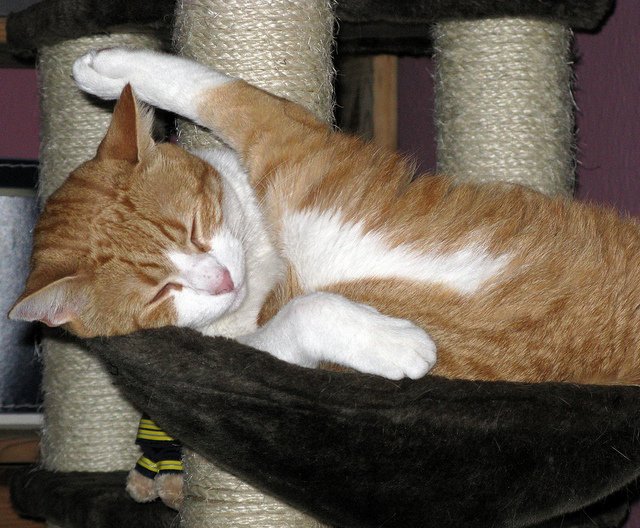
    • A photo of a cat doing yoga is never wrong.
     

    4951372883_299d70bc2b_z

    • Oh and one last thing. Why do you think it is important to ask questions on a blog?


    Picture credit – Mel on Flickr  Copyright (CC BY-ND 2.0)


6 responses to “Here or there?”

  1. Gary Avatar

    Up there. High altar. No doubt.

  2. Tom Allen Avatar

    I am very much with Richard Giles on this one – there should liturgically only be one main altar – ideally this is achieved by romoving the former High altar and dedicating that space to some other purpose – where that is not possible as in historic cathedrals then it should be left dormant (covered in a simple cloth perhaps) and only the altar which is being used for worship should be dressed since this is in fact THE altar.

    Despite all the reservations about removing former altars in the end it solves long-term problems, and provides a single visual focus for Eucharistic worship. At times when a high altar is needed then the new altar can moved there.

    This kind of fuzziness illustrates that our liturgical practice has become dominated by hertiage criteria.

    I am about to replace our main altar with something moveable and aesthetically more appropriate, but am facing a Registrars ruling that the current altar (and former eastward facing number more recently provided with wheels and moved to the chancel!) must be burnt, and that the wood frontal cannot be used for a screen.

    Dont’ we get ourselves tied up in knots!
    Tom

  3. Stewart Avatar

    A thought came to my mind this afternoon. At the Creed we all face east. This results in the choir turning their back on the Nave Altar and in most cases put the High Altar in their sight.

    Considering Tom’s comments, another thought thinking about some English Cathedrals which have multiple altars around the building, it is not usually possible to see more than one at a time. Some have a chapel behind the High Altar – behind a screen.

    Turning back to St Mary’s – all the action at the 10:30 service is centred and focused around the Nave Altar. However there is still the High Altar, the Pheobe Traquair Reredos and Gwyneth Leach mural of Our Lady at the East End. To my mind their presence enhances the worship around the Nave Altar and does not detract from it.

  4. Andrew Avatar
    Andrew

    The Altar is a table, where we commemorate a meal together. Clearly (to my mind) we should all be sitting round it, as we do (more or less) at present. The table reminds me that Jesus instituted the Last Supper when he was among us (HERE), not somewhere else (THERE).

    I very much hope that the Altar in St. Mary’s can be left where it is.

  5. kelvin Avatar
    kelvin

    It seems to me curious that the practice that I inherited was to light and dress the high altar whilst using the nave altar. It makes no sense, except perhaps to highlight St Mary’s puzzling parallel worlds of deep conservatism mingled with radical liberalism.

    Whist tending to agree with Andrew’s sentiments, it is worth remembering that the nave altar could hardly be said to have stayed in one place these last 20 years.

  6. Elizabeth Avatar
    Elizabeth

    Here. Both. Loving the paradox.

    But maybe I only say that beccause the only church I’ve regularly worshiped in where there are clearly two visible altars is St Mary’s and that’s what I’m used to. I’ve never found it distracting that the high altar is dressed and lit, even though the nave altar is where the action is, so to speak. But then, would I notice if the high altar wasn’t dressed and lit? Probably not.

    I do love the nave altar, peripatetic as it is!

Leave a Reply

Your email address will not be published. Required fields are marked *

Previous Posts

  • What's a-happening

    People connected with the Scottish Episcopal Church who go abroad sometimes tell me that they find the blogs a great help in keeping in touch with what’s going on back home. Here is today’s news. Fr Dougal has been posting about the scandal of Rowan Williams (and others) not speaking out about human rights abuses…

  • Anglican – RC conversion figures

    Does anyone know whether there are any estimated figures anywhere for how many Anglicans convert to being Roman Catholics and vice versa over any period of time? In the light of the Pope’s trawl for disaffected Anglicans, I’ve been reflecting on the fact that it has always a two way street. I’m aware of quite…

  • Sermon – Creation

    Oops, I forgot entirely to set the video camera up this morning, so there is no recording of this sermon, I’m afraid. I did not realise until well into the service that the camera was not there. It is perhaps time to think about gathering a team of people who could be resonsible for dealing…

  • Gay Marriage in Church in Sweden

    The Church of Sweden, with which the Scottish Episcopal Church is in Full Communion, has just voted to open marriage to same-sex couples as well as straight couples. The word equivalent to “matrimony” will be used for all couples. Something to welcome. Something to celebrate.