
• Husbands and Wifes

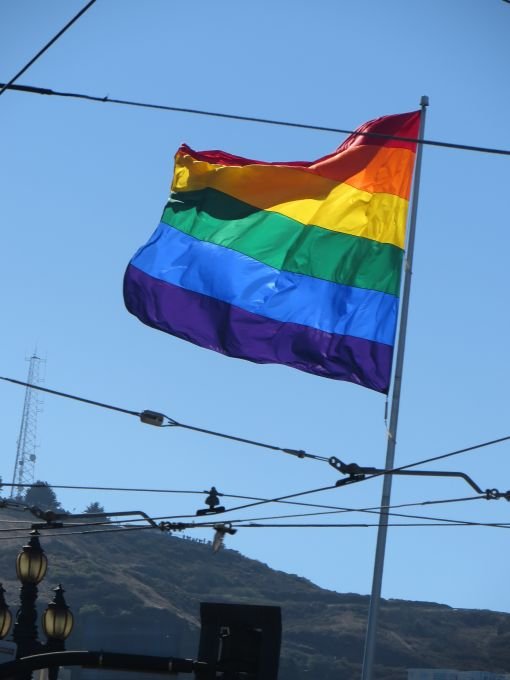
    flag over castro

    Yesterday I heard the news that the House of Lords has given a third reading to the new legislation which will allow gay couples to get married in England and Wales. It should get the nod from the House of Commons today and then go to the Queen for Royal Assent by the end of the week. The first marriages under this legislation will take place sometime next year once registrars have been re-trained and new forms printed.

    I expect we will have a period where all kinds of other institutions will have to re-write their forms and policies too. One can imagine married same-sex couples getting grumpy when they try to fill in an insurance form or try to join a social network and they are offered wife or husband when they want to be offered a box to tick for the opposite.

    It is only fairly recently that I’ve heard same-sex couples who were married speaking freely of their husband or wife. We have one same-sex couple connected to St Mary’s who are married, having been hitched in South Africa. When I was in Canada and the USA I was hearing the use of husband by some married gay men and wife by some of the lesbian couples I met. It was by no means universal but it was becoming common and rather ordinary though no doubt that takes a little time.

    Part of me remembers that I once was against same-sex marriage and that it was partly because I thought that gender-neutrality had something to offer. Were gay couples not leading the world by insisting on having partners rather than the somewhat possessive alternative nouns?

    I think I was wrong about that. What was needed was equality and some people need to use just such possessive language to describe their relationships in the same way that straight married couples sometimes reject it and use the partner language.

    Inevitably there is now going to be a period of reflection and consultation whilst the government tries to decide whether to open Civil Partnership up to straight couples. I expect that will happen though I’m not that keen. It seems to me that the right way forward was simply to incorporate Civil Partnership with Civil Marriage. However, I suspect that though I’ve been on the winning side of most arguments about changes in marriage law, that is not one that I’m likely to win now.

    Very many churches have proclaimed themselves to be against same-sex marriage as it will somehow undermine and threaten the institution of marriage itself.

    I don’t think that is true. I do think that retaining Civil Partnership and opening it up to straight couples does undermine the institution of marriage though. Had the churches engaged in these arguments in more constructive ways than most of them did then they might have had an influence which strengthened marriage. Instead, I suspect that in the long term they will have weakened it.

    Still, we’ll not worry about that today. We will simply fly a rainbow flag in celebration for all those soon to be married couples in England and Wales. And recognise that the last battles still have to be won in Scotland.

    Alleluia for England!

    And once more unto the breach.

5 responses to “The Primus’s Radio Interview about the Columba Declaration”

  1. Benj Avatar
    Benj

    I’m not sure Chillingworth gave a clear answer to Beattie’s question of what is wrong with the declaration beyond its discourtesy and rudeness. What does he mean when he says it is putting at risk the leadership of Christian faith communities at a critical moment in the ‘story of Scotland’?

    1. Kelvin Avatar

      I can’t speak for Bishop David but my view is that this debacle (the discourtesy and rudeness and the rest) has had a serious knock on effect on the ecumenical life of Scotland. To put it bluntly, trusts and friendships that have been built up over years have been very sorely tested. I think that this risks poisoning ecumenical life in Scotland for a generation and I’d say that does seriously compromise the way in which church communities and leaders will be able to speak to Scotland.

  2. Richard Avatar
    Richard

    It also speaks volumes for the contempt with which the Church of Englandshire holds for the Scottish Episcopal Church.

    You struggle to see the shining truth through his words because his words lack honesty and integrity. Not that anyone in Englandshire really cares- most probably haven’t even heard of the Scottish Episcopal Church and if they have, it will be as an unknown backwater entity. To sweep aside the Scottish Episcopal Church must have taken breathtaking arrogance.

  3. Iain McLarty Avatar
    Iain McLarty

    I can totally understand the SEC concern about the CofE barging into territory that isn’t theirs. However, there are perhaps a few things to bear in mind about why a relationship between the CofS and CofE is important where that isn’t really relevant.

    The first is that the CofS has a presence in England. Having spent a few years in a CofE congregation in Denmark I witnessed first hand how important the Porvoo agreement was in that context for enabling local worship and mission and similarly it could be hugely beneficial for the CofS congregations in England to be able to develop more formal relationships with their local Anglican partners.

    Secondly, there are a number of areas where the CofS and CofE are already working together and developing closer relationship such as on training and fresh expressions. These are areas where the relationships have developed naturally due to the two churches dealing with similar areas of concern and where there should again be no encroaching on SEC ground.

    Thirdly, the CofS and CofE work closely together in ecumenical circles through both CTBI and the WCC where both are significant players. It does seem strange that these two churches don’t recognise each other when their place in the wider ecumenical scene is so closely linked. That is not to deny the SEC’s ecumenical importance.

    Obviously no one is denying that the way this became public has been badly handled but I struggle to see what more can be down than the very sincere apologies and frank criticisms of what happened which have been offered. In terms of what real issues there are, I have yet to see anyone pin down specific parts of the Columba agreement which are concerning to the SEC, with all the comments either much more vague or else being fears about issues (such as interchangeability of ministry) which are not actually part of the agreement. In my experience (through ACTS, WCC etc.) the relationship between the CofS and SEC is one of the strongest ecumenical relationships and it would be very sad if this was jeopardised because of miscommunication rather than substance.

  4. Jeremy Bates Avatar
    Jeremy Bates

    It’s not just Scotland. A lot of people are struggling to see truth in the words of the Archbishop of Canterbury these days.

Leave a Reply

Your email address will not be published. Required fields are marked *

Previous Posts

  • Quick Links

    Friends of Radio 3  Update- beware – see comments – Lindsay should know!Church Marketing SucksColour LoversMy contributions to WikipediaTraveline Scotland

  • Liturgical Notes – as given to the servers this morning

    [Well, this is what was supposed to happen…] Bishop Idris is preaching this morning. On the rota (prepared before KH was installed), +Idris is down to preach and KH to celebrate. +Idris is to be invited to celebrate if he wishes as is the courtesy given to a Diocesan Bishop when in his churches. We…

  • "…and all those falsely accused…"

    For some reason this year, I never got into Big Brother. Last year I was a devotee, and could be heard opining about the religious nature of the show. (It’s the God Complex we all have…the need to control and manage and to conjure up a controlling managing God when we inevitably fail). I think…

  • Wikipedia

    From time to time, I contribute to Wikipedia, particularly the SEC (and related) pages. Several things have interested me on WP this week.Firstly, a little toing and froing about whether the SEC has parishes. It doesn’t have parishes, though some, especially those from outside the province speak rather loosely as though we do. This loose…