
• How twitter and facebook can save your blog rather than kill it

    One of the things that anyone keeping a blog must be aware of at the moment is that things are not the same as they were. At one time you simply had to put up something even vaguely interesting and people all over the world would read and comment. Blogging was like the Wild West – for the attention seeker there was gold to be mined her.

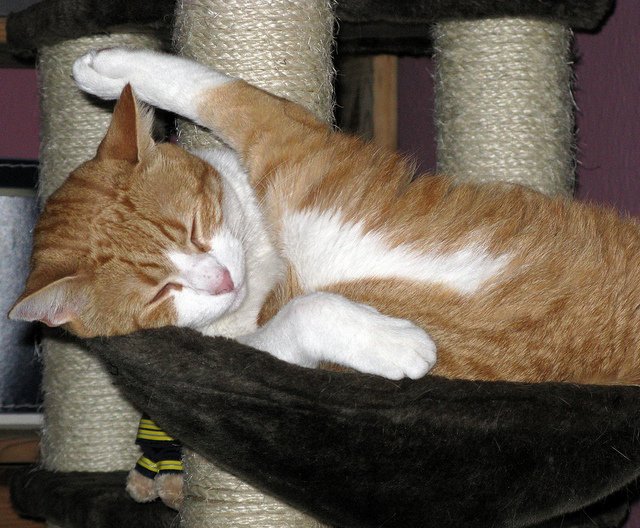
    I remember Mother Ruth saying to me before she started blogging, “All you have to do is ask ‘Who teaches cats yoga?’ and you’ve an audience”. If you could supply an entertaining picture of the cat in question, you were immediately set to dominate the blogging world.

    Nowadays, things are more difficult. One-liners like that have long since moved over to social media. Facebook and twitter are a more appropriate place for compact wit and if you are initially trying to reach friends and friends of friends then the social media platforms are the way to go. It is, to a large extent, what they are for.

    I made a prediction in one of my new year posts that the number of active bloggers would decrease but the influence of those who remain blogging would continue to increase. I still think that is true and I can see when I look through my blog feeds in a morning that there really are far fewer people making the effort. The fad has past but there are some who continue. Those who continue tend to be those who have learned to harness social media and quite often those who have  given up have simply moved to social media instead. Perhaps blogging gave them connections with people that they are happy to retain in a different way.

    For some people, starting a blog is about keeping up with those whom you know. For others it is like taking a few tentative steps into the limelight and tottering onto a very public stage. It is the latter type of bloggers who are persisting and they have even greater potential now to become global voices. The blogosphere is becoming free of some of the clutter. Now the cat pictures have moved to facebook and twitter, maybe posts with more substantial thinking matter more.

    It is very obvious that quick witty thoughts are going on social media whereas blogs are now being used for more substantial thinking. Successful blogs these days quite often seem to have fewer posts than they once would have done but the posts themselves are more substantial.

    Who would have guessed that blogging would have reinvigorated the essay as a writing style?

    Anyway, it seems to me that you can write as much as you like these days, if you are not engaging on social media then you are unlikely to see many readers.

    Here’s how to make social media work for you and keep the readers flowing in.

    • Post links to your latest blog entry on twitter and facebook (it isn’t rocket science, that’s where your readers are).
    • Note the plural! – Post a link in the morning to get the morning audience, one in the afternoon (for when America is waking up, if you are in Europe) and another one later in the day.
    • Don’t be ashamed to work for your audience.
    • Remember that email is a form of social media and offer people the chance to sign up to receive your posts. This way of reading blogs is growing.
    • Remember to provide an RSS feed for those who receive blogs that way. (For readers, I recommend Feedly now that Google Reader is long gone).
    • A witty link on twitter that gets retweeted is the gold you are chasing
    • A photo of a cat doing yoga is never wrong.
     

    4951372883_299d70bc2b_z

    • Oh and one last thing. Why do you think it is important to ask questions on a blog?


    Picture credit – Mel on Flickr  Copyright (CC BY-ND 2.0)


11 responses to “We should be wary of declaring martyrs”

  1. Eamonn Avatar

    Agree totally. I find myself in a comparable position vis-à-vis the mass canonisations of the ‘martyrs’ of the Spanish Civil War, which assume that all those worthy of commemoration were on the same side.

  2. Michael Russell Avatar

    Anyone killed for professing their faith is a martyr. ISIS is an equal opportunity martyring machine. The various faith communities targeted, including Islamic ones, should build common ground to dismember ISIS. I simply fail to see the point in quibbling about who is a real martyr and who is not.

    1. Kelvin Avatar

      Is it your view that someone is a martyr for Christianity because they cannot recite a verse from the Qur’an?

      It seems to me that whilst some men and women of violence are being claimed to be martyrs if they should be shot by law enforcement agencies whilst pursuing paths of terror that there’s a huge amount to be gained by determining who is a martyr and who isn’t.

      1. Bro David Avatar
        Bro David

        Not being able to explain a quranic verse was merely a way of discerning if someone was not Muslim. However, is it not just as great a presumption to think they weren’t martyrs, as to think that they were.

        The early church seemed to accept that all who were crucified or sent to the lions for their Christianity were martyrs. Perhaps not all did so as a statement of faith, but were nominal Christians caught up with the rest. But the church didn’t seem obliged to footnote who didn’t qualify.

        I’m not sure that I understand why your are hesitant. It seems a quibble. I don’t think anyone is leaning toward canonization here, just speaking of them as a whole.

  3. Jo Avatar
    Jo

    The SEC still keeps the feast of Charles, King and Martyr. I don’t think we get to be too narrow in defining who is or isn’t a martyr.

    1. Kelvin Avatar

      Actually, Jo – that’s not quite right. The SEC keeps the commemoration of “Charles I, King, 1649”

      There’s no mention of him being a martyr in the calendar (and the current calendar superseded and replaced the one in the prayer book). There are plenty of people who are named as martyrs such as Agnes the week before Charles or indeed “Charles Mackenzie of Central Africa, Bishop, Missionary, Martyr, 1862” the very day after Charles.

      It would appear that rather careful thought was given to whether to describe Charles as a martyr and though he is included in the calendar (not least for founding one of our dioceses) any notion of martyrdom is absent.

      1. Jo Avatar
        Jo

        Thanks for the correction, I hadn’t realised there was that detail of difference between the SEC and CofE.

  4. Father David Avatar
    Father David

    Of course, King Charles was a Martyr and is commemorated as such on January 31st each year. The trouble is that Anglicans have no real mechanism for declaring people to be saints or martyrs. Having referred to two recent horrific incidents on the African continent where Christians were slaughtered simply for being Christians, I wonder what the Provost of Glasgow thinks about the Ugandan Martyrs of the 19th century and would you personally regard them to be martyrs? As you know 23 Anglicans and 22 Roman Catholics were killed by the Kabaka for refusing to submit to King Mwanga’s corporal intimacies. The Roman Catholics were beatified in 1920 and canonised in 1964 but what of our Anglican Ugandan brothers – where they equally to be regarded as martyrs, or would you deny them that honorific title?

    1. Kelvin Avatar

      The Scottish Episcopal Calendar is again very clear: “Charles Lwanga and his companions, 1886, Janani Luwum, Bishop, 1977, Martyrs of Uganda”

      I have no idea why anyone would say that the SEC has no means of declaring someone to be a martyr. Not only do we have such a mechanism, we use it.

  5. Father David Avatar
    Father David

    It would be interesting to know how this mechanism works in the SEC in deciding who is eligible to join the noble army of martyrs? Bishop Edward King of Lincoln is widely regarded as a saint South of the Border. I think it was Archbishop Lang who was asked how it was decided that Bishop King had reached sainthood status and the answer was that he was given a Collect, Epistle and Gospel to commemorate his saint’s day – 8th March, the day of his Heavenly Birthday.

  6. Harry Campbell Avatar
    Harry Campbell

    “We strongly condemn such atrocities, whether they are Ethiopians are not,” the Ethiopian communications minister Redwan Hussein told AFP.
    http://www.theguardian.com/world/2015/apr/19/isis-video-purports-to-show-massacre-of-two-groups-of-ethiopian-christians

    What a shame the Archbishop couldn’t have said something similarly inclusive about the victims of the Kenyan massacre, and all such massacres, without caring about what their religion affiliation may or may not have been.

Leave a Reply

Your email address will not be published. Required fields are marked *

Previous Posts

  • What's a-happening

    People connected with the Scottish Episcopal Church who go abroad sometimes tell me that they find the blogs a great help in keeping in touch with what’s going on back home. Here is today’s news. Fr Dougal has been posting about the scandal of Rowan Williams (and others) not speaking out about human rights abuses…

  • Anglican – RC conversion figures

    Does anyone know whether there are any estimated figures anywhere for how many Anglicans convert to being Roman Catholics and vice versa over any period of time? In the light of the Pope’s trawl for disaffected Anglicans, I’ve been reflecting on the fact that it has always a two way street. I’m aware of quite…

  • Sermon – Creation

    Oops, I forgot entirely to set the video camera up this morning, so there is no recording of this sermon, I’m afraid. I did not realise until well into the service that the camera was not there. It is perhaps time to think about gathering a team of people who could be resonsible for dealing…

  • Gay Marriage in Church in Sweden

    The Church of Sweden, with which the Scottish Episcopal Church is in Full Communion, has just voted to open marriage to same-sex couples as well as straight couples. The word equivalent to “matrimony” will be used for all couples. Something to welcome. Something to celebrate.