
• News from around the Scottish Episcopal Church – March 2015

    United Lent Appeal

    The College of Bishops has launched a Lent Appeal to raise funds for the Scottish Episcopal Institute, the new body that is the successor to the troubled Theological Institute of the Scottish Episcopal Church. The Lent Appeal is to raise funds to enable full-time training for younger ordinands.

    The following prayer has been published by the bishops to go along with the appeal:

    Almighty God, giver of all good things,
    you showed your love for us by giving us your only Son:
    help us to show our love for you.
    Grant us this Lent
    the vision to see where you are at work in the world,
    the courage to join in that mission
    and the desire to give
    in support of those seeking to train
    within the Scottish Episcopal Institute.
    In the power of the Spirit
    we make our prayer
    through Jesus Christ
    our Lord.

    There are no details yet as to how full-time ordinands will be funded for in subsequent years if this appeal is successful.

    Visit of the Bishop of Zanzibar
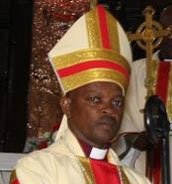
    bish_zanz_2

    The Bishop of Zanzibar, the Rt Rev Michael Hafisd has been visiting the Diocese of Argyll and The Isles. Details of his visit are available on the diocesan website. There are more detailed reports and pictures in the Diocesan Newsletter.

    New Diocesan Council in Brechin

    The Diocese of Brechin is to consider proposals to establish a new Diocesan Council which would replace their current Administration Board and Mission and Ministry Board. Full details are available in their Diocesan Synod Papers.

    Lectured by the Rev Anne Dyer – forward notice

    The Rev Anne Dyer is giving four lectures looking at the use of the female form to depict and carry ideals of virtue and vice in the Christian tradition. Dates – 28 May, 4 June, 18 June, 25 June. Time – 2 – 4 pm. Location – Royal Overseas League, Princes Street, Edinburgh.

    Scottish Episcopal Church Provincial Youth Week

    The Glenalmond week this year will be 2 August 2015 to 8 August 2015

    Details here: http://www.scotland.anglican.org/wp-content/uploads/2015/02/glen15form.pdf

    The Buzz

    Earth Hour

    This year’s Earth Hour where people are asked to dim lights and use less power to highlight climate change issues takes place on 28 March 2015. Details of how churches can get involved are available from the Eco Congregation Website.

    People

    • The Rev Canon John Lindsay retires as Rector of St Adrian’s Gullane and St Baldred’s, North Berwick on 1 March 2015
    • The Rev Chucks Iwuagu has moved from St Mary’s Cathedral in Glasgow to take up a post in Haslemere near Guildford. (Farewell sermon here)

    Vacancies


24 responses to “Good Vicar, Bad Vicar”

  1. Josh Avatar

    Being a good vicar to stony, unreceptive hearts might require a pickaxe to reveal gemstones within. It must be tough to minister to jerks and meanies, no? We lose faith in people easily – I certainly do. But a good vicar – a loving parent – doesn’t give on up one’s children.

    A good vicar might depend on the eye of the beholder. Whether you believe vicars and congregations are intrinsically good or evil might get you called a Pelagian or an Augustinian depending on who you ask. Faith in the work of a vicar or the reception of the congregation depends on good faith and co-operation – what then do we place our faith in? Hardly Protestant thinking, when faith is dependent on work, manifestation, and epiphany. A bad vicar might be sent to good people. A good vicar might be sent to bad people. Whether a vicar or congregation is subjectively or objectively good is a difficult question to answer.

    It is then that I prefer to see both the vicar and congregation not as “good” or “bad” but rather as equally “beloved”. However large the congregation, or even the vicar’s skill shouldn’t matter then. But that raises the question: Who then do we love if we are so beloved by God? Perhaps love might be the answer. A vicar and congregation who sees and knows themselves as equally and lavishly beloved of God will love each other. Love makes congregations meaningful and precious, no matter how small they might be.

  2. Josh Avatar

    And if I might add to my previous comment – And love also makes vicars meaningful and precious, no matter how small the congregation might be.

  3. Rosemary Hannah Avatar
    Rosemary Hannah

    Yes – things which make the practicalities of small congregations include:
    the laity in most senior positions find it hard to see the inclusive love of God and to see the value of prayer and spiritual exercises, a shortage of laity with administrative abilities, a tiny handful of parishioners prepared to insist on unhelpful things all the time (the oldest liturgies every week, the kind of behaviour small children cannot sustain all service long, particular dress in those at church on Sunday to name but a tiny selection). In a larger church these things can be contained (one nasty comment for lady x outweighed by five or six lovely ones or simply finding somebody to be treasurer who can cope with the job). In a small church, however good the vicar, the nasty comment carries more weight, and the sorting out of the finances may take days of clergy effort. It is always hard to get from a tiny congregation to a large one.

    That said, I have sat through sermons so mind-numbingly boring and inappropriate that I have actually moved to another church.

  4. Paul Waddington Avatar
    Paul Waddington

    If one looks at the larger picture, the Archbishop’s optimism seems misplaced.

    According to the 1851 census, about five million people attended a Church of England service on the census day (a Sunday). The population of England and Wales at the time was about 17 million. These are round figures and I know that there were difficulties with the religious census, but they are good enough to demonstrate my point. Roughly speaking, about 30% of the population attended a CofE that Sunday.

    Recently published figures estimate average Sunday attendance at CofE churches at about 900,000. That is about 2% of the population of England. Wales is now excluded.

    So taking the long view, the trend is rather depressing for the CofE. Compared with 1851, fourteen out of fifteen no longer attend church regularly.

    As an aside, the 1851 census indicated a church attendance for Catholics of about 350,000. That is about 2% of the population. I understand that the current figure is very similar for Mass attendance is also around 900,000 or 2% of the population.

    Other recent research has indicated that the age range of CofE congregations is skewed towards the upper end. Certainly in my local parish, it is unusual to see anyone under the age of 60. I do wonder how many there will be in, say, 15 years time.

    1. Kelvin Avatar

      Thanks Paul – I find that bishops generally tend to accentuate the positive when it comes to thinking about numbers in church. Whether that is because they only go to events that are comparatively well attended or whether it is actually because it is their job to be upbeat about possibilities is not clear to me.

  5. Pam Avatar
    Pam

    It is complicated – ‘good’ and ‘bad’ – poor adjectives. The rector is the leader of the congregation and needs support and trust. But, I think, no longer is the vicar held in such esteem as not to have to earn that support and trust. A good thing, mostly. Churches grow for all sorts of reasons – the level of involvement with non-believers, a prominent noticeboard and outstanding bikke and slice-makers all help.

Leave a Reply

Your email address will not be published. Required fields are marked *

Previous Posts

  • OK Go again

    Remember that video from OK Go that I put online a while ago to keep you entertained? Here’s their latest which involves playing with dogs: Tip of the biretta to Mr Jiggers for spotting this. Note for future – I’m planning a similar video involving servers, candles, thuribles and Dyson in D.

  • Sermon preached on 24 October 2010

    Here’s last week’s sermon – better get that posted before putting up this week’s. For some reason the congregation seemed immensely entertained by the idea of me preaching about humility. Curious.

  • Meetings, meetings, meetings

    Can someone tell me whether the church is unique in holding meetings in which the amount of time devoted to meeting vastly outweighs the amount of business that is done? I’ve a suspicion that the church is far from unique in this but also that others also must know better how to manage business than…

  • To Castle Douglas

    The Cathedral Chapter met yesterday in Castle Douglas. If this Provost is going to make a habit of such journeys, its likely that he will begin making a case for a diocesan grant for gaiters. Quick Friday Quiz Question – how many Anglican Cathedrals are nearer to Castle Douglas than St Mary’s is?