
• We are marching in the light of God

    We are marching

    So proud of St Mary’s folk and friends yesterday. A very happy Pride parade through the streets of Glasgow giving out invitations to the Cathedral and generally having fun.

    A whole rainbow of people connected to the congregation made it onto the street including church wardens, vestry members, young church folk, readers, LGBT group members and me.

    A good time was had by all.

    Here are some of the marchers by the stall in the marketplace:
    Pride

    The People’s Warden getting ready to mingle with the people of Glasgow
    Franny

    Kennedy Fraser, the dioesan rep on our Vestry and Lay Reader in Bishopbriggs
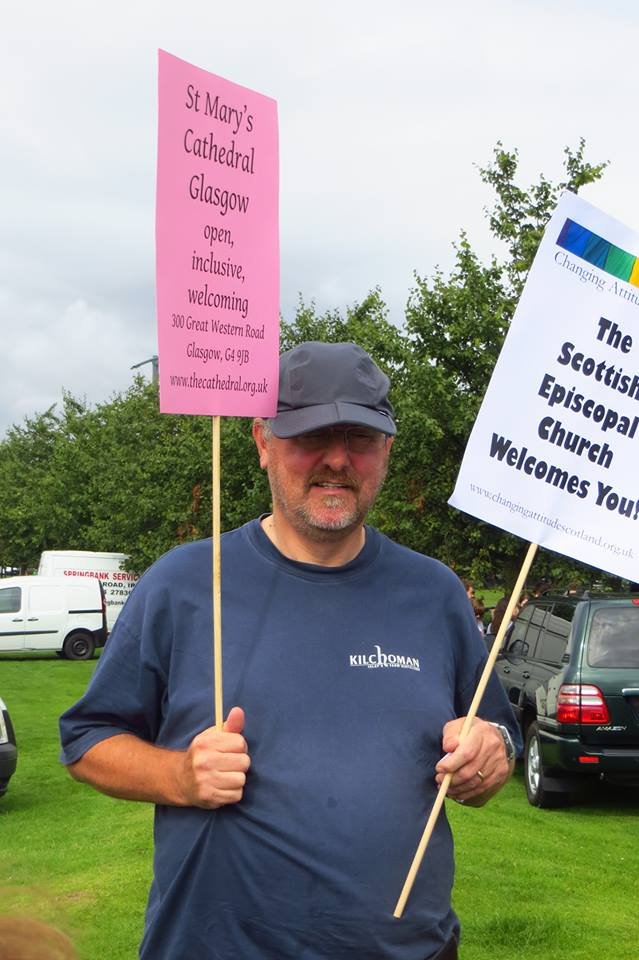
    Kennedy


    One of the Young Church members of St Mary’s teaching us how to do mission.

    young church


    The afternoon crew at the stall in between answering questions and chatting to people in the crowd:
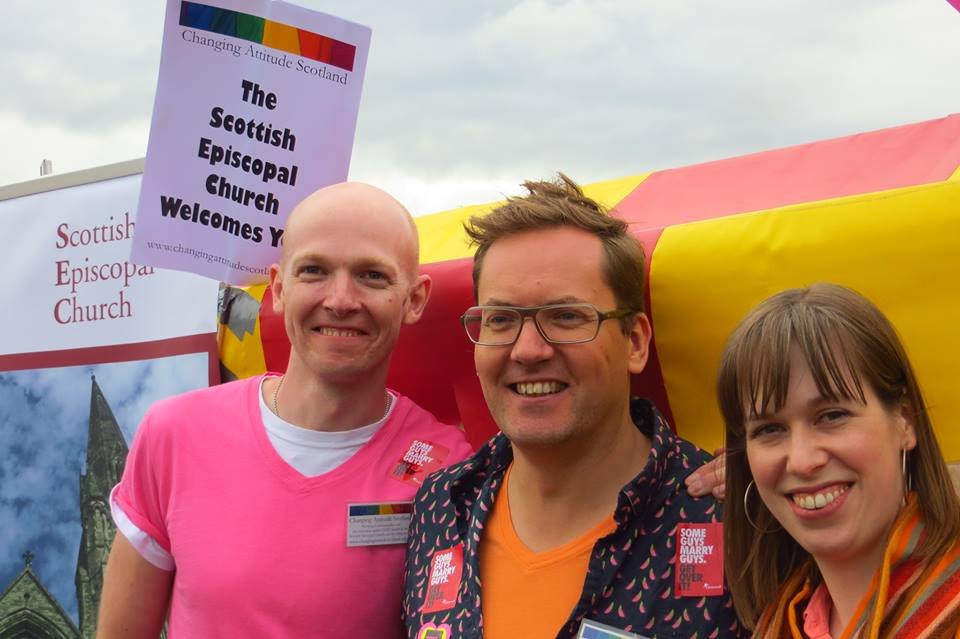
    stall team

52 responses to “Inclusive Language – again”

  1. ryan Avatar
    ryan

    Kelvin – that cracked me almost as much as your last tweet on the left of your blog ;-)!

  2. Jimmy Avatar

    Ryan, although you address your comment to Kelvin like I am not there. I assume you are referring to my poem, I can assure you that it does not crack me up watching you making any opinion you may have untenable.

    1. kelvin Avatar

      No Jimmy – I think Ryan was indeed referring to my last comment, above.

  3. Jimmy Avatar

    Thank you Kelvin and Sorry Ryan.

  4. ryan Avatar
    ryan

    No worries! Was indeed referring to the v.amusing coming out day tweets at the side.

    I’m not sure there’s ever existed anyone, anywhere,at any time, of whom it could be said that *all* their opinions are ‘untenable’, so such rhetoric is dehumanising at best. Apropos nothing, I was moved to google the poetic stylings of the great David Brent. Who needs Auden? 😉
    http://murfinsandburglars.com/2009/04/14/bad-poetry-for-tuesday-david-brent-edition/

  5. Peter Avatar
    Peter

    Kelvin; no, I think it distracts. It simp;ly reminds us that this is how your mind works: you make connections and delight in that sort of word-play. However, to sharpen up my point. Thank you for helping me to realise that, for some, ‘family’ is not a positive word in the way in which I experience it. For my part, this willl mean that I will be more careful about its use when others might feel excluded (and therefore hurt). Mutatis mutandi can you accept that I feel offended by what seems to be merely a casual linking between family and the f word? These are sensitive areas, but sensibilities are by no means confined to those who find family a painful or unhelpful concept.

  6. Simon Avatar
    Simon

    I am slightly nervous aboaut the alternatives to the 1982 Liturgy, not because I don’t share the inclusive sentiments expressed above (I do). I fear that, as so often in the history of the church, the steps we take to avoid one kind of mistake in the way we talk about God can lead us into another. The avoidance of pronouns as a measure to achieve inclusivity produces inelegant, strained and stilted English. How would it be if one were to use it in day-to-day speech? ‘I saw John this morning. I asked John’s how John’s health was. John said that John was over his flu, and hoped to be back at work on Monday’. This may not in itself seem to be a problem. But in fact, what very quickly happens when we adopt this idiom in addressing/expressing God, is that the very idea of a personal God begins to recede. My basic instinct is that the church’s language of pulbic prayer is properly anchored in that of the scriptures. There are dangers in departing from this. The perceived problem (rightly perceived) is perhaps better tackled by good teaching about the nature of God, than by linguistic contortions that produce stilted prayers, and possibly a less real and vivid idea of God.

  7. Melissa Avatar
    Melissa

    About the family imagery – another reason to drop it in church is for the sake ones who, like me, do actually have the signifying family relationships.

    There is too much pressure on day to day life with children when that life is forced to serve as some kind of example or testimony or witness to the world – or more likely one’s church friends – about the nature of God.

    I think it sours love because in that kind of scheme loving children is more fundamentally a means to an end.

Leave a Reply

Your email address will not be published. Required fields are marked *

Previous Posts

  • Festivals

    I rather like the cultural elision that is unfolding this year, as Diwali give way to Eid which in turn gives way to Halloween/All Saints/All Souls and then Guy Fawkes. (All festivals that are religious in one way or another). Basically it means lots of fireworks. However, Miss T is not so happy at the…

  • Questions for us secularists

    The veil question which has been raised in the media this week is a strange one for me to consider as someone who often finds himself wearing a form of religious dress in Great Western Road and elsewhere. It seems to me that people should be able to wear what they like in public. Mind…

  • Ceilidh Invitation

    Rather at the last minute, a decision has been made to celebrate the anniversary of the consecration of St Mary’s (ie the consecration of the building), this weekend. According to the records kept at the time, the Hallelujah Chorus by Beethoven was sung at the consecration. Unfortunately, we’ve been unable to find that one, but…