
• Bible Study – Turning Over a New Fig Leaf

    We had a good bible study last night at the LGBT group here at St Mary’s. I thought I’d post the basic questions here and see whether people wanted to have a go at answering them here too.

    First of all we read most of Genesis Chapter 2. (You can find the text at the Oremus Bible Browser)

    Then we had a go at these questions

    • What strikes you about the text?
    • Does the text tell us more about how people think about God or about how God thinks about us? Why?
    • What different patters of partnership can you think of from the Bible?

    And then we had a look at this picture (Willem Vrelant, 1460s illuminator Flemish, died 1481—Digital image courtesy of the Getty’s Open Content Program.)
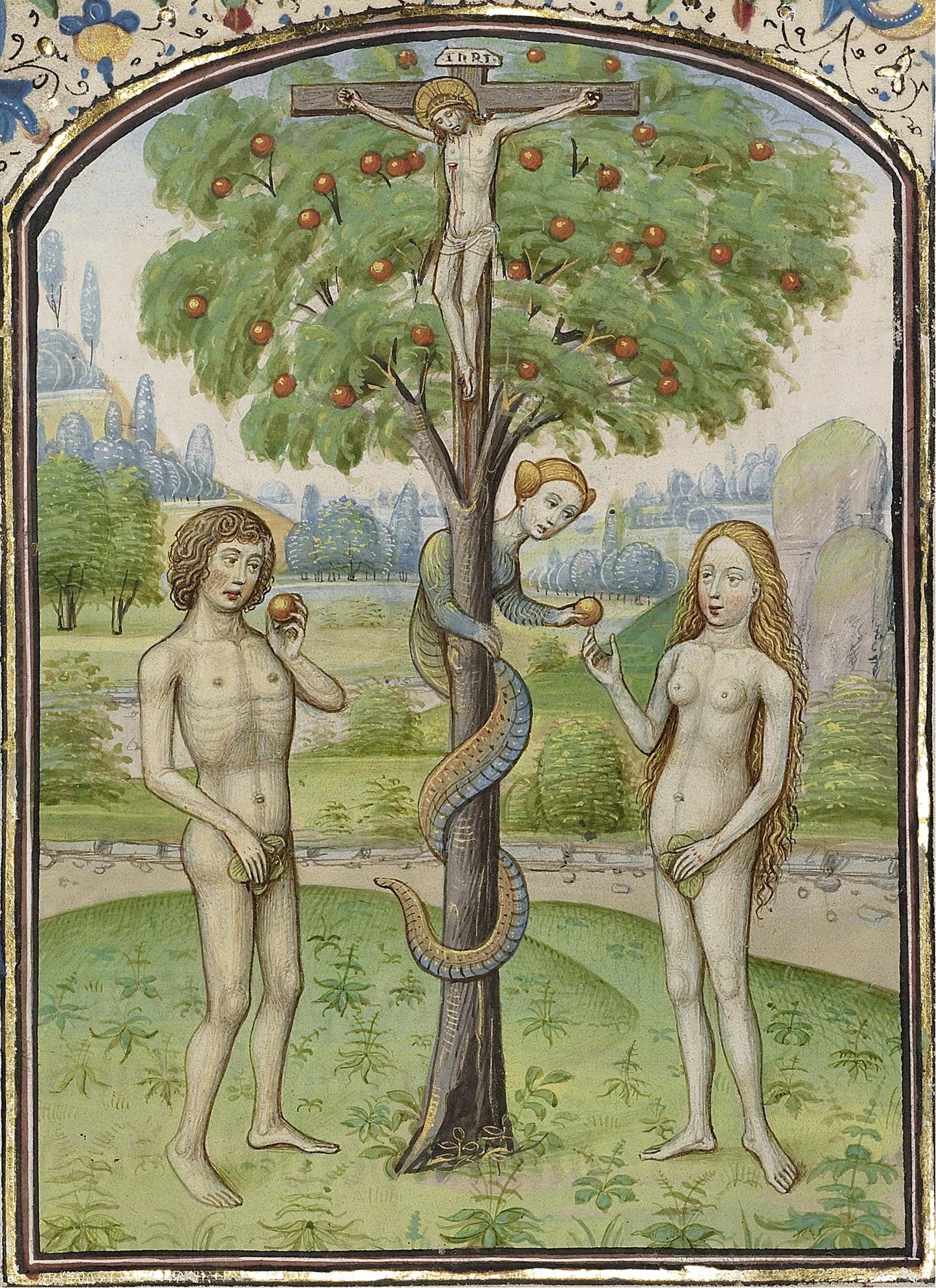
    Adam and Eve

    And tried to answer these questions:

    • What strikes you about the picture?
    • What influence does this story have on you today?

    I’d be interested to hear any responses on here. (Why can’t we do bible study on a blog post?)

    And here is an extra question for those answering today:

    • What difference do you think it might make studying the story of Adam and Eve in an LGBT group to any other group?

    Don’t be shy…

3 responses to “Power needs to be baptised by love”

  1. Robin Avatar
    Robin

    A very good and thought-provoking sermon. I’ve always thought of the Ethiopian eunuch as a man of great power and authority, and of great learning and devotion too, which points me to your third interpretation. But what startles me about the story – partly because of my thinking of the eunuch as someone of great power and authority compared to Philip, and partly because of a tendency on my part to be dogma-bound – is the sheer simplicity of how Philip welcomes him into the Church.

    There is no complicated initiation process. There are no doctrinal tests. The eunuch sees water, and asks Philip in a businesslike way if there’s any reason why he shouldn’t be baptised. Philip’s answer couldn’t be more direct and straightforward: “If you believe with all your heart, you may be baptised.” And the eunuch’s response couldn’t be more direct and straightforward either: no lengthy creed, no question and answer interrogation, but simply, “I believe that Jesus Christ is the Son of God.”

    No doubt the eunuch continued his studies after his baptism, being that sort of man. But in a complicated world and (sometimes) a complicated Church I often turn to this passage for reassurance that it needn’t always be so.

    1. Father Ron Smith Avatar

      Thank you, Father Kelvin. What a lovely and refreshing new insight into the identity and provenance of the ethiopian Eunuch! Philip’s acceptance and Baptism of the Eunuch reflects the teaching of Jesus in Matthew 19:122, where he speaks of 3 types of eunuch; made so by others (the Ethiopian, castrati); those who become so for the sake of the Kingdom (monks, nuns, celibate clergy);
      and then, of course; those so ‘from their mother’s womb’ (intrinsic Gays).

  2. Aleks Avatar
    Aleks

    Really profound. You’ve given me a lot to think about.

Leave a Reply

Your email address will not be published. Required fields are marked *

Previous Posts

  • To the Theatre Royal, Tarantara!

    As if there were not enough camp Victoriana in my life already, I took myself off last night to the Theatre Royal for a splendid Pirates of Penzance by the Carl Rosa company. It would be fair to say, upon looking around at the audience, that the young people of Glasgow have not yet discovered…

  • I know a fount

    Quite like the new font that has been “cut” for the Times headlines. As the paper has gone compact, it needs a more compact font for headlines to get all the words in. Don’t like the sans font that is sprinkled through the paper looking like confetti dropped by a Guardian reader. How quaint of…